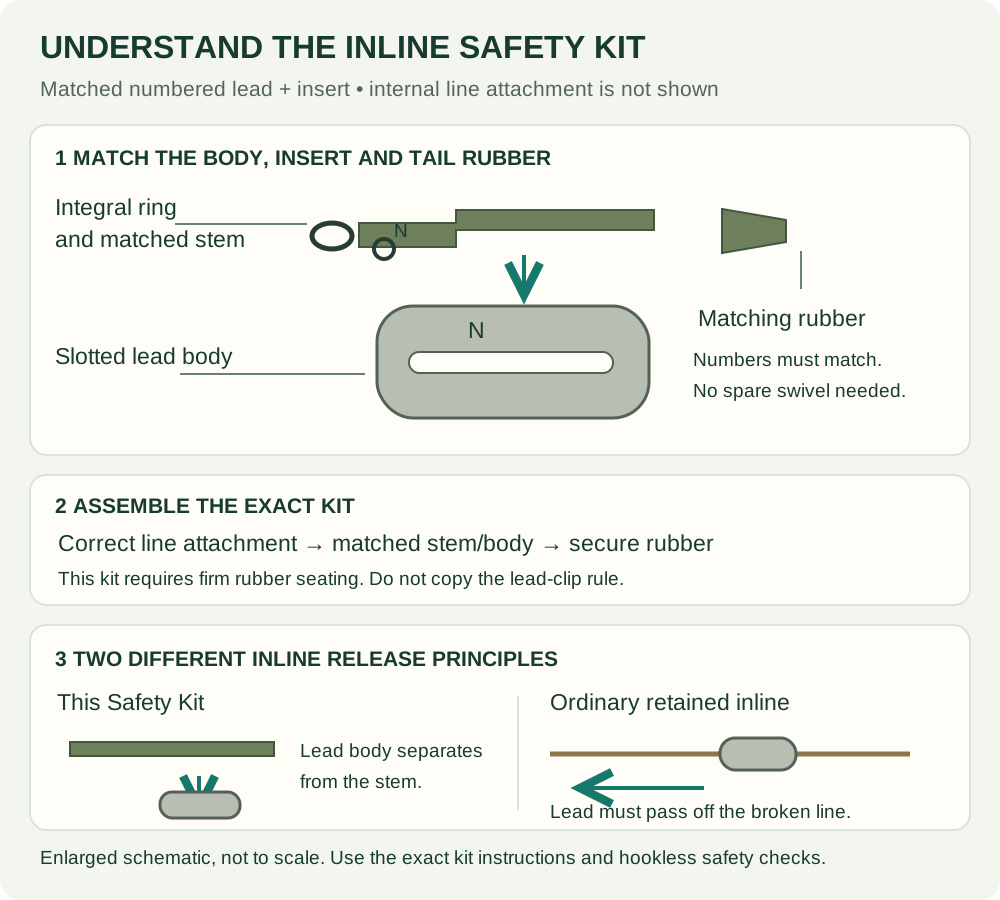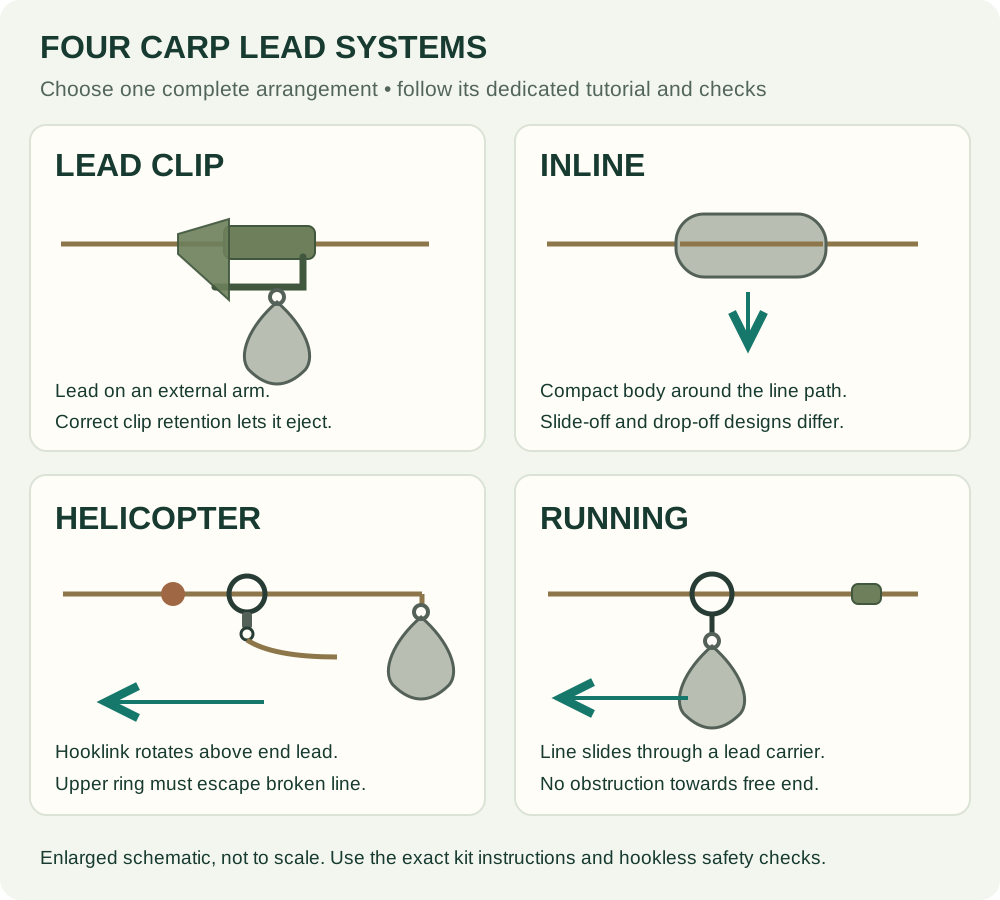
A helicopter rig setup has two release questions to check: the hooklink's escape and the lead's release. Build the specified arrangement without treating those as the same job. Once you've laid the parts out, the name makes sense! We'll build a naked-mainline version, look at the bead positions and check how the hooklink can come free if the main line breaks.
This tutorial explains a naked-mainline arrangement using the Korda Naked Chod Safety System, its specified size-11 ring swivel and a Heli-Safe terminal connection. “Naked” means no separate leader or tubing. It is a simple way to see the parts, not a recommendation to use bare mono in every weedbed or at extreme range.
Helicopter rig setup: can the hooklink escape the upper bead?
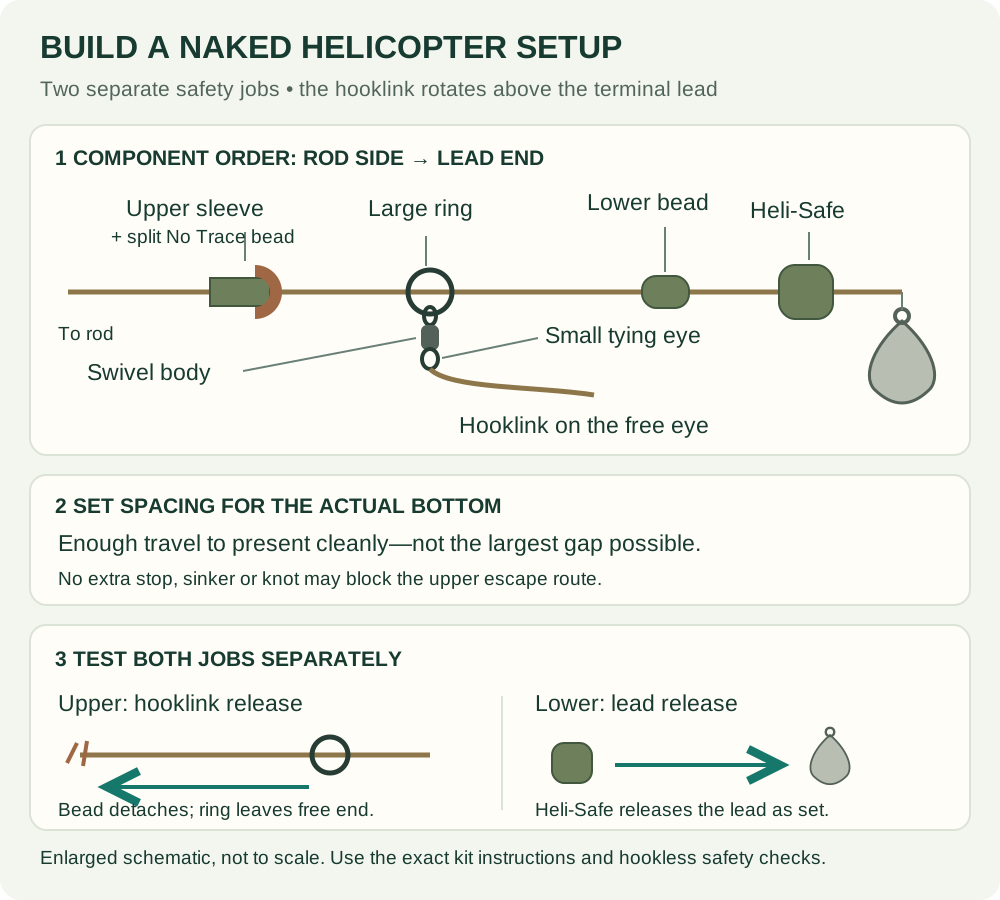
The most important helicopter check is at the upper end. If the main line breaks above the setup, the hooklink ring must be able to move past the upper retaining arrangement and off the broken line. A bead that simply grips permanently can leave the hooklink trapped on the remaining tackle.
In the specified Naked Chod system, a split No Trace bead sits on its matching sleeve. The bead can detach, leaving a route for the correct ring to pass. Don't replace it with a solid bead of similar colour, glue the split closed or put an additional stop above it. The visible bead is only one part of a matched release mechanism.
The Heli-Safe at the lower end controls the lead. Its operation doesn't prove the hooklink can leave the line. Dropping the weight while retaining a fixed upper bead is still a defective helicopter arrangement. Equally, retaining a lead in a suitable open-water configuration is not automatically unsafe if the hooklink has a reliable escape route and the full setup suits the venue.
Our lead-systems overview puts those mechanisms beside lead clips, inlines and running leads. Learning which part must separate is more useful than memorising that a certain product is called safe.
When a helicopter arrangement helps
The adjustable distance between the lead and upper stop allows the hooklink to settle above some of the material into which the lead sinks. That can be useful over soft silt or low debris. The rotating connection can also help a suitable hooklink travel cleanly during a cast, although it doesn't make tangles impossible.
The trade-off is freedom of movement. The hookbait can land closer to the main line than intended, and a fish may move farther before feeling the lead's resistance. Raising the upper bead indefinitely is therefore not a universal improvement. Set enough travel for the actual bottom, rather than the largest gap you can arrange.
For a beginner practising this naked rig, use a safe, accessible open-water spot with modest casting demands. The ring bears on bare line during a fight, so condition, diameter and the angle of pressure matter. Heavy weed, severe angles and prolonged snag pressure are not the right places to discover a naked setup's limitations.
If the venue requires tubing, this is not the correct rig unchanged. A leader ban doesn't necessarily mean bare line is allowed. Obtain a manufacturer-approved tubing system and follow its instructions instead of pulling the Naked Chod components over a piece of tube that happens to fit.
Complete component list
Lead arrangement
- Korda Naked Chod Safety System (paid link), specifically the naked-mainline version. It supplies the matched sleeves, lower barrel beads and split No Trace beads.
- Korda size-11 ring swivel (paid link), the specified separate hooklink carrier. Thread the large ring onto the main line, not the small tying eye.
- Korda Heli-Safe (paid link) for the terminal lead attachment and its manufacturer-designed lead-release option.
- A compatible lead (paid link), selected for the rod, line and distance. Fit it to the Heli-Safe exactly as its instructions require; don't force an oversized swivel into its latch.
- Suitable, sound monofilament main line (paid link). Check the diameter compatibility of the current components and the venue rules.
A simple conventional hooklink
For practising over a known clear or lightly littered area, use a tested hooklink with Korda N-Trap Soft (paid link), a permitted Wide Gape X hook (paid link), bait stop (paid link) and sinking hookbait (paid link). A sinking bait is not the choice for presenting above weed: use the separately explained, correctly balanced chod presentation when that is appropriate.
Tools
Scissors (paid link), knot-pulling tools (paid link), a suitable baiting needle (paid link) and a container for presentation checks. The kit's wire retainers help transfer its small parts to line; don't use a sharp improvised needle that can damage their bores.
Amazon links are affiliate links; we may earn a commission from qualifying purchases. Check the selected kit and contents: the leadcore and naked safety systems are not interchangeable merely because their beads look alike.
Plan the order before tying the terminal connection
Looking from the rod towards the lead, the completed rig has the upper sleeve and No Trace bead, then the hooklink's free-running large ring, then the lower barrel bead, then the Heli-Safe and lead. The hooklink attaches to the ring swivel's other eye. It must not be tied directly around the main line.
Lay those parts out in order and identify the orientation on the packet. Some pieces arrive on wire retainers for threading. Keep them organised rather than tipping them into a mixed compartment and trying to identify the upper and lower components by memory.
Inspect the ring for a rough edge or damaged plating and the line for flattening. A smooth sliding ring is important because this is a moving connection, not simply a static knot eye. Reject damaged parts before assembling the system; covering or lubricating a rough edge is not a repair.
How to assemble the naked helicopter setup
- Prepare the main line. Use an undamaged working length and check the component fit against the permitted diameter. No leader knot, sinker or stop is added above the release zone in this rig.
- Transfer the upper sleeve. Follow the supplied wire-retainer method and orientation. Position it provisionally up the line, leaving room to finish the lower parts.
- Add the ring swivel. Pass the main line through the large ring so it can travel and rotate. Keep the small tying eye clear for the hooklink.
- Transfer the lower barrel bead. Fit it in the specified orientation below the ring. Don't substitute an ordinary bead that could grip the line or contact the Heli-Safe differently.
- Assemble the terminal Heli-Safe. Thread its required housing parts before tying the main line to the supplied half-swivel. Seat and close the housing exactly as the current product instructions show, ensuring the spring and any selected collar are correctly located.
- Attach the lead. Use the latch and permitted lead attachment specified by Korda. Check it closes properly; don't improvise extra rings or squeeze an unsuitable connection into place.
- Connect the tested hooklink. Tie it to the free eye of the ring swivel. Keep the knot, coating and any putty away from the large ring's opening and the release route.
- Set the travel. Position the lower buffer and upper sleeve to suit the intended bottom, then fit the split No Trace bead onto its matching sleeve. Keep enough room for free rotation; don't pinch the hooklink swivel tightly between both stops.
- Check both release mechanisms. Test the upper hooklink escape and lower lead behaviour separately on a hookless dummy assembly before fishing.
The inner Heli-Safe construction is deliberately not replaced by an invented cutaway drawing. It contains small working parts, and the manufacturer's packet shows their exact orientation. If a housing will not close normally, reopen it and find the cause rather than pushing harder.
How to set the upper bead on a naked helicopter rig
On a clean, firm area, you generally need less space between the lead and the upper stop than over deeper soft material. Over light debris, allow enough movement for the hooklink to settle without being dragged directly into the lead's entry point. The correct adjustment follows what the lead lands in and the presentation you're using.
A bucket cannot recreate an unknown lakebed. Use information from a careful lead-around, visible margins and the fishery's advice, without disturbing fish unnecessarily. If your retrieved rig repeatedly carries leaves around the hook or the bait is buried, reassess the location and presentation rather than merely shifting the bead farther up.
A chod hooklink is short, stiff and buoyancy-dependent. Its ability to settle above suitable low debris should not be assumed for a sinking bottom bait on a long conventional hooklink. Our chod-rig guide explains that separate hook section. The shared helicopter lead arrangement doesn't make their hookbaits behave identically.
How to test hooklink release on a helicopter setup
Make a dummy with the hook removed and a short free end of the same line above the upper mechanism. Wet it and follow the maker's testing method. The split bead must be able to leave its sleeve; the large ring must then pass the remaining upper parts and travel off the free end.
Follow the entire route with your eyes. Don't stop after seeing the bead pop off if the ring then catches on a sleeve, knot or added weight. Equally, sliding the ring up bare line before the bead is installed doesn't test the final fishing assembly.
Replace a lost or damaged No Trace bead with the correct spare. Don't substitute a solid bead to finish the session. Keep spare matching parts in their labelled packet so an urgent repair on the bank doesn't become an unverified new design.
How to check the Heli-Safe separately
Keep the lead low over a soft surface, hook omitted and hands away from a tensioned line. Check its action using the direction of pressure described by Korda: pulling at the lead end is not equivalent to pressure from the hooklink connection above the unit.
The manufacturer provides a collar for retaining the lead where conditions and rules make that appropriate. Retention at the bottom doesn't remove the need for upper ring release. Conversely, if the situation needs lead ejection, don't accidentally leave the locking collar installed and assume the mechanism will still behave as before.
Record which configuration you're actually using, particularly if several rods are assembled differently. Before casting, inspect the unit for grit, damaged housing and incomplete closure. Don't add heavy PVA parcels or other loads without checking the maker's advice about unintended lead release.
Inspect the moving line contact after every fish
Slide the permitted moving parts aside gently and examine the area on which the ring has been working. Look for a kink, flattened surface, roughness or a pale mark. Don't inspect only the terminal knot: the helicopter's sideways loading means another section of line may deserve attention too.
If you replace that section, rethread and retest the complete arrangement. Don't bridge it with an extra short leader knot that sits in the upper escape path. Choosing a properly designed protected system is a separate decision involving new compatible components, not a way to hide damaged main line beneath tubing.
Common mistakes and fixes
The top bead never releases
Check that it is the split No Trace part on its matching sleeve, not an ordinary bead. Check orientation and damage. Remove any glue, improvised stopper or additional weight by rebuilding the arrangement with sound components; don't keep fishing an assembly that fails the test.
The ring hangs up after the bead comes off
Trace the actual obstruction. A wrong swivel, damaged ring, line join or substituted sleeve can be responsible. The solution is the correct compatible system with a clear path, not pulling harder and declaring it passed.
The line is kinked or flattened below the ring
Cut back and reassess the line and conditions. Angled loading on naked mono is a real consideration. A permitted protected system may be more appropriate, but it must be built with its own matching parts rather than adding tubing to this rig.
The rig lands in a heap near the lead
Review the hooklink, casting technique and bead spacing. Freedom to rotate doesn't force the bait to land at a set distance. Practise short casts where you can inspect the presentation, and choose a simpler arrangement if it better suits the clear spot.
Frequently asked questions
Is every helicopter rig a chod rig?
No. A chod is a particular short stiff pop-up hooklink. Helicopter describes how that or another suitable hooklink is carried above the terminal lead.
Can I use the Naked Chod kit on leadcore?
Use the maker's correct system for the actual substrate. The naked and leadcore versions are separately specified. Compatibility is not established by forcing a bead over a thicker material.
Does a Heli-Safe mean I can omit the upper safety bead?
No. Releasing the lead and releasing the hooklink from broken line are different requirements. The upper escape route remains essential.
Final check
Correct naked components; smooth specified ring; sound line; no obstruction above the upper release; both mechanisms checked; sensible spacing; suitable baited hooklink; safe landing route. Use the beginner rigs overview to choose the hook section without confusing it with the lead arrangement.