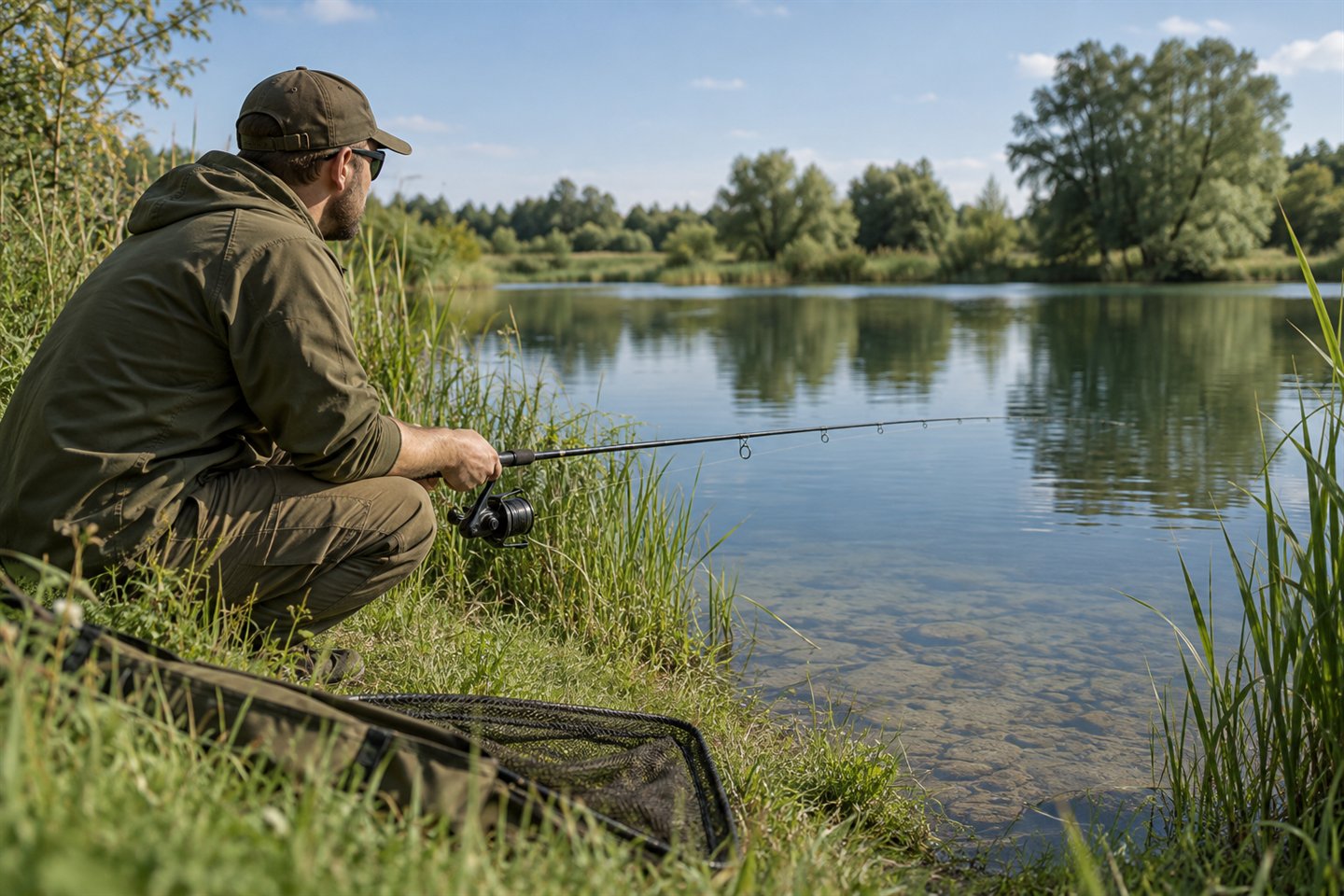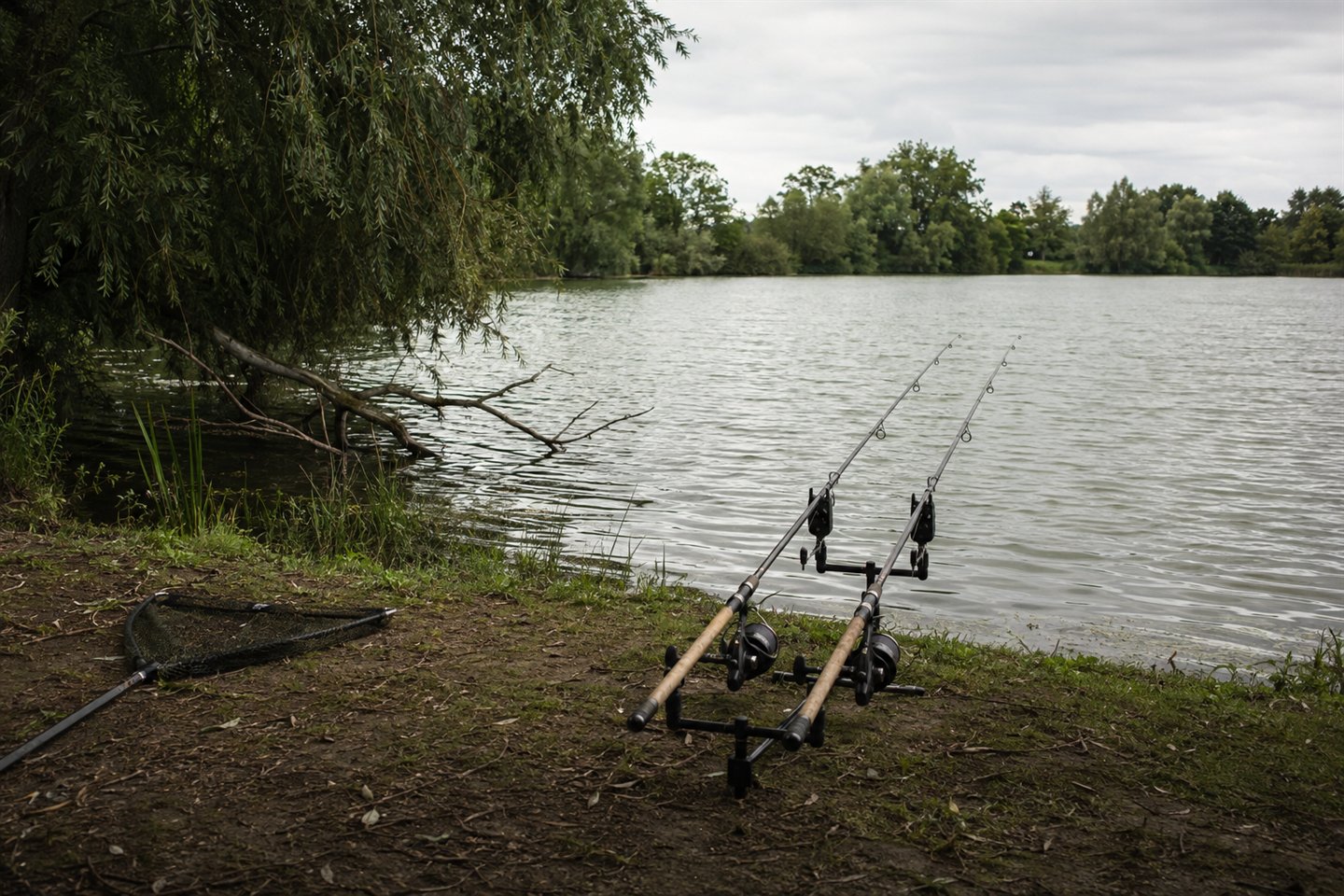
Before casting across the lake, have a quiet look along the margin. A shelf, clear patch or regular route near the bank may offer a chance. We'll look at presenting a bait there without disturbing the fish, and making sure you can land one safely.
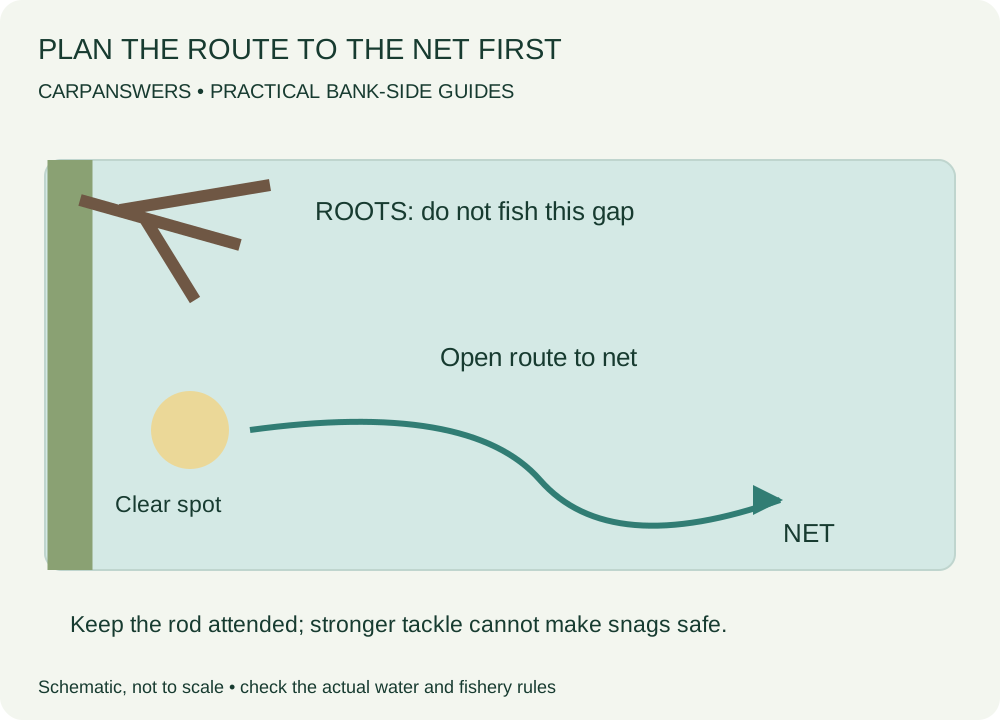
Close range does not mean easy or safe. Check the bottom, submerged roots, line position and the route to the net before introducing a hooked bait. If a carp can reach a snag before you can control it, choose another spot.
You can fish a margin during a settled session or as part of a mobile approach. Our stalking guide covers moving between opportunities; this page concentrates on choosing and fishing the near-bank area itself.
Margin fishing for carp: where is a fishable close-range chance?
Approach from back from the edge and avoid stamping across a platform or pushing a barrow beside the water you want to inspect. Stand still, let your eyes adjust and look for movement rather than expecting a whole carp to appear neatly in view.
Useful signs include repeated routes, tails tipping as fish feed, small disturbances of sediment and fish returning to the same clear patch. A single cloud of mud could have several causes, so watch what happens next.
Fortis Bays polarised glasses (paid link) are an optional aid for reducing glare. If your existing glasses do the job, there is no need to replace them. Stay on safe ground; a better view is not worth climbing an unstable bank or tree.
For a wider search when the margins appear empty, use How to Find Carp in a Lake. Fish can be close without being visible, but that is not a reason to ignore stronger evidence elsewhere.
Which margin depth should you choose?
There is no standard “margin depth”. One lake has a gentle shelf; another drops steeply beside the bank. A spot a rod length out can be deeper than a bar in the centre.
Look for a place fish can use and you can present on. A shallow sunny area may attract passing carp at one time, while a deeper edge nearby offers another opportunity later. Do not assume warmth, shade or cover guarantees feeding.
If the bottom is visible, check for leaves, small branches and fresh weed. If it is not, investigate carefully with a suitable lead where safe and permitted. Short range does not remove the need to understand what your hook lands on.
Check the landing route before the bait goes in
Imagine the take and the first run. Where could the carp go? Can you stand safely, apply suitable pressure and keep it away from obstacles? Where will the net be, and can its handle reach without you leaning dangerously?
A visible clean patch underneath a bush may still have submerged roots beside it. Do not fish such a trap simply because you intend to sit close to the rod. Reaction time and heavy tackle cannot make every snag situation acceptable.
Keep the net assembled and the unhooking area ready. Do not leave the rod fishing while you return to the car for a mat. The snag-fishing safety guide explains when the right decision is to leave a spot alone.
Check neighbouring anglers' water too. A fish running into someone else's lines creates problems even if your own margin is clear. Ask before occupying an area that might interfere with another swim.
How much bait should I use for margin carp fishing?
A small amount on a visible safe patch can help you see whether carp will feed. Place it quietly, step back and watch. Do not keep throwing bait at fish that are already nervous about your presence.
One fish passing over the feed is not the same as clearing it. Watch for fish lowering to the bottom, turning on the spot or returning for another mouthful. Small fish can remove bait too, so do not attribute every missing grain to carp.
If carp feed confidently, let them move away naturally before placing the rig where possible. You are trying to leave a normal food item in their route, not drop a hook onto a fish you can see.
On a longer session, top up according to the response. A margin can receive a surprising amount of food if you add a handful every time you look at it. Keep a reserve instead of creating a large feed pile before the first indication of carp feeding.
Choose a method for the spot
A familiar bottom-bait rig can work on a clear patch. Test the hookbait and make sure the hook point remains unobstructed. A balanced bait is useful only if it behaves correctly with the exact hook and mounting you are using.
A small Korda Solidz PVA bag (paid link) is another option for delivering a suitable rig with a compact feed parcel. Check the bag size and version, keep contents compatible and test it in lake water. It does not make roots, dense weed or deep debris safe to fish.
If fish are taking bait above the bottom, do not insist on a bottom presentation. A permitted float approach may help you follow a bait at a chosen depth; surface fishing and freelining offer other possibilities. Each requires appropriate bite observation and control.
Use the Carp Rig Selector to compare bottom presentations, then follow the relevant detailed tutorial. The choice still depends on what you have established about the spot, not simply the word “margin”.
How to keep the line controlled when fishing close in for carp
At close range, a badly positioned line can cross the fish's route even when the hookbait looks tidy. Take up enough slack for the chosen setup and bite indication, but do not drag the lead out of place in an attempt to make everything tight.
Equally, do not create a large loop that delays indication or lies across an obstacle. “Slack line” is not a universal margin instruction. Choose line tension and rod position for the spot and maintain effective control.
Do not scatter extra weights along the line without understanding their effect on safe release and bite indication. Keep the arrangement simple, permitted and tested. Check it again if the water level or weed changes.
Set the clutch for the tackle and situation and stay attentive. A lightly resting rod can be pulled into the water on a close-range take; secure the setup appropriately without treating a locked clutch as a substitute for avoiding snags.
When are margins worth a look?
Inspect them whenever you arrive, but give quiet periods particular attention. An area beside a busy path may become more interesting when people leave. Another margin may receive fish in broad daylight despite regular foot traffic.
Watch repeated routes rather than relying on a dawn-or-dusk rule. If you see fish visiting a patch at the same time on several trips, arrange the next session so that your presentation is ready beforehand.
For an evening attempt, establish the landing area and safe footing before dark. If you can no longer judge the bait, birds or line well enough for the chosen method, change the method or stop.
Common close-range mistakes
- Putting the rod beside a snag because the fish are easy to see.
- Repeatedly peering over the water and spooking the fish you attracted.
- Using lighter tackle than the landing situation allows.
- Adding bait without checking whether carp or nuisance fish are eating it.
- Leaving the net or mat packed because it is only a quick try.
If a fish refuses the bait, resist changing everything immediately. Check whether the line moved, the hookbait behaved differently from the free feed or your approach disturbed it. Change one useful thing at a time.
Margin fishing questions
Is margin fishing the same as stalking?
No. Margin describes where you fish; stalking describes a mobile, observation-led approach. You can fish a margin from a settled swim or stalk fish elsewhere.
Do I need a short rod?
Not necessarily. Use a rod you can manage safely with suitable control and room to handle the net. A shorter rod is convenient in some places, not a requirement for every margin.
Should I fish tight against cover?
Only where the complete situation is safe. Often the better choice is a clear route away from the obstacle, and some spots should not be fished at all.
Record the visiting times, depth and response in the Session & Catch Log. Add observation time to the Session Planner for your next trip. It is time spent fishing intelligently, even before the first cast.