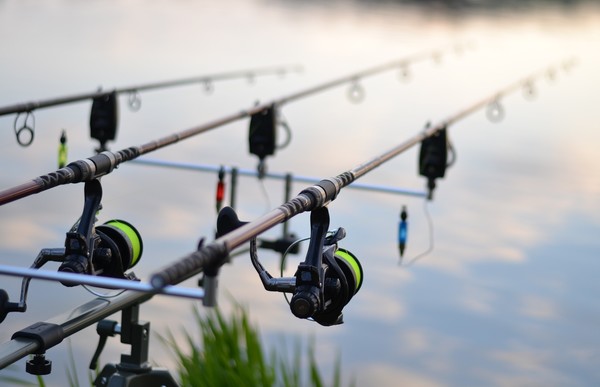
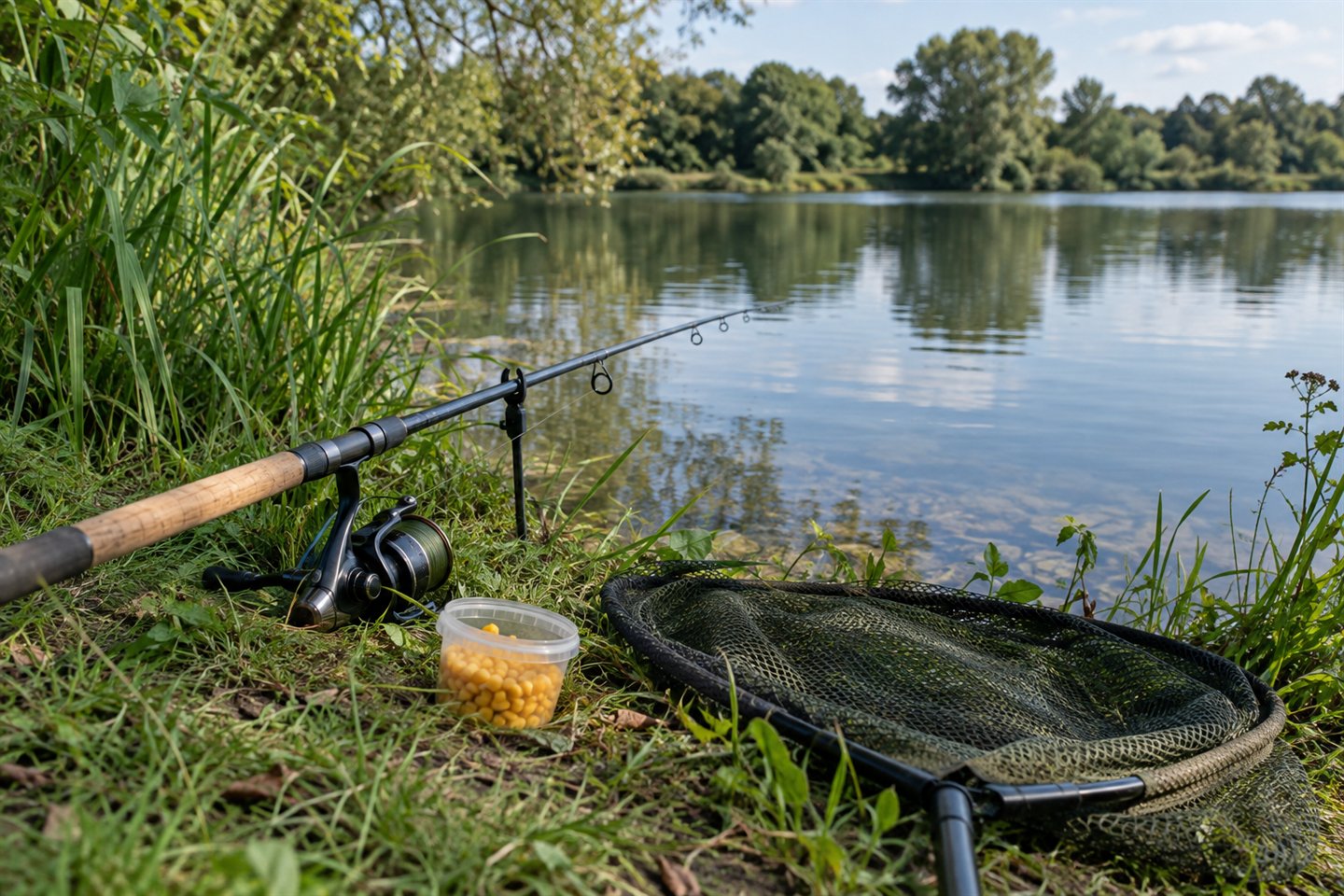
For a closer look at the parts and the Korda component list, see the illustrated freelining guide in our beginner overview. Check which version you're tying before changing its materials or connections.
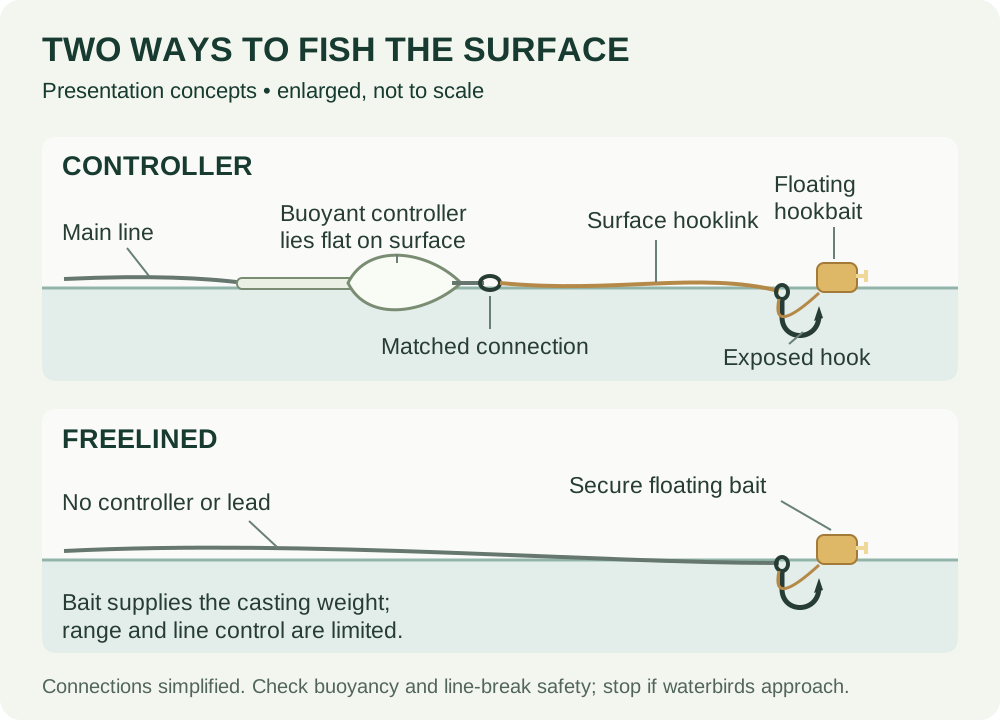
Freelining for carp uses the bait's weight for a short cast or careful placement. Find fish within reach, keep watching for a take and make sure you can land them safely. It's involving fishing with very little gear.
Simple tackle doesn't make it an unattended method. Without a float or lead-based indication system, you must maintain a useful connection and concentrate throughout. If the presentation disappears into water where you can't recognise a bite promptly, the answer is a better-suited method, not a longer wait before reacting.
This guide covers a careful UK stillwater approach using bread or other permitted baits. It distinguishes a floating bait from an unweighted sinking one, explains where freelining becomes unsuitable and shows how to keep the apparent simplicity from hiding problems with slack line, casting control or safe fish playing.
Freelining for carp: when does an unweighted bait make sense?
Walk quietly and observe from stable ground before assembling the final presentation. You're looking for a carp using reachable open water, not merely the darkest tangle of roots on the lake. A clear patrol route or feeding patch gives you a realistic chance to place a bait without landing it on the fish.
Watch long enough to distinguish cruising from feeding. A carp may pass the same bank repeatedly without investigating food, or pause and turn in a way that suggests more interest. Those observations help choose the timing of a cast. They don't justify repeatedly throwing bait at a fish that continues to ignore it.
The stalking guide explains the wider mobile approach. Freelining is one technique within it, not a synonym for every form of stalking. You can move carefully and still choose a float or safe ledger arrangement when those provide better presentation and indication.
Pick a spot with room to land the fish
Assess the likely first run, the path of the line and the final netting position. A carp close to the bank may reach an obstacle almost immediately. Don't assume an unweighted bait becomes safe beside branches because it makes less splash than a lead. The playing problem exists regardless of the rig's simplicity.
Choose an open area with stable footing and enough space to use the rod properly. Avoid steep edges, fragile undercuts and any place that would require wading or climbing to follow a fish. Polarised glasses may help observation, but they don't make an uncertain bank or hidden underwater route safe.
Read the snag-safety guide before considering tight cover. For a first freelining session, keep a generous margin from hazards. Passing up one visible fish is a sound decision when the only likely outcome is a rushed fight against an obstacle.
Keep the tackle simple, not underpowered
Use a rod with a forgiving playing action and enough capability for the venue's carp. A suitable shorter carp or specialist rod may be comfortable at close range, but rod length should match the bank and the way you intend to place the bait. There's no need to choose the weakest rod you own.
A fixed-spool reel with a smooth, properly adjusted drag is essential. Check the working line and knots before approaching a fish. A powerful surge can arrive immediately after contact, so a sticking spool or damaged line matters more than whether the tackle looks discreet in a photograph.
Match line diameter and strength to the rod, hook and fishery rules. The carp-line guide explains why the label alone is not enough. Clear open water offers more room for a balanced setup, but it doesn't justify deliberately fragile tackle for large fish.
A concrete bread setup to assess first
For an open-water opportunity where the fishery permits it, a useful reference is 10 lb monofilament tied directly to a strong size 6 single hook, with a small securely mounted piece of bread and no float, lead or added shot. Drennan's freelining account records 10 lb line and a size 6 hook with slow-sinking flake. The hook pattern still needs to meet your venue's barb rule.
Pair that line with a carp-capable rod whose maker supports it and a smooth-drag reel, rather than borrowing a delicate silverfish outfit. Begin within an easy gentle placement, with the bread and taking fish visible. Adjust the bread's mounting and compression after a water test so you know whether it floats or sinks; there's no float-depth setting to copy.
This is a reference combination, not a guarantee that 10 lb line suits every carp or bank. Don't use it against snags, sharp features or a stronger venue minimum. If visibility or control is inadequate, change the presentation. The numerical example only helps when the fishing situation also matches.
What belongs in an unweighted setup?
The simplest arrangement is suitable line tied to a single appropriate hook, with the permitted bait mounted securely. A carefully tied hair can be used where it improves mounting, but every added connection should have a purpose. The absence of a float and lead is the defining feature, not a ban on thoughtful rig construction.
Check the hook's strength, sharpness and gape against the bait. A large piece of bread or meat can obstruct a small hook even when it is easy for a carp to eat. Use the hook-pattern guide to assess the actual shape rather than relying on a number shared by different brands.
If you add shot or a controller for casting or depth control, you have moved into a weighted presentation. That can be the correct decision. Set it up properly for its new job rather than calling it freelining and assuming the additional components need no separate safety or compatibility checks.
Floating bread and sinking bread are different presentations
Bread can be presented on the surface or below it depending on the piece used, compression, water absorption and hook arrangement. Test a sample safely at the edge before fishing. Don't assume every piece from the same loaf will float identically once the hook and line are attached.
A surface presentation lets you watch the bait itself, provided light and distance allow it. A sinking piece can be offered ahead of a visible fish, but soon becomes harder to track in coloured water. The observation and bite-detection requirements change as soon as you lose sight of that bait.
Drennan's freelined-bread capture account illustrates the use of slowly sinking flake for visible carp. It is one angler's example, not evidence that any loaf, line strength or fish behaviour should be copied directly onto your own water.
How to freeline bread for carp at close range
Choose a fresh usable piece and secure it around the appropriate part of the hook while leaving the point effective. Compress enough to hold, without turning the whole offering into an unrecognisable hard lump. The correct amount depends on the bread and whether the presentation is intended to float or sink.
Make a gentle test placement and inspect what returns. If the bait falls away immediately, alter the mounting or casting action before presenting it to a fish. A hook fishing alone after the first splash can create a long, misleading period of apparent refusal when there was no bait to refuse.
Keep the bread protected from drying and crushing in the bag. Prepare only what you need for the next short opportunity rather than leaving a large pile exposed. Changes in texture can alter buoyancy, casting resilience and the size of the piece you end up using without noticing.
When to use sinking bait for freelining carp?
Luncheon meat, a suitable grain presentation or another permitted sinking bait may be easier to place than a light floating piece. The bait's own mass supplies the cast. That doesn't mean increasing it indefinitely until it reaches a distant fish; the hook, mounting and available indication still set practical limits.
Check that the bait settles where intended without rolling into debris or being drawn away by line tension. A gentle slope can change the final position. If you can't judge the route or maintain clear indication, use a small float or an appropriate weighted setup instead of guessing where the unweighted bait stopped.
Our luncheon-meat guide explains secure mounting and preparation. Treat freelining with a sinking bait as an actively watched presentation, not a substitute for a bite alarm during an overnight session. Simple equipment still requires a dependable way to know when a fish has taken the hookbait.
Stay inside an honest casting range
An unweighted bait has a limited reliable range, affected by wind, line, rod and bait condition. Choose a fish you can reach gently from a permitted, safe position. Trying to force another few metres often damages the bait or creates an uncontrolled cast with little chance of landing where intended.
A smooth underarm placement can be useful where space allows, but it is not permission to cast beneath electricity cables or through a narrow gap beside people. Check the entire swing and final trajectory. If the route is unsafe, move or don't cast, even when the fish seems perfectly positioned.
Never climb a tree, lean over an unstable edge or enter the water simply to extend reach. A missed opportunity is temporary; poor footing can create a serious emergency. If your bait cannot reach the fish from safe ground, choose a correctly assembled method with suitable casting capability.
Place the bait ahead of the carp
Watch the direction and speed of travel, then aim to put the bait where the carp may encounter it naturally. Landing directly on its head is likely to disturb the opportunity. Give the bait time to settle into the intended presentation before the fish arrives rather than chasing it with repeated casts.
The useful lead distance varies with visibility, movement and how the bait sinks or drifts. Make a conservative first attempt and observe. If the carp turns away well before reaching the bait, consider your movement, shadow and line route as well as the splash, without claiming certainty about what the fish noticed.
Our watercraft guide helps interpret repeated patrols and feeding signs. Position and timing are often easier to improve than the bait itself. A modest offering placed calmly at the right point can be more useful than a larger bait repeatedly thrown behind a departing fish.
Control line without pinning the bait unnaturally
After placement, manage the line between rod and bait so you retain useful information without dragging the offering out of position. Wind can bow the line and move a surface bait differently from free offerings. A sinking line section can also pull down a bait you expected to remain on top.
Observe the complete presentation and adjust the rod angle or position within the safe swim. Don't create a large pile of slack simply to remove visible tension. Excess slack can delay contact and make a sinking bait impossible to monitor, particularly when a fish moves towards you rather than away.
Keep loose line clear of vegetation, boots and reel handles. If a coil catches during the take, it can abruptly stop a running fish. The neatness of the bank-end arrangement is a practical safety issue here, not merely a matter of tidying equipment for a photograph.
How to detect bites when freelining for carp
With visible surface bait, watch the actual hookbait and the line approaching it. A swirl nearby is not necessarily a take. Respond when the bait is clearly accepted and positive contact develops, using a controlled lift rather than a violent strike that can send the hook flying back towards you.
With a sinking bait, watch for deliberate line movement and maintain enough controlled connection to answer promptly. Don't wait for an extended run simply because a carp is expected to be cautious. If the indication is ambiguous or consistently late, retrieve and choose a setup that gives better information.
Never wrap line around fingers or hold it in a tight loop to feel a bite. A running fish can cut or trap skin. Keep the rod and reel doing their intended jobs, and seek hands-on tuition if you're unsure how to monitor a close-range unweighted presentation safely.
Don't give a fish time to swallow the bait
Freelining doesn't require a long delay before making contact. The aim is to recognise the take clearly and respond promptly. A belief that you must let a fish travel several metres with an unweighted bait can lead to poor hook placement, especially when the bait or fish disappears from view.
If repeated bites are difficult to interpret, examine the line route, visibility and bait mounting rather than waiting longer. A short float setup may provide the missing information. The bottom-float guide offers an alternative when a visible indicator would make the session more controlled.
After each fish, check the hookhold and whether the tackle performed as intended. Unexpectedly deep hooking or damaged tackle is a reason to stop and revise the approach, not an acceptable cost of a supposedly delicate method. Ask the fishery or an experienced coach for help if the cause remains unclear.
Wildlife can close an otherwise good opportunity
Surface bait and shallow line can attract or intercept ducks, gulls and other wildlife. If birds approach the hookbait or cross the line, retrieve early and pause. Don't wait until a bird has reached the offering before deciding whether the cast was safe.
Don't feed birds elsewhere to create a temporary distraction for a risky cast. More food can attract additional wildlife, and their movement remains unpredictable. A sinking bait is not automatically safe either, since diving birds can reach beneath the surface. Keep the whole fishing area under observation.
The surface-fishing guide covers the wider method and its practical limits. Sometimes the right decision is to use a different safe spot or stop altogether. Catching the visible carp is not more important than keeping an unhooked bird away from your tackle.
Feeding is optional, not automatic
You may be able to offer one hookbait to a fish already feeding or following a predictable route. Introducing extra food can help assess interest in some situations, but it can also attract birds, small fish or unwanted attention. Start with a clear reason for every free offering.
If feeding is permitted and useful, introduce a small amount where you can observe what happens. Wait for a genuine response rather than repeatedly adding food to a fish that is only cruising. The single-hookbait guide explains why loose feed is a choice rather than an essential part of every carp presentation.
Keep reserve bait packed away so you remain mobile and can stop cleanly. Don't scatter leftovers around the margin at the end of a session. Responsible small-scale fishing includes removing unused bait and leaving the water's wildlife without a new feeding problem after you have gone.
Play the fish with a prepared landing area
Once connected, use a smooth drag and an effective rod angle to guide the carp into open water. Resist the temptation to raise the rod vertically and pull hard because the fish is close. Close range can produce abrupt lunges, so keep the rod's cushioning action available throughout the fight.
Have the net ready before presenting the bait. You should not need to assemble it one-handed while a fish is running. Guide a tired carp over the submerged mesh and never lift it by the line. A lightweight fishing approach still requires appropriately sized landing and unhooking equipment.
Follow the carp-care routine for wet hands, supported handling and prompt return. Don't carry an unhooked or hooked fish along the bank in search of a better photograph. Select the safe care area before casting, while you have time to think calmly.
Troubleshoot refusals without chasing the fish
If carp repeatedly approach and turn away, first check whether the hookbait behaves differently from any free offerings. A surface bait being dragged by line or a sinking bait hanging unnaturally may explain more than its flavour. Adjust presentation from a settled position instead of standing up after every refusal.
If fish leave after each cast, pause and let the area settle. Consider whether your silhouette, footfall or cast is the main disturbance. A longer rest or a different authorised position may be more useful than immediately changing the hook size and making another cast into the same empty margin.
If the bait vanishes without a readable take, don't assume a carp stole it. Small fish, weak mounting and water absorption can all alter the offering. Inspect a fresh bait through a short controlled test, then reassess whether the method provides enough information for the conditions.
Equipment worth considering
A compact, carp-capable rod-and-reel outfit, protected spare hooks and sound line are the core tackle. Polarised glasses may help you see through glare where light and water clarity allow. Choose lenses and fit for comfortable observation, not a promise that hidden fish will suddenly become visible everywhere.
A practical net, suitable mat and small bag for bait and unhooking tools should remain part of the mobile kit. Lightweight doesn't mean leaving care equipment in the car. Avoid buying specialist accessories until you can name the presentation problem they are meant to solve.
Fortis Bays polarised sunglasses (paid link) can help you follow fish and bait in suitable clear margins, while the Roddarch four-piece bait-box set (paid link) are a practical way to carry a small selection of permitted soft baits. Their value depends on the conditions: polarised lenses don't remove every reflection, and ventilated boxes are not sealed liquid containers. Neither should encourage a closer approach to an unstable edge. Test the complete presentation from a safe position, keep landing equipment ready and use the simple tackle you already know wherever it is suitable.
Frequently asked questions
Is freelining only surface fishing?
No. An unweighted bait can float, sink slowly or settle on the bottom, depending on the bait and setup. The important limitation is dependable bite indication. If you can't track the presentation or recognise a take promptly, use a method with clearer control rather than extending the waiting time.
Can I freeline with my usual carp rod?
Possibly, if it suits the bait placement and gives appropriate control and cushioning. A powerful distance rod may feel awkward with very light bread at close range. Assess the whole outfit and the water rather than buying another rod automatically or assuming all carp rods behave identically.
Should I leave the bail arm open?
For the visible, open-water setup described here, start with the rod held, bail arm closed and a smoothly adjusted drag. Remove excess slack without dragging the bait, watch the bait and line, and lift promptly into controlled contact when the take is clear. This avoids managing loose coils from an open spool. If that routine cannot provide clear indication, use a float or seek practical coaching rather than leaving the bail open and waiting longer.
Simplicity works when you can see the detail
Keep the bait within a range where you can watch it or read the line properly, and have the landing gear ready. A secure bait and steady concentration matter more than extra distance. When the opportunity is right, enjoy how simple freelining feels—but change methods if you can't recognise a take promptly.
Sources and further reading
The linked Drennan capture account was checked on 15 September 2026 as a primary example of freelined slow-sinking bread. For floating-bait preparation, Mainline's floater specification distinguishes feed from prepared matching hookbait. Product and capture examples are not universal tackle prescriptions; use current instructions and venue rules.