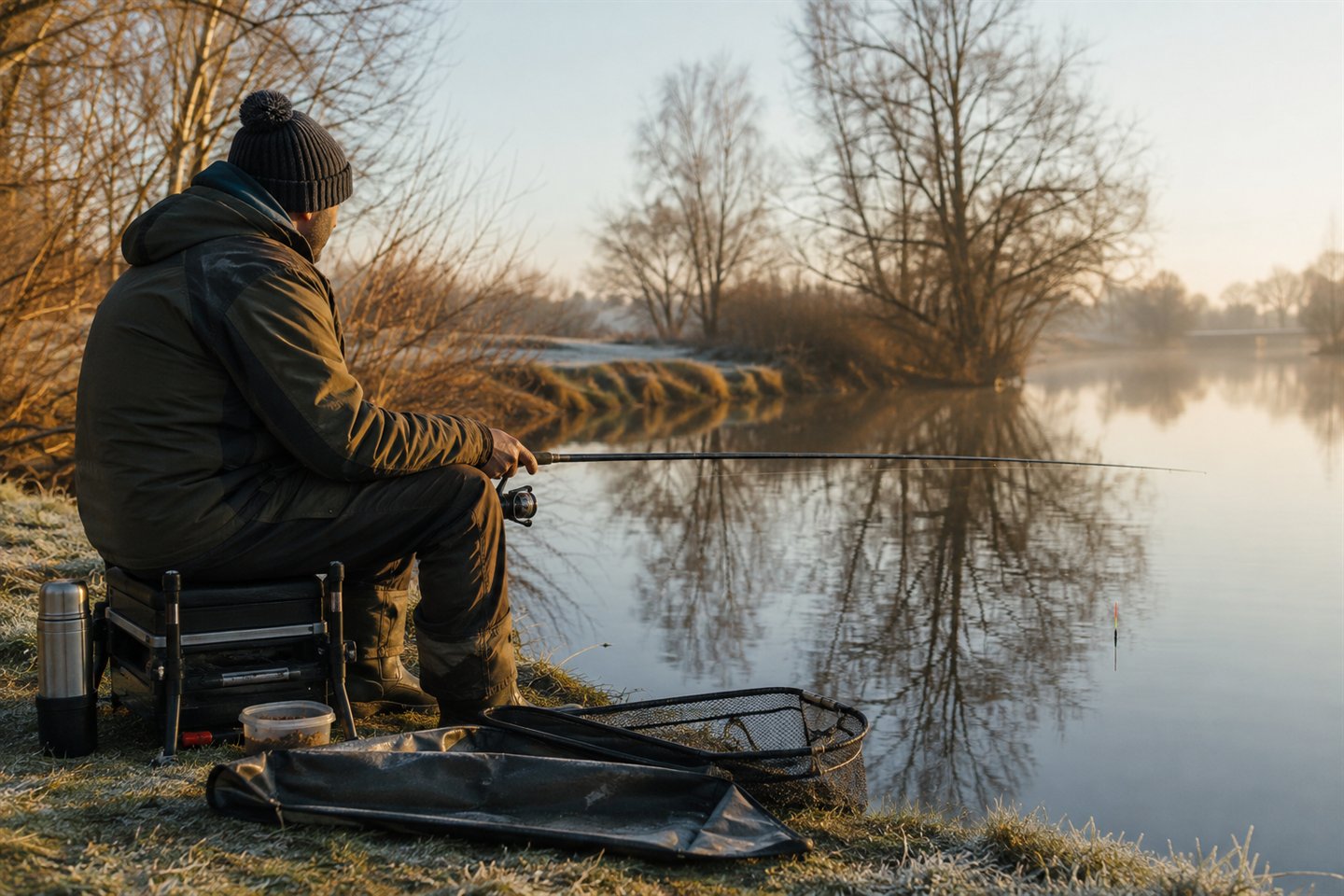
Winter coarse fishing often means fewer bites, but a short trip can still be well worth it. Find where the fish are holding, start with modest feed and fish a method you can control. We'll look at the changes that help when the water gets cold.
A good winter session is short enough to remain warm and attentive. It uses one familiar float or feeder method, fresh small baits, a landing net and unhooking tools prepared before fishing. Clothing must preserve dexterity, and the journey, bank and pack-down must remain safe if weather changes.
The ideas below suit mixed coarse fishing on waters open to fishing at the time of your trip. Check for closures, floods, ice and any local restrictions first. Winter tactics vary between species and venues, so use the advice as a starting point and keep watching how your water responds.
Winter coarse fishing for beginners: where are the fish?
Choose a water with recent coarse-fish form and safe all-weather access. Check licence, permission, close season, daylight, wind, rain, ice and flood information. Ask which lake or stretch holds silverfish in winter, then fish a deeper, steadier or sheltered line at a range that can be repeated comfortably.
Begin with a few maggots, pinkies, casters, bread crumbs, chopped worm or a small feeder of fine groundbait where permitted. Wait for a response before adding more. Search depth or a second nearby line with the same modest feed, rather than filling the first peg. Keep fish out of cold air briefly and stop before hands lose unhooking control.
Define a realistic winter aim
A winter session is not a failed summer session with fewer bites. Clearer water, shorter daylight, colder hands and concentrated fish change how the day should be planned. The useful aim is to find one feeding group and present consistently during its active period.
Small roach, perch and skimmers provide valuable sport and regular handling practice. Don't ignore them while waiting for a large tench or chub that may not be present. A dozen controlled bites can teach more about winter depth and feeding than one accidental fish after heavy baiting.
Use recent local information carefully. A catch report shows that fish fed at a time, place and set of conditions; it doesn't guarantee the same peg. Ask the fishery which area is appropriate for beginners and whether any winter rules or closures are active.
Licence, permission and close seasons
In England and Wales, anglers aged 13 or over need the appropriate rod fishing licence, and separate fishery or landowner permission is required. Check both before travel. Opening times often shorten in winter, while gates, parking and toilets may operate differently.
The statutory river coarse close season is 15 March to 15 June inclusive, so much of winter is within the open period, but regional byelaws still matter. Some canals and designated stillwaters have close seasons, and private fisheries can impose their own closures or protect spawning fish for longer.
The rod licence guide introduces the requirements. Scotland and Northern Ireland have different systems, so check the authority for the actual country rather than treating UK coarse fishing as one legal area.
Check whether the journey is sensible
Review weather warnings, road conditions, daylight and the forecast for the entire session. Freezing rain, snow, high wind and flooding can make a familiar venue inaccessible. Confirm that the fishery is open instead of assuming an online timetable covers severe weather.
Tell somebody where the session will be and when the angler should return. Keep a charged phone dry and warm because batteries can perform poorly in cold. Park only where the exit is unlikely to flood or become locked.
Plan to finish with enough daylight to pack hooks, wet nets and cold equipment safely. A final feeding window is not worth crossing an icy platform in darkness. Turn back if the bank, path or water looks materially less safe than expected.
Cold-water bank safety
Ice on timber, concrete, clay and metal platforms may be difficult to see. Test footing from a secure position and avoid steep edges. Never break bank ice by stamping or reaching with a carbon pole near cables; follow fishery instructions and choose an open peg.
Wear layered clothing that manages moisture, a waterproof outer layer, warm hat and suitable boots. Gloves should allow secure handling of hooks and fish. Keep a dry spare pair and remove bulky gloves before touching a fish if they could catch fins or wipe protective mucus.
The OriStout waterproof thermal fishing gloves (paid link) are one current option. Check their dexterity, grip and cuff design. No glove makes cold-water immersion safe. Check fit and carry dry spares rather than relying on a product claim.
Choose the easiest winter venue
A small mixed stillwater or accessible canal with a reliable silverfish stock is often easier than a large exposed reservoir. Recent management information, safe pegs and a nearby car reduce uncertainty. Commercial fisheries may designate a silverfish lake or restrict which waters open in winter.
Rivers can offer chub, roach and dace, but levels and banks change quickly. Beginners should select maintained club stretches and stable flows. The river coarse fishing guide explains close season, creases and flood decisions.
Don't choose a water simply because it is ice-free. Fish can be concentrated by inflows, structures or low oxygen, and access may be prohibited. Follow signs and never fish inside a sanctuary or temporary closed area.
Where to find coarse fish in winter on stillwaters?
Many coarse fish use deeper, stable areas as water cools, particularly where these connect to feeding shelves. On a stillwater, test the base of a slope, a deeper bay or water beside remaining cover. On a canal, the boat channel, turning areas where fishing is permitted and bridge approaches can concentrate shoals.
Depth alone is not sufficient. A shallow area warmed by several hours of sun can produce a brief afternoon opportunity, while a deep exposed basin may remain inactive. Look for fish topping, small bubbles, coloured patches and bird activity without treating any sign as proof.
Plumb several points accurately. The depth-plumbing guide explains how to identify shelves and set a bait close to bottom. Mark the productive depth and casting line so it can be repeated after cold hands or fading light reduce precision.
Use shelter and sunlight as clues
Reed beds, bridge shade, marinas where fishing is allowed, bushes and high banks can reduce wind or provide cover. A calm surface is not always warm, but stable water may let fish conserve energy. Safe access and fishery permission remain essential around structures.
Low winter sun can warm shallow margins slightly during a bright afternoon. Fish may visit for a limited period, especially after several stable days. Test with a small bait rather than feeding heavily in anticipation.
Wind that has blown steadily can move surface water and food, yet a cold new wind may make an exposed bank uncomfortable and difficult to control. Observe actual water and personal safety instead of following a rule always to fish into or away from wind.
Pick one simple method
Float fishing gives clear depth control and allows small amounts of loose feed. It suits roach and perch at short to medium range. Feeder fishing can place groundbait and hookbait accurately in deeper water, but the feeder should remain small enough for the planned quantity.
A short pole or whip is effective when fish are close and the bank has room for safe handling. A feeder rod can search a modest second line without needing a large bait load. Don't set up several rods if cold conditions make them difficult to attend and pack.
A winter float setup
Select a float with enough capacity to remain stable in wind or tow while showing delicate movement. Shot it correctly and present the hookbait close to the bed as a starting point. Spread lower shot for a slower fall when roach intercept bait above bottom.
Use balanced main line, hooklength and hook rather than the finest components available. Clear water may favour refinement, but a bream, chub or tench still needs to be landed efficiently. Check hook point and bait after every missed bite.
Sink or control the line to prevent surface drift pulling a waggler. On a pole, keep the rig directly managed without holding it unnaturally against tow. A stable visible float is more sensitive in practice than a tiny tip lost in glare.
A small running feeder
A cage or open-end feeder can deliver a controlled pinch of fine groundbait and a few samples. Use a free-running arrangement that meets fishery rules. The filled feeder must remain within the rod rating and should land softly at a repeatable distance.
The feeder fishing beginner guide covers the basic rig. In winter, extend recast intervals after enough attraction is present. Repeated casting adds food and disturbance even when each feeder looks small.
The Fladen 10-piece wire cage feeder set (paid link) includes a range of capacities and weights. Compare filled load, release and attachment. A set containing many heavy feeders is not automatically useful on a compact winter water.
Baits for cold-water coarse fish
Pinkies and maggots provide small active hookbaits; casters offer a firmer alternative. Bread punch and flake can work for roach and chub, while worm sections interest perch, bream and other species. Sweetcorn or small pellets may work where fish recognise them and rules allow them.
Carry two principal hookbaits and keep them fresh. A small bait doesn't mean hiding the hook point. Replace damaged maggots, empty caster shells and waterlogged bread, and inspect the hook after contact with the bottom.
The coarse bait guide introduces the common options. Winter selection should then be reduced by venue knowledge and likely species rather than expanded because bites are scarce.
Groundbait in winter
A fine, correctly mixed groundbait can create scent and small particles without many solid mouthfuls. Mix only a small batch, allow it to absorb fully and test whether it leaves the feeder or breaks down at the intended depth.
Colour can influence how conspicuous the feed appears on a clear bed, but there's no universal winter shade. Match the lakebed or create contrast deliberately, then judge the fish response. Avoid adding strong liquids simply because the water is cold.
The groundbait beginner guide covers mixing, riddling and feeding. Venue limits apply even when the angler intends to use less than a bag.
How much bait should I feed when coarse fishing in winter?
“Lightly” should describe an amount that can be counted: a few maggots, a pinch of crumb or one small feeder. Start there and wait. Fish may take longer to locate bait in cold water, so impatience can create an overfed swim before the feeding window begins.
When bites arrive quickly after each small feed, maintain the rhythm. When they stop immediately after feed lands, reduce dose or frequency. When hookbait returns untouched for a long period, search a different depth or location before adding more.
Keep most bait in a sealed reserve. Preparing half the usual warm-weather quantity reduces temptation and waste. Take leftovers home; don't empty them into the water at pack-up.
Loose-feed for roach
On a float line, feed a few pinkies, maggots or casters accurately. Allow time for them to sink and watch when bites occur. If roach take on the drop, adjust depth and shotting in measured steps.
The roach-on-the-float guide covers bite timing and feeding rhythm. Winter shoals can produce consistent sport once located, but their position may be narrow. A broad catapult spread makes that location harder to understand.
Feeder tactics for bream
Use a small feeder and cast to one marker near a deeper route or known holding area. Include very few solid items at first. Bream may arrive as a shoal after a quiet period, so avoid moving the line immediately when presentation and location remain plausible.
The bream feeder guide explains groundbait release and quivertip bites. In cold water, liners can show that fish are near the line without feeding hard. Change hookbait or hooklength carefully before introducing a large top-up.
Chub on cold rivers
Chub can feed in low temperatures and may group in deep, steady swims near cover. Bread, maggots, casters and worm can all work. Feed can draw them from an obstruction into open water, reducing snag risk.
Use tackle capable of controlling a large chub in current and prepare in-water recovery. The chub beginner guide covers location and safe presentation. Stable river level is more beginner-friendly than dramatic coloured floodwater.
Recognise a short feeding window
Several bites close together, small fish topping, bubbles or repeated liners can show that a winter shoal has become active. Keep the productive rig and feeding amount steady before experimenting. The window may close quickly if the swim is disturbed.
Note the time, light, temperature and weather trend. One bite gives you a clue; a few sessions can show whether it's a pattern worth following. Arriving for a known two-hour period can be more efficient and safer than sitting through an entire cold day.
Don't extend into darkness without lighting, access and fish care prepared. A feeding spell cannot make an icy path or unlit unhooking area acceptable.
Bite detection in cold conditions
Shot a float so both dips and lifts are visible. On a feeder, establish a stable quivertip curve and reduce wind movement through line angle and rod position. Cold-water bites may be subtle, but sensitivity begins with a quiet baseline.
Strike with a controlled lift. Thick clothing and numb hands can lead to exaggerated movements that tear small hookholds. Keep the rod close and the line organised so little motion is needed.
If bites are repeatedly missed, inspect bait and hook, then alter lower shot, hookbait size or hooklength. Don't switch every component. A sequence of small changes produces usable evidence.
Keep warm without losing attention
Eat and drink regularly, but don't rely on alcohol for warmth. Use a hot drink in a secure flask and keep any stove outdoors on stable clear ground. Never use a fuel-burning heater or cooker in an enclosed shelter or vehicle because of fire and carbon monoxide risk.
A search for a secure insulated flask for outdoor fishing (paid link) is one current option. Compare closures, capacity and ease of cleaning. Position it where a spill cannot reach bait, hooks or electronics.
Stand and move carefully at intervals without leaving a baited rod unattended. If shivering, confusion or loss of dexterity develops, pack away and seek warmth. A fishing session should never be used to test the limit of cold exposure.
Landing fish in winter
Assemble a soft knotless net before casting and keep it free of ice. Use it for any fish that cannot be brought to hand without swinging or dropping. Keep the route from chair to water clear of bags and frozen mud.
Wet hands and the mat with water from the fishery, taking care not to create an icy walkway. Keep the fish low and minimise time in cold wind. Prepare forceps or a disgorger before the bite rather than searching with a fish in the net.
Return the fish promptly once balanced. On a river, face it upstream and support it so water moves naturally through the front of its gills. Don't assume cold water eliminates recovery needs.
Fish welfare around ice
Don't cast onto ice, drag a fish beneath an ice sheet or force a landing through a narrow sharp-edged hole. Ice can cut line and fish, and a restricted opening may prevent safe net use. Follow fishery decisions about whether any part of the water is open.
Never walk onto fishery ice. Its thickness and strength vary with springs, structures, vegetation and recent weather. Recovering tackle is not worth entering cold water; inform the fishery instead.
Floods, storms and rapidly changing weather
Winter rain can raise rivers and flood stillwater paths. Check official warnings and leave before access deteriorates. Floating branches, coloured surges and eroding banks are reasons to stop, not prompts for a larger feeder.
Carbon rods and poles conduct electricity. Keep far from overhead power lines and put them down during lightning, then move to safety. Strong wind can also lift pole sections and umbrellas beyond control.
If the weather changes faster than expected, abandon the feeding plan and pack methodically. Count hooks and sections, scan the peg and use the safest route. Equipment can dry at home; remaining for a final cast cannot repair a blocked exit.
Biosecurity after a wet session
Cold, damp nets and boots can carry mud, plant fragments, disease and invasive organisms. Check all equipment, clean it according to official and fishery guidance and dry it thoroughly before another water. Frozen equipment is not necessarily disinfected.
Carry wet items in a separate container and open them at home. Don't leave a landing net sealed in a bag until the next trip. Follow on-site dipping rules, but remember that a dip doesn't replace checking and drying where required.
Common winter mistakes
Heavy feeding before locating fish is the most common tactical error. Too many clothes without waterproofing can also become cold once damp, while gloves that prevent precise unhooking create welfare problems. Pack for movement, rain and dexterity.
Staying in an empty comfortable peg can waste the short window. Move only when alternative access is safe and tackle can be transported compactly. Searching means controlled relocation, not scattering bait around the venue.
Finally, don't ignore pack-down. Darkness, frost and gate times make the end of the session part of the plan. Set an alarm well before closing rather than at it.
Frequently asked questions
What is the best winter coarse bait?
Maggots, pinkies, casters, bread and worm are useful across many species, with small pellets or corn working on waters where fish recognise them. The best choice is permitted, fresh and delivered in a small amount near located fish.
Should winter coarse fish be fed?
Yes, but begin with a measurable small amount and add only after evidence. Fish still need food, yet their location and feeding period may be narrow. Accuracy is more useful than volume.
Float or feeder fishing for coarse fish in cold weather?
A float suits close silverfish and precise depth changes; a small feeder places attraction in deeper water. Choose the method that reaches the likely holding area with the least disturbance and can be controlled in the conditions.
Can a partly frozen lake be fished?
Only if the fishery permits it and a fully open peg allows safe casting, landing and release without contact with ice. Never walk on ice or drag fish beneath it. When uncertain, postpone.
Final thoughts
Winter coarse fishing for beginners is a search for the fish before it is a search for bait. Choose a safe accessible water, use one familiar method, find depth and introduce a few accurate mouthfuls. Let bites determine every top-up.
Keep winter trips short enough to stay warm and attentive. Dry hands, a ready net and enough daylight to pack away safely matter as much as a sensitive float. Start with little feed and enjoy working for the bites. If the conditions deteriorate, there's nothing wrong with finishing early and returning another day.
Sources and further reading
GOV.UK: when and where freshwater fishing is permitted covers close seasons for rivers, canals and enclosed stillwaters.
GOV.UK: check for flooding in England provides current warnings and river information where available.
Angling Trust: Best Practice Guide to Freshwater Angling covers fish care, personal safety, biosecurity and cold-weather planning.
Canal & River Trust: beginner's guide to canal fishing provides current permission, species and starter-tackle context.