Roach are a great fish to learn with, but catching them regularly takes more than scattering maggots and hoping. We'll put together a balanced setup, find the right depth and use small feeds to keep bites coming when the fish are willing.
If you are learning to catch roach, you should choose a water with a known stock, start at comfortable range and use tackle strong enough for the largest likely accidental fish. The float must settle consistently and show both dips and lifts. If the rig drifts, tangles or lands in a new place each cast, reducing hook size will not solve the underlying problem.
You can try these ideas on a suitable stillwater, canal or manageable river glide. Adjust the tackle for the bait, depth, flow and other fish present. Check the local rules and season first, then choose a float you can control and see clearly.
How to catch roach on the float: depth, bait and feeding
Choose a safe peg with signs of small fish or a reliable shelf, then plumb the depth before feeding. Set a waggler, pole float or stick float so only its intended tip shows. Start with a single small hookbait and feed a pinch or a few particles regularly, watching whether bites improve or fade after each introduction.
Fish one depth and line consistently for a meaningful test. When bites are fast but missed, inspect bait and hook, then adjust shot or bait size. When the swim goes quiet, vary feeding or depth one element at a time. Land larger roach with a soft knotless net and return every fish promptly unless a lawful, well-managed match requires retention.
Why roach suit a beginner
Roach are widespread coarse fish and commonly live in shoals. They can be caught on simple baits across canals, rivers, lakes and commercial mixed fisheries. Their bites give immediate feedback about float setting, feeding accuracy and timing, so a small roach is not merely practice for a supposedly more important species.
The challenge grows naturally. Small fish may feed confidently near the bank, while larger roach can be more cautious, occupy a different depth or arrive later. The same basic rig can teach the beginner to alter feed, shotting and hookbait without changing to an entirely new style of fishing.
The existing silver fishing guide places roach among the wider group of species targeted in mixed and match fishing. This article narrows that subject to float presentation and doesn't attempt to cover every silverfish method.
Confirm permission and rules
In England and Wales, anglers aged 13 or over require the appropriate rod fishing licence, including on private fisheries. Access or a day ticket is separate. River coarse fishing is closed from 15 March through 15 June inclusive under the national framework, and some canals and stillwaters have additional close seasons.
Check regional byelaws and venue rules for hook type, keepnets, bait, fish handling and net treatment. A commercial lake may require fishery-supplied landing nets; a canal club may ban bloodworm and joker; a river match may limit bait. Tackle advice is valid only inside those conditions.
If roach are spawning or fish are visibly distressed, move or stop even where the water is legally open. Permission to fish is not an obligation to continue. Report serious fish distress, pollution or deaths through the fishery manager and appropriate environmental authority.
Recognise a roach without overconfidence
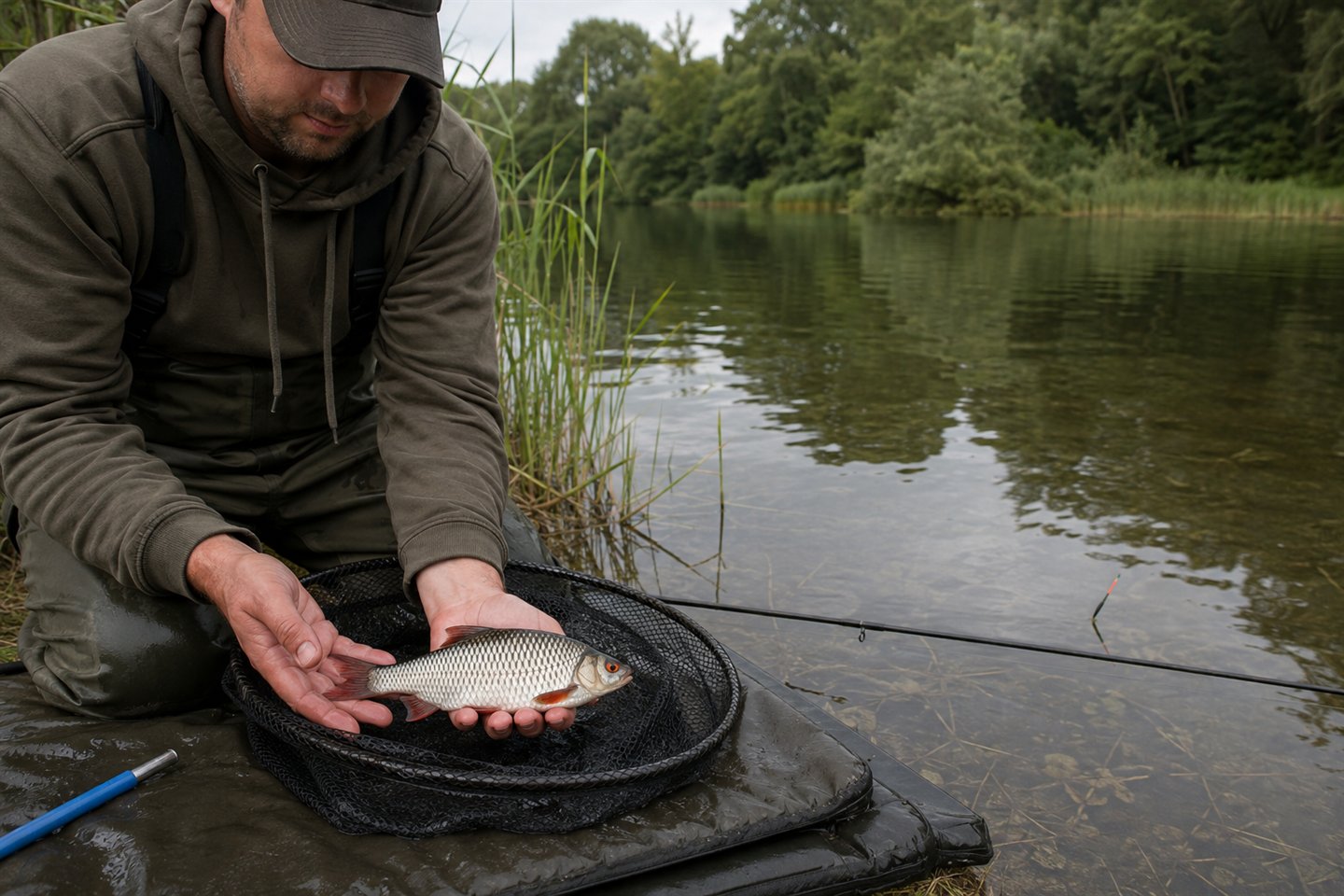
Roach usually have a silvery body, darker back, red or orange tones in the fins and a mouth that doesn't turn sharply upwards. Rudd can look similar but typically have a more upturned mouth and different fin position. Hybrids also occur, so identification from one colour feature is unreliable.
For ordinary catch and release, uncertainty rarely changes fish care: keep the fish wet, supported and out of water briefly. For records, matches or survey reporting, ask a competent organiser or fisheries specialist. Never handle a fish longer while trying to force an identification from a phone image.
Find roach before choosing fine tackle
Small roach may show as dimples, tiny rolls or flashes close to cover. On stillwaters, look along reed edges, shelves, shade and the downwind side when it remains safe. On canals, the base of near and far shelves, boat channels and permitted cover can hold shoals. In rivers, steady glides and current seams are useful starting points.
Activity changes through the day. Roach may feed shallow when loose bait falls regularly, then settle deeper as disturbance or light changes. A line that produced at dawn is not guaranteed at noon. Observe the water while setting up and keep one alternative depth available.
Don't fish directly into an obstruction because fish are visible there. Feed can sometimes draw a shoal towards an open edge. The chosen spot must allow every hooked fish, including an accidental bream, tench or chub, to be landed without trailing tackle.
Choose the float method for the water
A waggler attached at the bottom suits many stillwaters and wider canals because much of the line can be sunk beneath surface drift. A pole float gives direct, precise control at a fixed line. A stick float is designed for running water and can carry shot through a controlled trot.
The float fishing rod setup guide explains the full rod-and-reel arrangement, while the waggler beginner guide develops stillwater use. Select one method rather than combining instructions from floats designed to work differently.
A float's carrying capacity is a practical tool. More capacity can control a rig in wind, flow or depth; less can present a small bait delicately in calm shallow water. Sensitivity comes from correct shotting and visible movement, not from using the smallest float regardless of conditions.
A balanced float rod and reel
A light match or float rod with a responsive tip protects small hooks and hooklengths while retaining control of better fish. Its length should suit casting range, line management and peg space. A modest fixed-spool reel with a smooth clutch and fresh line is sufficient for most beginner stillwater roach fishing.
Check rod sections, guides, reel fitting and line before every session. A damaged guide can cut line; old coiled line can drag the float and obscure bites. Fill the spool correctly rather than to the lip if excess line springs off during casting.
Main line, hooklength and hooks
Choose main line to cast and control the rig while coping with the water's snags and largest likely fish. A finer hooklength can improve presentation and provide a replaceable controlled link, but it must remain strong enough to land fish efficiently. Very light tackle that prolongs every fight is not refined angling.
Hook size numbers are not standard physical measurements across brands. Match the hook's gape and wire to the bait. Bread punch may sit on a small fine-wire hook, while several maggots need enough gape to leave the point clear. Use the fishery's required barbless or micro-barbed pattern.
Pull-test each connection and inspect the hook after striking gravel, wood or a platform. Replace a blunt or opened hook. A sharp suitable hook often improves clean contact more than moving through several sizes.
How to catch roach with a waggler float
Attach the waggler at its base using locking shot or an appropriate adaptor. Place most of the required loading near the float, then arrange smaller shot down the line to control the fall. The exact pattern depends on depth and whether roach are feeding near the bottom or intercepting bait as it drops.
The 20-piece straight and insert waggler set (paid link) includes a selection of straight and insert patterns. Check how they are marked and attached. A float set is useful for options, but the angler still needs to choose one capacity that can be shotted correctly.
Cast beyond the feed, feather the line before the float lands, then sink line by dipping the rod tip and turning the reel where appropriate. Don't drag the hookbait far through the swim. Practise this sequence without feeding until it lands neatly.
Plumb the depth accurately
Attach a suitable plummet and cast or lower to the chosen line. Adjust float position until the depth is understood, testing around the spot rather than at one point. A shelf, small depression or patch of soft silt can explain why bites occur on one side.
The detailed guide to plumbing the depth covers on-bottom, just-off-bottom and shallow settings. For the first test, present the hookbait close to the bottom where roach often feed, then change depth deliberately if bite behaviour suggests fish are higher.
Recheck after wind, boat traffic or a move. On a rod-and-line setup, mark a far-bank feature and casting distance. A perfectly measured depth has little value when the rig lands several metres away on the next cast.
Shot for a controlled fall
Shot near the float creates stable casting weight, while shot spread down the line slows and controls the hookbait's descent. A bulk with a few droppers reaches the bottom quickly; evenly spread small shot gives roach more opportunity to intercept a falling bait.
Begin with a simple pattern and observe. If bites happen before the float settles, fish may be taking on the drop. If the bait is stolen without a registered bite, the lower shot may be too far from the hook or the rig may be falling through fish without control.
Use only legal non-toxic shot sizes and close them without damaging line. A search for a non-toxic split shot and float-fishing plummet (paid link) shows dispensers and depth tools. Confirm markings, secure closure and current legal compliance rather than relying on old inherited shot.
How much float tip should show?
Shot the float according to its maker's marks and intended design, leaving a tip that remains visible in the light and wave. A tiny dot that the angler cannot see is not more sensitive. A long unshotted stem can resist a bite and hide lift movement.
Test the assembled rig in representative water. Add or remove the smallest appropriate adjustment rather than squeezing random shot onto the hooklength. Keep polarised or prescription eyewear current and never strain at a float beyond reliable sight.
What bait should I use for roach float fishing?
Maggots are versatile and can be hooked singly or in small combinations. Pinkies provide a smaller mouthful, casters can select a different stamp, and bread punch creates a compact bait. Hemp is often used as feed with a hookbait such as caster or tare by more experienced anglers, subject to rules.
Start with one small bait and one alternative. The existing coarse bait guide explains the broader options. Freshness and correct hook placement matter: leave the hook point clear and replace damaged, emptied or waterlogged bait.
Don't assume larger bait always finds larger roach. It may instead reduce bites or attract a different species. Use a bigger mouthful as a measured trial after the shoal is feeding, and compare the actual catch rather than the intention.
How much loose feed should I use for roach?
For maggot or caster fishing, begin with a few baits delivered to the same point. Use fingers, a small catapult or a pole pot at the range each controls. The loose feed and hookbait should travel through the same water as closely as current and depth allow.
A search for a coarse fishing bait catapult for maggots (paid link) is one current option. Compare pouch size and elastic strength. Choose one that delivers the required small amount at the fishing range; excessive power spreads bait and creates safety risks.
Feed by response. If roach compete and bites accelerate, maintain or slightly increase frequency while keeping each dose small. If bites vanish after feed lands, reduce quantity, refine accuracy or allow more time. Large balls and handfuls can fill small fish and draw the shoal away from the hookbait.
Groundbait, bread and hemp
A small amount of fine groundbait can create scent and particles without feeding many solid mouthfuls, but its mixing and placement determine where it works. On a slope, a heavy ball may roll. In flow, a light cloud may travel well downstream. Follow venue limits and begin conservatively.
Mashed or liquidised bread can complement bread punch in cold clear water. Feed tiny pinches that reach the intended depth. Loose clouds look attractive to the angler but can move roach away from a bottom rig if introduced too high or too widely.
Prepared hemp can hold roach searching, yet a bed of seed may make a different hookbait less obvious. Introduce small amounts and watch whether caster, tare or another permitted bait is taken. Don't prepare unfamiliar dry particles without reliable supplier instructions.
Recognise roach bites
A roach bite may pull the tip under, lift it as a lower shot rises, hold it against normal tow or move it sideways. Learn how the correctly shotted float behaves without a fish. Strike when movement differs positively from that background rather than waiting for one textbook pattern.
Use a short controlled lift. A hard sweep can tear a small hookhold and throw the rig into trees. Maintain a bend in the rod and guide the fish away from the feeding line where possible, using the reel clutch for an unexpected stronger fish.
Several rapid dips with no contact can mean tiny fish are attacking the bait, the hook point is masked or the rig is not registering the lower line. Inspect first. A smaller bait, shallower depth or lower dropper may help, but change one component.
When roach feed shallow
Regular loose feed can bring roach up through the water, especially in mild conditions. Signs include bites before the float settles, bait taken on the drop and fish flashing near the surface. Move the float down in measured steps rather than instantly fishing inches deep.
Shallow fishing increases tangles if line between float and hook is uncontrolled. Use an appropriate shot pattern, feather the cast and avoid long drops beneath a short float. Keep feeding small and frequent only while the catch rate supports it.
Stillwater approach
On a lake, begin near a shelf, reed edge or comfortable open-water line. Wind can create surface drift and undertow, so sinking the line behind a waggler may improve control. If the float keeps travelling, a slightly heavier pattern or a closer line may be better than adding excessive depth.
Roach may move with light and pressure. Keep a close line available even when starting farther out. A quiet margin late in the session can produce fish after bankside disturbance falls, provided bait has not been scattered there continuously.
Canal approach
Plumb the near shelf, boat channel and far rise within safe range. The canal fishing beginner guide explains navigation and towpath etiquette. Lift the rig before boats reach it and restore the swim with a tiny feed after the wake settles.
Pinkies, bread punch and small maggots suit many canal roach, but club bans and nuisance species influence bait. Fish may regroup beside cover or at the base of a shelf after disturbance. Test close lines before casting tight to moored craft.
River approach
In a steady glide, loose feed slightly upstream so it sinks through the float's path. Control a stick float without dragging it across currents, and vary holding back to learn the response. The safest catching point remains within a pre-checked downstream landing route.
Roach can share the river with dace and chub, so tackle must cope with those fish. Don't reduce hooklength simply because the first captures are small. A balanced setup lands incidental fish efficiently and leaves less tackle after breakage.
Seasons and changing conditions
In spring, check close seasons and avoid spawning activity. In summer, roach may feed across depths, but hot stillwaters and sluggish canals can lose oxygen. Follow fishery restrictions, minimise retention and stop if fish show distress.
Autumn can bring steady shoal fishing as water cools. In winter, roach often group in deeper or sheltered areas and respond to smaller, slower feed. Bread punch, pinkies and fine groundbait can be useful, but location and controlled quantity remain more important than bait reputation.
Cold hands reduce unhooking control. Wear layers that preserve dexterity and shorten the session before handling becomes clumsy. A winter fish deserves the same wet, prompt routine as a summer one.
Land and unhook roach well
Set up a soft knotless landing net before fishing. Small roach can sometimes be brought to hand over the open net, but larger fish and any uncertain capture should be netted. Never swing a fish onto concrete, boards or a dry bank.
Wet hands and support the fish without squeezing. Use a correctly sized disgorger for a small hook, keeping fingers away from gills and eyes. If deeply hooked and the safe action is unclear, keep the fish wet and seek competent help quickly.
The coarse fish care guide covers landing, unhooking and return. Photograph only when it can be done low over a wet mat and without delaying release. Return the fish once it is balanced and responsive.
Common problems
If the float will not settle, check depth, tangles, bait weight and shot total. If it drifts, assess wind, tow and line control before adding shot. If bites occur without contact, inspect the hook point and bait, then adjust the lower rig.
If bites stop after several fish, try a slightly different depth or feed less before abandoning the line. The shoal may have backed away from repeated casting or a predator may have moved through. A short rest can be more effective than throwing extra bait.
If only tiny fish are caught, test a larger caster, bread flake or deeper line without assuming large roach are present. Venue stock information and seasonal behaviour set realistic expectations. Good fishing cannot create a specimen population.
Frequently asked questions
What depth should roach be fished at?
Start close to the bottom after plumbing, then move shallower if bites arrive before the float settles or feeding fish rise. Roach can occupy any depth, so use bite timing rather than a fixed rule.
How often should maggots be fed?
Begin with a few at regular, accurate intervals and watch the response. Feed more frequently only when roach are competing; reduce it when bites slow after each dose. The size of each feed matters as much as frequency.
What float is best for roach?
Use a waggler for controlled stillwater casting, a pole float for direct precision or a stick float for a river glide. The best float carries enough shot to present cleanly and remains visible in the conditions.
Do large roach need very fine line?
No. Presentation should be refined, but the whole setup must control the largest likely fish and resist the water's hazards. Choose balanced line, hooklength and hook rather than pursuing the lowest diameter.
Final thoughts
To catch roach on the float consistently, make the basics repeatable: find a shoal, plumb the line, shot the float correctly and feed small amounts accurately. Let the timing of bites show whether fish are near the bottom or rising through the feed.
Keep watching the float, feed little and accurately, and have your unhooking gear ready. A couple of fresh baits and a simple rig give you plenty to work with. Once you get used to spotting those small changes in the tip, roach fishing can be a very satisfying way to spend a few hours.
Sources and further reading
Canal & River Trust: beginner's canal fishing guide describes common canal species, basic float tackle and permissions.
Canal & River Trust: large maggots as coarse bait covers hook placement, storage and canal use.
GOV.UK freshwater rod-fishing rules explain licences, regional byelaws and legal responsibilities.
Angling Trust: Best Practice Guide to Freshwater Angling covers fish care, warm-water risk and responsible angling.