Bream fishing rewards a little patience and a repeatable cast. Start by finding a suitable spot, then keep your hookbait and feed together. We'll cover simple float and feeder approaches and what to change when bites are hard to spot.
For a first bream session, you need a balanced feeder rod, reliable reel line, a fish-safe rig, a selection of permitted feeders and two straightforward hookbaits. The filled feeder must remain within the rod's casting rating. More distance and more groundbait don't compensate for an unknown lakebed or a line that cannot be repeated.
We'll focus on common bream and smaller skimmers in stillwaters, canals and slower rivers. Check access, seasons and fishery rules before you go, and have your landing and unhooking gear ready. A mixed venue may produce other species, so the tackle needs to cope with those too.
How to catch bream on the feeder with a repeatable cast
Find a safe open-water line near a depth change, wider area or known bream route. Use a simple free-running cage or open-end feeder with a suitable hooklength and hook. Cast to one marker, let the feeder settle, tighten gently to the quivertip and recast at controlled intervals while the swim is being built.
Start with a modest amount of correctly mixed groundbait containing a few hookbait samples. Use maggots, casters, worm, sweetcorn or another permitted bait. When indications and bites begin, repeat the successful distance and feed; when the swim remains blank, check bottom, bait release and location before increasing quantity.
Why feeder fishing suits bream
Bream are deep-bodied coarse fish that commonly feed near the bed on invertebrates and other small food. They occur in shoals in many lakes, reservoirs, canals and slower rivers. A feeder places attraction and hookbait close together at a depth where they naturally search.
The method also gives the angler a stationary visual reference. A correctly set quivertip shows current, wind, line bites and feeding bites differently over time. Learning that background is easier than chasing an unseen shoal with random casts.
Feeder fishing is not self-hooking by default and doesn't make every fixed arrangement safe. The beginner should use a straightforward running setup that complies with the fishery. The feeder fishing beginner guide explains the complete first rig and casting sequence.
Permission, seasons and venue rules
In England and Wales, anglers aged 13 or over require the appropriate rod fishing licence, and separate fishery or landowner permission is needed. The river coarse close season runs from 15 March through 15 June inclusive, with some canals and designated stillwaters also covered. Regional byelaws and club closures must be checked.
Venue rules can specify feeder type, maximum hook size, line, bait limits, barbless hooks, landing nets and keepnets. Some commercial fisheries allow only free-running inline feeders; others ban certain baits or insist on fishery feed pellets. Obtain the latest rules before assembling rigs.
Don't assume a match video represents pleasure-fishing rules. Competition retention, bait limits and assistance can differ even at the same venue. If a component's safety status is unclear, show the complete rig to the fishery rather than describing only its feeder.
Recognise bream and skimmers
Common bream have a deep, laterally flattened body and a high back. Younger, smaller fish are often silvery and commonly called skimmers; mature fish can be darker or bronze. Silver bream and hybrids can cause confusion, particularly when identification rests only on colour.
For normal catch and release, uncertainty doesn't change the core routine. Wet hands and equipment, support the fish, avoid gills and return it promptly. For competition or record purposes, ask the organiser or a competent fisheries expert rather than extending handling for photographs.
The existing silver fishing guide introduces bream alongside roach and chub. This article concentrates on feeder presentation and shoal management rather than attempting another general species overview.
Where bream are likely to feed
On stillwaters, look for deeper water, gradual slopes, broad shelves, old stream beds and open areas between weed. A wind that has pushed for some time can move food and coloured water, but safe access and the lake's shape matter more than a simple rule to follow the wind.
On canals, wider and deeper features such as junctions and winding holes can hold bream. Navigation has priority in turning areas, and an angler may need to remove line and equipment. The canal beginner guide covers safe peg choice and boat response.
On rivers, bream tend to favour slower, deeper reaches, steady glides and areas away from severe turbulence. A feeder must hold predictably without rolling into an obstruction. If the river is rising quickly or carrying debris, postpone rather than trying to pin a heavier rig in place.
Signs include broad rolling fish, pinprick bubbles, coloured patches and liners across the quivertip. These can support a location choice but are not proof. Cast carefully to learn the bottom and keep a second line available only when both can be fished accurately.
Choose a feeder rod and reel
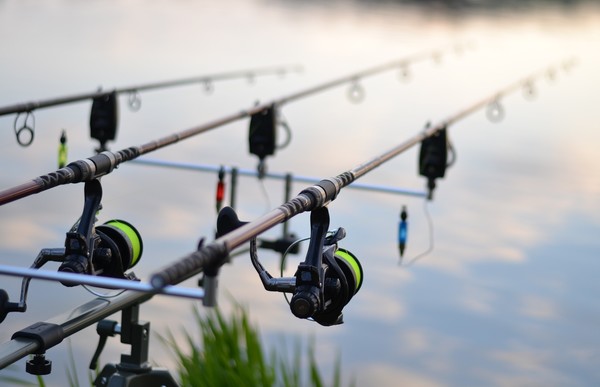
A feeder rod has interchangeable or graded quivertips and a casting rating. Select length and power for the water, range and filled feeder. A short light rod may suit a small lake; a broader reservoir or river can require more power, but tackle should not be scaled up without need.
A modest fixed-spool reel with a smooth clutch, reliable line lay and enough capacity balances the rod. Use fresh line suited to casting and the largest likely fish. Fill the spool correctly and check the clip if it will be used; a damaged sharp clip can weaken line.
The Hunter Pro 11ft feeder rod-and-reel combo (paid link) is one current option. Check its rod rating, supplied tips and reel size. Confirm whether the stated casting weight includes a full feeder and replace unknown pre-spooled line when its age or diameter is unclear.
Pick a quivertip for conditions
The lightest tip is not automatically most sensitive in use. It must hold a readable curve against wind, tow and feeder weight without being dragged fully round. A tip that moves continuously creates less useful information than a slightly firmer one with a stable baseline.
Manufacturers mark tips by test curve or colour, but systems vary. Use only tips designed for the rod and seat them fully into clean joints. Check for cracks and protect them in a tube during transport.
After casting, tighten gently until a small curve forms. The line should communicate movement without shifting the feeder. If the tip continues to pull round, the feeder may be moving, weed may be collecting or the line angle may be wrong.
How to set up a running feeder rig for bream
Thread the main line through the feeder attachment or use a purpose-made running link, then add a protective bead where the design requires it and tie to a suitable swivel. Attach a hooklength that remains replaceable and moves freely. Follow the fishery's exact rig definition.
Test that the feeder runs as intended and cannot jam against an oversized knot or incompatible stop. Pull-test all connections. If the main line parts, a fish should not be left towing a fixed heavy assembly because two components locked together unexpectedly.
A short anti-tangle sleeve may help separate the hooklength where allowed, but neat casting technique matters more. Feathering before impact and keeping controlled tension as the feeder falls reduces the chance of the hooklength wrapping around it.
Cage, open-end or method feeder?
A cage feeder lets groundbait wash through its openings and provides a visible rate of release in margin tests. An open-end feeder holds groundbait between its ends and can carry a small core of particles. Both work well for general bream fishing with a running rig.
A method feeder compresses bait around a flat or shaped body and uses a short hooklength. It is a different presentation and often governed by specific commercial rules. The method feeder guide explains moulding, hookbait placement and safe setup.
For a first bream session, a small cage or open-end feeder makes bait release easy to understand. A search for a cage and open-end coarse fishing feeders (paid link) shows different weights and capacities. Compare empty and filled weight, attachment and material.
Choose feeder weight by behaviour
Use the lightest filled feeder that can be cast accurately and remain predictable. On stillwater, excess weight increases disturbance without necessarily improving presentation. In flow, too little weight may roll; the solution can be a closer line or calmer swim rather than an indefinitely heavier feeder.
Count groundbait weight as part of the load. Wet mix, particles and a feeder together can exceed the rod's rating even when the stamped lead weight looks safe. Weigh a representative filled feeder at home if uncertain and leave a sensible casting margin.
Change weight when the current, wind or distance requires it, then make several controlled casts before judging. Different feeder shapes grip and fly differently. Don't force a full-power cast until the complete setup has been practised at shorter range.
Main line, hooklength and hook
Main line must withstand repeated casting and the water's abrasion. The hooklength provides presentation and a controlled replaceable link, but should not be so fine that ordinary bream take excessive time to land. Account for tench, chub or other stronger coarse fish on mixed waters.
Hook choice follows bait. Several maggots need enough gape to leave the point clear; worm may require a wider pattern; sweetcorn can be hooked directly or presented by another venue-approved arrangement. Check barbless rules and replace a hook damaged by gravel or a snag.
Hooklength length changes bait separation and bite registration. Begin with a moderate length recommended for the method and water, then shorten if bites are positive but missed or lengthen if wary fish seem to contact and leave. Avoid changing length, hook and bait together.
What groundbait should I use for bream fishing?
Bream groundbait should leave the feeder on the bottom within a useful time, not explode in the air or remain as a plug on retrieval. Add water in stages, allow the mix to stand as directed and riddle where appropriate. Test a small feeder in the margin at the water's temperature.
The groundbait for beginners guide covers mixing and adjustment. Colour, fishmeal content and flavour can matter, but consistency and quantity are the first controls. A famous mix packed incorrectly is still poorly presented.
The Korum EVA groundbait bowl and riddle set (paid link) is one current compact option. Check mesh size, bowl capacity and packed space. Keep tools clean and don't rinse leftover bait into the water.
Add particles with restraint
Chopped worm, casters, maggots, sweetcorn, hemp and small pellets can provide food samples inside groundbait where allowed. Begin with a low proportion. Too many solid items can feed a small shoal before the hookbait is found or attract species the rig is not designed to handle.
Keep wet bait from changing the mix unexpectedly. Chopped worm and tinned corn add moisture; dry pellets can draw it. Prepare a small active batch rather than altering the whole bag, and store the reserve sealed.
When bream are feeding, topping up with a few samples in each feeder can hold them. When only liners occur, don't automatically add more. The fish may be above the bed, outside the casting circle or disturbed by frequent recasts.
Hookbaits for bream
Maggots and casters provide small versatile hookbaits. Worm sections offer movement and a larger profile, while sweetcorn creates colour and durability. Permitted soft pellets can work on commercial or mixed waters. Carry two main options and a third only when the venue's fish respond differently.
Mount bait so the hook point and gape remain clear. Replace punctured maggots, empty caster shells and waterlogged bread. A bait that has survived a cast is not necessarily still fishing correctly after small fish or crayfish investigate it.
Change bait after the rig and feed have been shown to work. If no bream are present, cycling through six hookbaits creates false precision. Location, accurate delivery and release remain the first questions.
How to keep casting to the same bream feeding spot
Choose a far-bank marker and make a comfortable exploratory cast. When the feeder lands on a suitable area, use the reel clip only if it is sound and the casting technique can absorb the stop. Measure the distance on banksticks or another repeatable system before moving.
Feather the feeder near the end of flight, lift the rod into the clip and follow it down on controlled line. This reduces impact and helps the hooklength straighten. Never point the rod directly at a hard clip hit with no cushioning.
After casting, place the rod in the same rest position and tighten consistently. Accuracy includes line angle and tip setting, not only splash point. A feeder that lands together but is pulled a metre during tightening will spread the swim.
Build the swim without overfeeding
At the start, several small feeder casts can establish attraction, but the right number depends on feeder size, stock, season and session length. Count the actual bait, not just casts. A large feeder can deliver several times more than a small one.
Begin conservatively when conditions are cold or stock is uncertain. Recast at a planned interval while checking release, then slow once bait is present. If bream arrive, a catch can justify another feeder; if the swim remains lifeless, adding continuously may make recovery harder.
Bream shoals can produce a sequence of fish. Keep casting accurately after the first capture, but complete fish care before racing to rebait. The shoal will not be helped by a dropped fish or loose hook on the platform.
Read the quivertip
First learn the normal curve and vibration caused by wind, tow and line. Liners can create pulls or springs as fish contact the line. A feeding bite may show repeated taps, a steady draw or a drop-back; strike shapes vary with rig, hooklength and direction.
Lift smoothly rather than sweeping violently. Maintain a bent rod and guide the fish away from the feeding line. Bream can use their deep body to resist sideways, so steady pressure is more effective than pumping them quickly.
If bites are fast and missed, inspect hookbait and point, then consider a shorter hooklength or different bait size. If only liners appear, the feeder may be among fish while the hookbait is poorly positioned, or the shoal may be above bottom. Change one variable and record the response.
Land and unhook bream safely
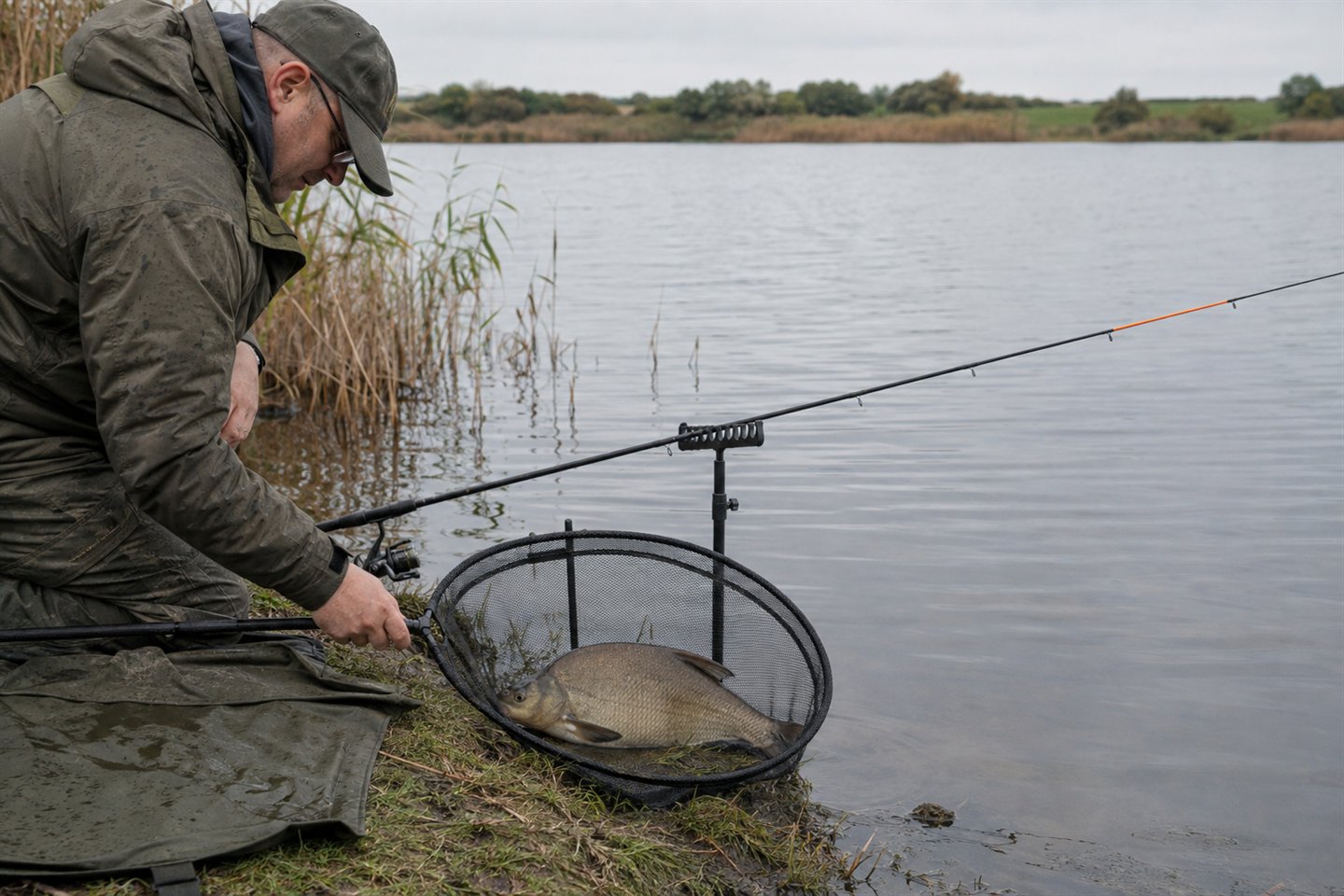
Use a soft knotless landing net with a head large enough for a deep-bodied fish. Draw the bream over submerged mesh and support the frame when lifting. Don't hoist a large bream by the end of an extended handle or lift it on the hooklength.
Wet the unhooking mat and hands before contact. Keep the fish low and supported, check that fins lie safely and remove the hook with a disgorger or forceps. Large bream carry substantial body weight and should never be left on a hard or dry surface.
The coarse fish care guide explains landing and return in more detail. Release promptly once the fish is balanced. In a match, follow keepnet and weight limits and monitor retained fish closely.
Warm-water welfare
Warm water holds less dissolved oxygen, and larger fish can take longer to recover after a fight. Follow fishery notices, minimise handling and avoid unnecessary retention. If bream or other fish are gasping, gathering abnormally or failing to recover, stop fishing and notify the manager.
Early or late sessions may offer cooler conditions where permitted, but time of day is not a substitute for measuring or observing water. A heatwave can leave shallow, still water stressed overnight. The fishery's closure or more cautious rule comes first.
Seasonal adjustments
In spring, confirm close seasons and avoid spawning fish in shallow vegetation. After legal reopening on rivers, location and flow may matter more than an established bait bed. On stillwaters, a mild spell can move bream towards shelves without proving they want heavy feed.
Summer can support active feeding, but bait must stay fresh and fish care becomes more important. Autumn often produces shoal catches as fish use established deeper routes. In winter, locate first, reduce solid feed and lengthen patience; a small accurate feeder can be more useful than a large food load.
Stillwater, canal and river differences
On a lake, wind and undertow affect the line even when the feeder holds. Sink or position line to reduce surface movement while retaining bite communication. On a canal, boat traffic requires the rig to be retrieved in good time and the swim rebuilt after disturbance.
On a river, feeder shape and line bow determine whether the rig holds. Cast slightly upstream only when doing so creates a safe, controlled settling path. A rolling feeder that crosses other swims or reaches snags is not a searching tool.
Keep the core rig simple across all three. Change feeder weight, groundbait release and hooklength for conditions rather than rebuilding it as a fixed arrangement. Familiar mechanics make water-specific adjustments easier to understand.
Common reasons a bream feeder swim fails
The feeder may be landing on weed, very soft silt or a slope that moves the bait. Groundbait may stay inside or burst on impact. The casting circle may be too broad, or frequent recasting may disturb a cautious shoal. Inspect each possibility in that order.
Too much feed is another cause. Large quantities don't summon fish from an empty area and can satisfy a small number quickly. Reserve bait until indications show that bream are visiting.
Finally, the venue may simply hold few bream in that area or season. Ask for current stock and location information, and accept that a good process can produce a small catch. Avoid making the tackle dangerously fine in pursuit of a result.
Frequently asked questions
What feeder is best for bream?
A small cage or open-end feeder on a safe running rig is an understandable starting point. Choose weight and capacity for distance, flow, bait amount and rod rating. Method feeders are a separate presentation governed by venue rules.
How often should the feeder be recast?
Recast more regularly while establishing a modest feed and checking release, then adapt to bites and conditions. There's no universal minute count. Frequent casting can overfeed or disturb fish when the feeder is large.
What is the best bream hookbait?
Maggots, casters, worm and sweetcorn are dependable where permitted. Choose a bait that matches the feed and leaves the hook point clear. Location and accurate casting matter before flavour.
Should the line be clipped?
A sound reel clip can improve repeatability when used with a cushioned cast, safe range and suitable line. Don't clip close to snags or use a damaged clip. Measure the distance so it can be recovered after a break.
Final thoughts
To catch bream on the feeder, make one area easy for a shoal to find and easy for the rig to repeat. Use a free-running setup, test groundbait release, cast to a marker and let evidence determine how much more feed is introduced.
Have the net, mat and unhooking tools ready while things are quiet. When a bream shoal arrives, you want to land and return fish calmly, then put the next cast back on the feed. Keep the routine steady rather than rushing to add more distance or a bigger feeder.
Sources and further reading
Canal & River Trust: bream species guide covers habitat, identification, shoaling and common baits.
GOV.UK freshwater rod-fishing rules explain licensing, close seasons, local byelaws and permission.
Environment Agency national rod-fishing byelaws set out current tackle, net and rod rules for England.
Angling Trust: Best Practice Guide to Freshwater Angling provides fish-care, warm-water and biosecurity guidance.