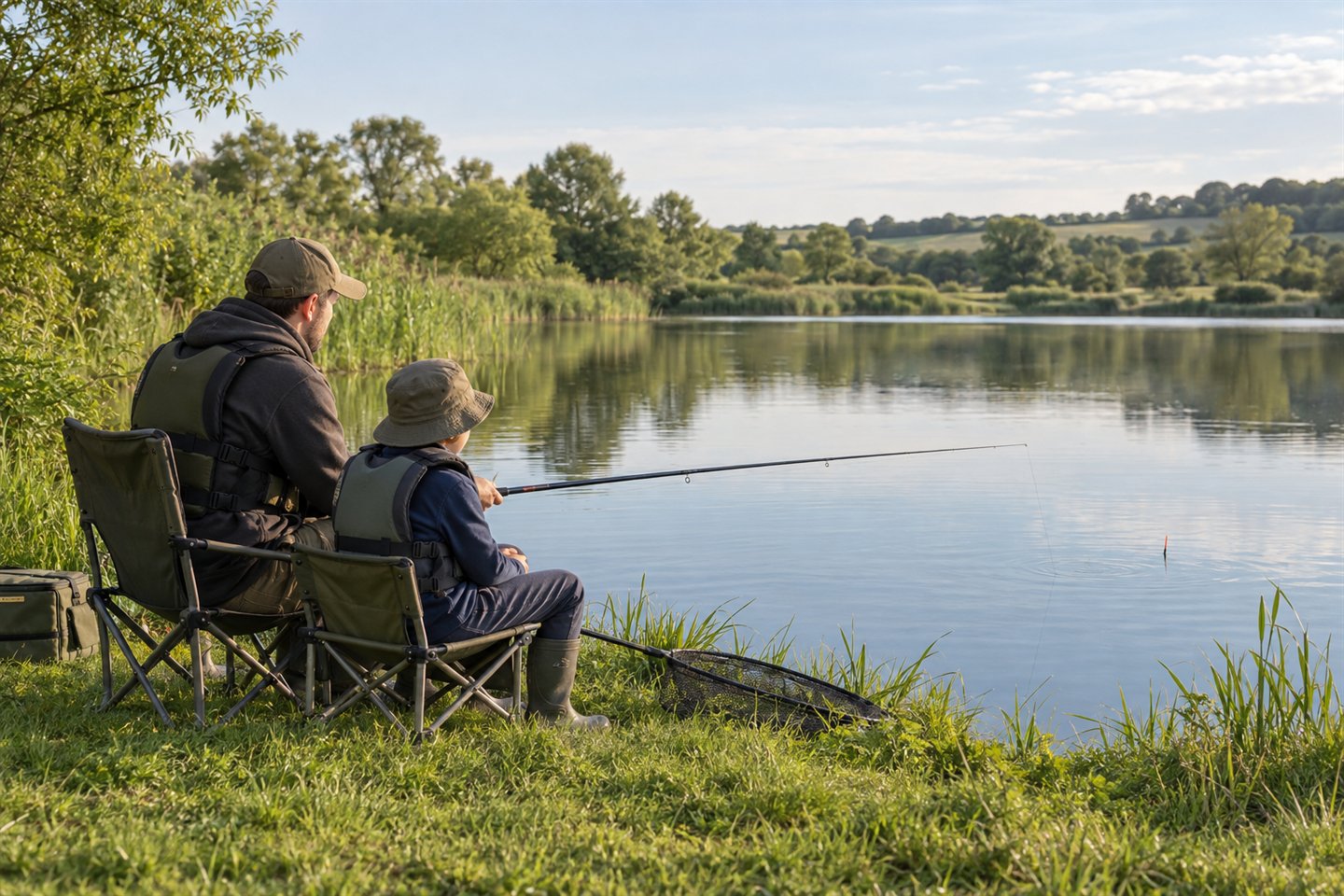
Taking children carp fishing? A comfortable swim, manageable tackle and a realistic session length can make the day much more enjoyable. Keep the plan simple and leave time for questions, snacks and the things they notice around the lake.
Carp can be exciting, but waiting for a single large fish is not automatically the best first experience. A mixed water with manageable fish and opportunities to watch a float may offer more involvement. Be ready to enjoy smaller catches or a different species, and choose the venue for the whole session rather than its largest advertised carp.
This guide is for parents, carers and other responsible adults planning a first informal outing. If you're new to fishing yourself, an organised beginner event with appropriate coaching can be a much easier introduction. You don't need to become an expert before sharing the interest, but the adult responsible must be able to supervise and manage the chosen activity safely.
Taking children carp fishing: what makes a good first visit?
Ask what interests the child about going. They may want to see fish, try casting, use a float or spend time outdoors with you. Start with that answer instead of assuming they share your ambition to catch a particular size. A child who enjoys spotting fish may be more engaged by a quiet walk and a short margin session than by distant rods on alarms.
Explain the likely experience in ordinary language: there may be waiting, the weather can change and a fish is not guaranteed. Keep the explanation positive without making promises you can't control. Saying that you'll learn how the tackle works and see what happens gives the visit a clear purpose even if the carp don't feed.
Use the first-session walkthrough to organise the adult's preparation, then simplify what the child needs to do. They don't need every term or rig detail at once. One clear action, followed by a chance to try it, is more useful than a long explanation delivered while they are eager to begin.
Consider a coached introduction
An organised beginner session can provide suitable equipment, a chosen venue and instruction matched to experience. Ask what the event includes, who supervises participants and whether a parent or carer must remain. Don't assume that booking an activity transfers every responsibility or that all events have the same age requirements.
The Angling Trust's current guidance on beginner coaching standards recommends checking coach licensing, safeguarding, supervision and emergency arrangements. A reputable organiser should welcome these questions. The important point is a clear, suitable experience, not choosing the event with the most ambitious capture photographs.
Tell the organiser about relevant access, communication or support needs in advance. Ask how the actual session can be adapted rather than relying on a general inclusive description. Good preparation allows the child to take part comfortably and helps the adults decide whether the event is a suitable introduction.
Choose a venue that supports the day
Look for a manageable bank, room behind the casting position and a landing area the adult can use confidently. Toilets, drinking water and a short walk from the entrance can matter more than fish size. Ask the venue which water or swim is suitable for a first family visit; a complex's specimen lake may not be its best beginner option.
Inspect the swim before unpacking. Avoid steep edges, slippery platforms, unstable ground, deep margins and places requiring wading to land fish. A busy public path directly behind the rod can create another problem. If the setting makes close supervision difficult, choose a different swim or venue rather than expecting equipment to compensate for an unsuitable location.
Check access hours, companion rules, ticket arrangements and any age restrictions. Ask whether two people can share the intended fishing space and what equipment is supplied. The water-choice guide helps compare arrangements, but a child-friendly claim should always be tested against the details of your actual visit.
Check licences and permissions properly
For England and Wales, children under thirteen don't need a rod licence, while those aged thirteen to sixteen need a free junior licence. The accompanying adult needs a licence if fishing themselves. Check the current official licence guidance, including the intended rod use, rather than assuming a parent's licence automatically covers the child's fishing.
Venue permission remains separate. A free junior licence doesn't mean free admission, unrestricted access or exemption from the fishery's rules. Confirm the child's ticket and the adult's role directly with the venue. If attending an organised event, ask whether any specific licensing arrangement applies to that event instead of assuming all coaching sessions are exempt.
Scotland and Northern Ireland use different arrangements; consult the appropriate official guidance and the water's rights holder. Keep the explanation to the child simple while the adult deals with the paperwork. Being prepared before arrival leaves more attention for the enjoyable part of the outing.
Plan a short visit with an easy exit
For a first outing, consider roughly an hour or two at the venue as a starting plan, adjusted to the child's age, interest and needs. That is an example, not a recommended duration for every child. It is often easier to extend an enjoyable short visit than to rescue an overlong session that has become uncomfortable.
Allow time for arrival, looking at the water and a calm setup. The fishing period itself may be shorter than the total visit. Keep the finish flexible enough to stop when interest or comfort drops, rather than insisting on using every minute of a purchased ticket. Leaving while the child still wants to return can be a very good outcome.
The short-session guide explains how adults can reduce unnecessary unpacking and rig changes. For a family introduction, apply that efficiency to create attention for the child, not to squeeze in more rods or turn the visit into a competitive race for a bite.
Give supervision one clear owner
Decide which adult is responsible for the child throughout each part of the session. With several adults present, vague shared responsibility can leave everyone assuming somebody else is watching. Communicate any handover clearly. The supervising adult should remain close enough to respond to the actual hazards and the child's needs, not merely somewhere on the same bank.
If one adult is taking a young beginner, plan the fishing around that supervision. Running a separate multi-rod specimen session can divide attention at precisely the wrong moment. A single shared activity is simpler. Reel in for toilet visits, walks or any task that prevents proper control, and never leave a child alone beside baited rods.
Talk through a few immediate boundaries before opening the tackle: where to sit, where not to step, and when casting is allowed. Show those boundaries in the actual swim rather than relying on an abstract warning to be careful. Revisit them calmly if the activity changes or another person enters the area.
Make water safety part of choosing the activity
Use a location and activity that the adult can supervise safely without entering the water. Avoid leaning over edges, climbing trees to look for fish or using unstable banks for photographs. The Angling Trust's freshwater safety resources are useful preparation for recognising the wider risks around a fishing trip.
Have a charged phone, know the venue's location and access point, and establish how to contact staff. Suitable personal flotation may be needed for particular activities or settings, but it doesn't replace supervision or make a dangerous bank suitable. If unsure about the necessary safety arrangements, seek competent advice and choose a safer introduction in the meantime.
Cancel or change plans for unsafe weather, flooding or an unsuitable route. Explain the decision matter-of-factly: fishing includes choosing when not to fish. There's no benefit in teaching that a promised outing must proceed regardless of conditions. A tackle lesson at home or a later visit can preserve interest without forcing the original plan.
What tackle should I take carp fishing with children?
Consider the combined weight and balance of rod and reel, not just a junior label. The child should be able to hold and operate the equipment comfortably for the intended task, with adult help as needed. A very short rod is not automatically suitable if it makes control awkward from the chosen bank or is inadequate for the fish present.
Match the whole setup to the venue's likely catches and rules. Don't use an underpowered toy outfit to target carp simply because it is easy to carry. Equally, a heavy distance rod can make a simple near-bank introduction unnecessarily difficult. Ask a competent coach or tackle shop to help match equipment where you're unsure.
The coarse-rod selection guide explains useful differences between methods. For a first family visit, float fishing for manageable fish may provide more visible involvement than waiting behind several alarms. The appropriate method is the one that the child can participate in safely and understand.
Start with one clear method
A float provides an immediate visual focus: where it sits, how it moves and what may indicate a bite. Explain that wind, line movement and small fish can also move it, then let the child describe what they see. The float-setup guide can help the adult prepare without delivering a full tackle lecture at the water.
If using a simple ledger or feeder approach, explain the indicator and the response before a fish takes. Practise where hands go and how the adult will help. Avoid making the first real run the moment when everyone discovers how the reel's clutch operates or who is supposed to pick up the rod.
Keep baiting modest and purposeful. Let the child help with safe, manageable jobs such as choosing an allowed bait or placing a small quantity in a container. The adult controls hooks, sharp tools and any equipment requiring experience. Involvement should match readiness rather than age alone or a desire to show rapid progress.
Teach casting before adding pressure
Begin with the space around the rod: look behind, identify the clear direction and wait until the adult confirms it is safe. A suitable supervised practice area away from people can be useful, using an appropriate hook-free practice arrangement. Follow venue rules and avoid overhead power lines or any location where a missed cast creates danger.
At the water, use a modest target within comfortable range. Accuracy and control matter more than distance. The adult can perform casts initially if that makes the session safer, while the child takes part in watching the float or retrieving. There's no requirement to hand over every task during the first visit.
When correcting technique, give one change at a time. A child hearing instructions about stance, grip, timing, line release and rod angle simultaneously may struggle to identify the useful action. Demonstrate slowly and praise specific controlled actions rather than declaring every cast perfect or making distance the measure of success.
Prepare for a fish before the first bite
Set up the landing net and unhooking area before fishing, with water and suitable tools ready. Explain that the adult will manage the fish if needed and that nobody should grab the line or rush towards the edge. Practise the sequence verbally so the excitement of a bite doesn't create competing instructions.
The carp-care guide explains landing, support and prompt return. For a first session, the child can watch or help with a safe role while the experienced adult handles the demanding parts. Never make a child hold a large or lively fish for a photograph when they are unsure or unable to support it properly.
Keep any photograph brief and secondary to the fish's welfare. A picture beside a safely supported catch can be meaningful without asking the child to lift it. If the fish is unsettled or the situation is awkward, return it and enjoy the memory. There's no obligation to produce a trophy-style image from every catch.
Make waiting active without disturbing everyone
Encourage quiet observation. Look for birds, changing light, insects or visible fish from the safe area, and ask the child what they notice. Distinguish an observation from a conclusion: a splash is something to investigate, not proof that a huge carp is about to bite. This turns waiting into learning without inventing promises.
Keep a simple record together, perhaps the weather, bait and species seen. A drawing or a few words may be more engaging than a detailed catch log. Allow the child to choose what was interesting rather than turning the outing into homework. The point is to notice the environment and remember the experience.
If a walk or snack break is needed, reel in first and secure tackle. Don't leave hooks exposed while everybody explores the park. A planned break can reset attention, but it should remain a supervised change of activity rather than an excuse for the adult to continue an independent session while the child wanders.
Comfort is part of the fishing plan
Bring suitable layers, weather protection, food and drinking water, along with a practical seat and any personal essentials the child normally needs. Check the forecast and actual conditions rather than packing only for how warm it feels at home. Banks can be exposed, and sitting still changes how a cool breeze feels.
Plan clean hands before eating and keep food separate from bait and tackle. Use the available washing facilities appropriately and don't treat a rinse in lake water as handwashing. Choose manageable snacks that don't require complicated cooking or distract the supervising adult from the session.
Ask regularly about comfort without waiting for a complaint to become a crisis. Cold fingers, an uncomfortable seat or uncertainty about the nearest toilet can dominate a child's impression of fishing. Solving these small practical issues often does more for enjoyment than changing the hookbait in the hope of a faster bite.
Handle a blank without making it a failure
If no carp is caught, talk about what the child actually did: a controlled cast, identifying a float movement or helping prepare the net. Avoid pretending the fish definitely would have arrived if you had stayed longer. The visit can be successful because it was interesting and well managed, even when the hoped-for capture did not happen.
Consider changing the next session's venue, duration or method based on the child's response. More accessible mixed fishing may suit them better than another long wait for carp. That is not a step backwards. Building an interest in angling can begin with any manageable species and develop according to the young person's curiosity.
Don't compare the child with somebody else's catches online or use disappointment as motivation to persist beyond comfort. Ask whether they would like to return and what they would change. Their answer is useful information about the next outing, not a verdict on your ability to introduce them to the hobby.
Equipment worth considering
Choose a balanced, suitable rod-and-reel combination, a complete landing and unhooking setup and a comfortable seat that fits the child and the bank. Practical weather protection and secure tackle storage matter too. Avoid buying a large collection before the first visit; borrowed or coached equipment can help establish what actually works.
Small bait containers and an organised box for adult-controlled sharp items make the session easier to manage. A dependable phone-charging option can be useful when the journey is long, but test compatibility beforehand. Equipment should support supervision and comfort, not encourage the adult to add more rods or more complicated methods than the visit can sensibly accommodate.
An adult organising the trip might compare the NGT 42-inch landing net with 2m handle (paid link) with the bank and likely fish size, and Fortis Bays polarised sunglasses (paid link) with their existing eyewear for observing the margin. Neither is presented as specialist children's equipment or a substitute for supervision. A large landing net should be handled by the adult where its weight or reach is awkward. Keep the focus on a manageable shared session, use a venue's suitable supplied gear when required, and avoid buying a complete extra outfit before the child has tried fishing.
Frequently asked questions
What age should a child start carp fishing?
There's no single age that guarantees readiness for every method or venue. Consider interest, ability to follow immediate instructions, the setting and the adult support available. A short coached introduction or simple mixed-fish session may be more suitable than targeting large carp. Follow any event or fishery age conditions.
Should the child have their own rod immediately?
Not necessarily. Sharing a supervised suitable setup or using equipment at a coached event can reveal what feels comfortable before you buy. If purchasing, judge balance and suitability for the water rather than a junior label alone. The child should not be given unsuitable tackle simply because it is colourful or inexpensive.
How long should a first fishing trip with kids last?
Plan a short visit with permission to finish earlier. An hour or two at the venue can be a workable starting example, but the child's interest and comfort decide the useful duration. Keep the exit easy and avoid making the value of the ticket depend on remaining until everyone is tired.
What if the child doesn't want to touch the fish?
That is fine. They can watch a competent adult handle it and take part in other ways. Don't pressure them into holding a fish for a photograph. Respecting that preference protects both the child and the catch and allows confidence to develop without turning one task into a condition of enjoying fishing.
Give the child a say in the next visit
After packing away, ask one or two open questions about what they enjoyed and what felt difficult. They may remember feeding a few permitted pellets, seeing a dragonfly or learning the reel handle more clearly than the moment a carp was hooked. Use those answers to shape the next session instead of assuming a larger target fish is the natural reward.
Let them choose between a couple of practical options you can safely support, such as another short float session or a coached event. Avoid offering a long overnight trip as an automatic next step. Repeating a comfortable activity with a little more independence can build confidence more naturally than continually increasing duration, tackle complexity and expectations after every visit.
Finish with a reason to return
The best first session leaves a child feeling included, comfortable and curious. Choose a manageable venue, keep the fishing simple and let their experience guide the pace. Licensing and coaching references were checked on 15 September 2026; confirm current venue and event arrangements before attending. A calm, enjoyable introduction matters more than the weight of the first carp.