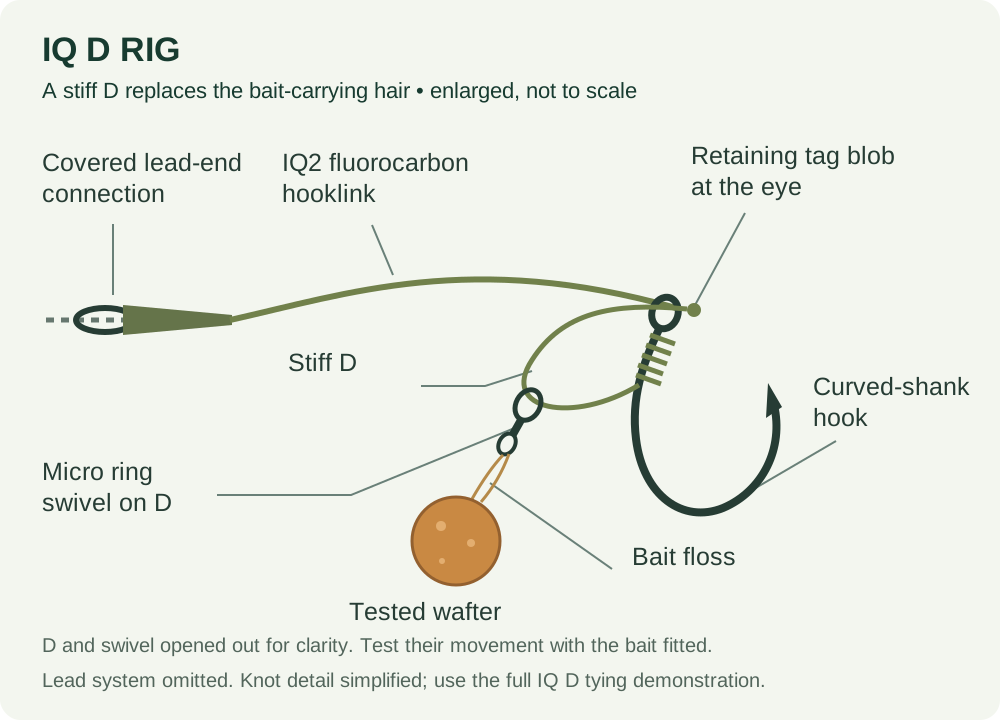
The IQ D rig gets its name from the D-shaped section of fluorocarbon behind the hook. A small bait swivel moves around that D, giving the hookbait a different attachment from an ordinary hair. We'll tie the compact, tag-return IQ2 version for a wafter, using matching components and checking the D and bait balance as we go.
It is an intermediate step after a sound hair rig, not a compulsory upgrade for every carp angler. You must be comfortable tying the hook securely, controlling the D and forming its small retaining tag without damaging the working line. Compare it with the beginner rigs guide before buying components. If you're still learning the knotless knot, practise the simple hair rig first.
What the IQ D rig actually changes
The hooklink secures the hook while its returned tag forms the D. A micro ring swivel rides on that D, and bait floss connects the hookbait to the swivel. Bait attachment and load-bearing hook connection therefore perform different jobs. Understanding that distinction makes it easier to inspect the rig: a sound hook knot cannot compensate for a bait attachment that jams, and a neat D doesn't prove the hook knot is secure.
Fluorocarbon gives the D more shape than a loose braided hair. Its diameter, stiffness and the hook's eye angle affect how the finished hook sits. The D must allow the bait attachment to move without forcing the hookbait into the point or gape. Making it larger is not automatically an improvement, because a loose oversized loop can create another place for the bait and hook to catch.
Korda's D-rig explanation describes several constructions under the same family name. This page uses the straightforward returned-tag concept, also described in Scott Sweetman's IQ2 D account. A longer separately whipped D, a moulded D-rig kicker and a D on a chod section are different rigs. Don't combine their tying stages merely because their names share a letter.
When to choose an IQ D, and when not to
A useful starting situation is a known relatively clear patch where the fluorocarbon can settle and a wafter can sit with its hook unobstructed. The rig is easier to assess when you know what it is landing on. A clean margin that can be observed safely also provides a useful place to check the baited presentation without guessing at the behaviour of a distant cast.
Be cautious on uneven debris or ground that encourages the hooklink to bridge between high points. The material is more controlled than very supple braid, but that doesn't make it suitable for every bottom. If a test shows the hook hanging awkwardly or the D trapped against debris, change the presentation or the spot rather than trying to hide the problem under extra loose feed.
Don't treat fluorocarbon as invisible. Water clarity, light, line diameter, sediment and the position of the tackle all affect what is present. The practical reason for choosing this material should be how it forms and presents the rig. Claims about a completely unseen hooklink are not a substitute for finding feeding fish and keeping the hookbait accessible.
If you want a bait held clearly above the bottom, start with a purpose-designed counterbalanced pop-up rig such as the Ronnie/spinner rig. If you want a flexible D made from braid, use the Slip-D guide. Those choices solve different presentation problems; they are not ranking positions in a league of better rigs.
IQ D rig components and tools
For the wafter hooklink
- Korda Kurv Shank hook (paid link), with the size and barb choice matched to the actual bait and fishery rules.
- Korda IQ2 fluorocarbon hooklink (paid link). Use the specified material rather than substituting an arbitrary stiff leader or clear main line.
- Korda Micro Ring Swivel (paid link) to ride on the D. This is a bait attachment, not the much larger lead-end swivel.
- Korda Bait Floss (paid link) and a suitable Mainline wafter (paid link) that balances against the chosen hook.
- Korda anti-tangle sleeve (paid link) and a compatible size-8 quick-change swivel (paid link) where the complete lead system permits them.
- Korda Dark Matter putty (paid link) only if the tested presentation needs appropriate pinning or adjustment; it is not a compulsory decoration.
Tools and working area
Clean-cutting scissors (paid link), a suitable baiting needle (paid link), a pair of Pulla tools (paid link), a container of water and a lighter for the short non-load-bearing tag. Work on a stable, well-lit surface with heat-resistant handling tools available. Keep heat away from working line, clothing and flammable materials.
Amazon links are affiliate links; we may earn a commission from qualifying purchases. Check the hook option, line specification and component dimensions before buying.
There's no rig ring, hair stop or ordinary kicker in this particular rig. The micro ring swivel replaces the ordinary hair attachment, and the D is made from the hooklink itself. A moulded D-rig kicker is an alternative construction, not something to push over the completed fluorocarbon D.
Hook-eye and material compatibility
More stiffness is not always more control. A hooklink that forces an unsuitable angle through an in-turned eye can reduce the open working space around the hook. Changing the hook pattern or material diameter therefore requires another inspection of the geometry, not simply a tighter knot.
Use the recommended combination as a starting point and compare the real parts in good light. Both the working line and returned tag need their intended path through the eye without being crushed or crossed. If the eye cannot comfortably accommodate that construction, choose an appropriate demonstrated combination instead of forcing the material through with pliers.
Read our hook-pattern guide when changing size. A numerical size label doesn't tell you the complete shape of the eye or shank. In particular, a hook recommended for a stiff pop-up section is not automatically a better replacement for the Kurv Shank used in this wafter arrangement.
This is a knotted IQ2 rig, not a crimped Boom rig. A crimp that closes around a material doesn't prove a safe connection. Don't borrow a crimp size from a spinner boom and apply it to IQ2. Likewise, don't replace IQ2 with Mouth Trap just because both can hold a curved shape; they serve different specified constructions.
How to make the compact returned-tag IQ D
Use Scott Sweetman's explanation of the returned-tag D to understand the construction below. His own version adds silicone and uses a Wide Gape X hook; those are deliberate variations, not missing items from this compact Kurv Shank rig. The Danny Fairbrass IQ D demonstration teaches a different long-D construction, so don't copy its whipping sequence into this one. Learn the complete chosen arrangement before fishing it. These checkpoints are not a substitute for practical help with an unfamiliar knot.
- Start with sound material. Cut enough IQ2 for the intended finished length, hook knot, D and lead-end connection. Allow spare working length and reject a kinked or abraded section.
- Secure the hook. Tie the demonstrated knotless-knot arrangement, retaining the tag that will form the D. Keep the whipping even, moisten and tighten it, and ensure the working hooklink exits on the intended point side.
- Add the bait attachment. Thread the micro ring swivel onto the retained tag. Its ring must travel on the D; it is not tied directly across the hook's gape.
- Return the tag. Pass it through the eye from the back towards the point side, creating a smooth D behind the shank. Adjust the loop so the swivel can travel without catching.
- Secure the short tag. Trim with enough allowance to form the retaining blob, then carefully form that blob without heating the working hooklink. Let it cool before checking that it cannot withdraw through the eye.
- Inspect before adding bait. Check the hook knot separately from the tag retention. Reject cloudy, distorted, nicked or heat-damaged material rather than hiding it.
- Finish the lead end. Add the sleeve before making the manufacturer-approved knot or loop for the compatible connection. Pull-test it separately; no crimp is specified.
- Mount and test the wafter. Attach the bait to the swivel with floss, check its security and movement, then test the complete wet rig and separate lead system.
The returned tag retains the D; it is not the knot that secures the hook to the load-bearing line. If you can't distinguish those two functions on the finished rig, pause and revisit the demonstration. A ready-tied example of the exact construction can be a useful physical reference, although it still needs inspection and a compatible complete lead arrangement.
Heat damage is a reason to discard the affected hooklink. Don't test its appearance and hope that a discoloured section is harmless. Keep the point away from your fingers while using tools, and don't carry out the heat-working stage beside aerosols, dry bankside vegetation or loose line.
Attaching the wafter without restricting the D
The bait needs to remain secure while allowing the small swivel to do its job. Use a baiting needle appropriate to the firmness of the hookbait; forcing a delicate needle through an unusually hard bait can bend it or split the bait. Arrange the floss through the swivel's bait-attachment eye and secure the bait using the floss method demonstrated for the chosen hookbait.
Don't let a large loose bundle of floss sit across the D or around the hook point. After attaching the bait, move the swivel along the loop and turn the bait gently. The attachment should move through its intended range, with enough separation that the bait cannot simply cover the hook.
A bait that turns on its attachment is not necessarily loose, but one that slides away from its retaining floss or tears around the hole needs replacing. Inspect that connection after each retrieve. Softened hookbaits can fail at the bait attachment even when the hooklink and knot remain sound.
Balance the real baited rig, not the label on the tub
Put the assembled rig into water with the hooklink slack enough to settle. A wafter should not suspend the entire arrangement like a high pop-up. Look at the hook, not just the bait: the hook must settle as intended with its point accessible rather than being dragged upright by excessive buoyancy.
Use the actual hook size and pattern when doing this test. Replacing the hook changes the weight acting against the bait, and replacing the bait with another size changes buoyancy. If the result is wrong, trim or change the hookbait carefully and test again instead of assuming that every bait from the same tub behaves identically.
Putty can be useful for a specified pinning or balancing job, but applying an arbitrary lump beside the D can prevent the small swivel moving. Identify what needs adjustment before adding weight. A thick blob also changes how the hooklink lies over debris; it is not a general repair for an unsuitable spot.
Repeat the test after a reasonable soak, especially with a new bait. Lift and resettle the rig several times to see whether the attachment returns freely or catches. This observation tells you about that assembly in the test conditions, not that every cast will reset perfectly on an unseen lakebed.
Keeping a repeatable IQ D reference
Once you have tied and checked an example successfully, record the hook pattern and size, IQ2 specification, bait-swivel size, finished hooklink length and actual wafter used. Photograph the hook end from each side while it is dry and again during the water check. Those views help distinguish a smooth D from one that only looks tidy when pulled into shape for a photograph.
Keep spare rigs protected from crushing and label them clearly. A bent or sharply creased fluorocarbon D should be inspected rather than stretched casually back into position and assumed sound. If changing to a smaller bait for the next session, test that spare again with the new bait fitted. The reference records a working combination; it doesn't certify every future hookbait or repair damage acquired in storage.
Choose and test a complete lead system
Compatible lead-clip example
Add a Korda Lead Clip Action Pack (paid link), a suitable swivel lead (paid link) and correctly loaded main line (paid link). Confirm the pack contents and exact swivel compatibility. Use the supplied swivel and its specified knot when an alternative quick-change connection is not approved.
A D describes the hookbait attachment, not the safety of the lead arrangement. Read our lead-system safety guide alongside the manufacturer's explanation of complete systems. There's no benefit in a precise hook-end rig connected to a poorly assembled clip.
Check the intended lead-release behaviour and the fish's escape route after a main-line break. Don't glue a tail rubber, force an oversized swivel into a clip or assume that a bulky leader knot passes through every component. A helicopter arrangement needs its own correct assembly; calling a hooklink an IQ D doesn't approve a random set of helicopter beads.
Casting and checking presentation
Practise at a range you can control accurately. Keep the hookbait and lead clear of people, vegetation and clothing before starting the cast. A controlled flight and landing help the hooklink extend; no fluorocarbon can guarantee that the hookbait will never fold back around the lead.
Check the retrieved D rather than assuming it has retained its original shape. A swivel jammed against whipping, a distorted loop or bait floss around the point all deserve investigation. Note whether the issue follows a particular cast or bait size, and change one factor at a time. The tangle guide explains why a recovered tangle doesn't prove exactly when it formed.
If the hooklink repeatedly returns coated in debris, reconsider the spot and the bait's position. Increasing the D's size doesn't lift an entire bottom-bait presentation above weed. Choosing somewhere the rig can settle and a fish can be landed safely is more important than preserving your original rig choice.
IQ D troubleshooting
| Problem | Inspect | Practical response |
|---|---|---|
| Swivel catches on the D | Loop shape, ring size, whipping and floss | Remake the mismatched or obstructed assembly |
| D tag pulls through the eye | Retaining blob and tag damage | Remake it; don't fish an insecure bait attachment |
| Material is cloudy near the eye | Heat exposure or crushing | Discard the damaged section |
| Hook hangs at an awkward angle | Hook-eye pattern, line diameter and D shape | Return to a demonstrated combination |
| Wafter lifts the hook | Actual bait buoyancy against this hook | Trim or change bait and retest |
| Hooklink bridges above debris | Bottom and material suitability | Change the spot or presentation |
| Lead-end joint slips | Knot, line condition and connection type | Remake and pull-test; don't hide it under the sleeve |
IQ D rig questions
Is an IQ D the same as a Slip-D?
No. This IQ2 version holds a D in fluorocarbon. The Slip-D uses a supple braided arrangement that changes shape. They share a moving bait attachment but not the same material route or construction. Follow the separate Slip-D rig if that is the behaviour you want.
Can I add a D-rig kicker to this rig?
A moulded D-rig kicker is a different way to provide the bait-carrying D. Don't add one over an already completed fluorocarbon D. Learn its own size and assembly instructions, and inspect the complete result as a separate version.
Does IQ2 need steaming?
Don't improvise a heat treatment around a finished hook knot. Follow the material maker's instructions for conditioning the actual product. Any heat used to form the small retaining tag must remain isolated from the working line.
Can the IQ D be used with sinking bait?
D arrangements can be used with different hookbaits, but this rig is explained around a tested wafter. A sinking bait changes the weight and settling behaviour. Fit it, check clearance and test in water rather than assuming the wafter result still applies.
What hooklink length is best?
There's no universally correct length. Start with a manageable length for a known clean spot and your complete lead arrangement, then assess its settling and casting behaviour. Avoid changing the hooklink length, hook, D and bait all at once, because you'll not know which alteration changed the result.
Can I use a ready-tied IQ D instead?
Yes, provided its hook, material, barb choice and bait recommendation suit the fishery. Check it just as you would a homemade rig, fit a compatible lead arrangement and test the actual hookbait. Ready-tied doesn't mean suitable for every situation.
The final check
Take a final look at the hook knot and returned tag, and make sure the swivel moves freely. Check the bait attachment and balance in water, then the lead-end connection and whole lead system. Confirm the fishery permits the setup. A neat D is satisfying to tie, but these checks are what get it ready to fish.
This guide is researched from the linked manufacturer explanations and separates compact returned-tag, long-D and moulded-D versions. Choose it for the way it presents your bait, rather than expecting it to outfish every simpler rig. Learn the construction at a table, have an unfamiliar setup checked and only fish it once you can explain what each part does.