To stop carp rigs tangling, keep an eye on what comes back after the cast. The tangle can tell you where things went wrong. We'll check the reel, cast and settling rig in that order, rather than keep adding anti-tangle bits and hoping.
A tangled rig can sit in the water looking perfectly ordinary from the bank. The alarm and bobbin may behave normally even when the hookbait is wrapped around the lead. That's why inspection, controlled casting and a repeatable setup matter more than confidence based only on the appearance of the rods.
This guide provides a practical troubleshooting order for UK carp fishing. It focuses on identifying symptoms, simplifying the presentation and testing one change at a time. No material or sleeve makes a rig impossible to tangle, and no correction should interfere with the safety function of the complete lead system.
How to stop carp rigs tangling: where does the wrap start
When a rig comes back tangled, resist immediately pulling every loop apart. Secure the hook and look at where the wrap starts, what is caught and whether the line or bait is damaged. A clear photograph on a safe surface can help you compare the next retrieval or ask for competent advice.
Note the cast, wind and how the rig was retrieved. Did it land heavily, hit the clip abruptly or feel unusual during descent? Was the bait soft, oversized or attached to a newly changed hair? Those details give the tangle a context instead of treating it as an unexplained failure of the entire rig pattern.
Separate observation from certainty. A tangle found on retrieval doesn't prove it existed for the whole wait, but repeated similar tangles are strong reasons to investigate. Don't dismiss them because a fish was caught earlier. A rig can sometimes work and still be unreliable often enough to waste valuable fishing time.
Separate reel-line problems from terminal-rig problems
If coils catch around the spool, bail arm or rod rings, begin with main-line management. Check spool fill, line twist, how the line was loaded and whether slack loops were wound back under uneven tension. A stiff hooklink at the far end will not repair a loop that forms at the reel before the rig leaves the bank.
Our reel-spooling guide explains those checks. Inspect the line and guides for damage as well as untidy winding. A nicked ring or rough spool lip can cause abrasion and unpredictable release, making the problem more serious than a harmless inconvenience during a cast.
If the main line travels cleanly but the hooklink returns wrapped around the lead or tubing, focus on terminal separation and the flight. Keep these categories distinct in your notes. Otherwise, changing several rig components may appear to help only because you also happened to rewind the spool more carefully.
Inspect the rig before every cast
Start with the hook secured while checking knots, hair position, bait stop and any sleeve or swivel connection. Look for a hookbait already caught around the point or a flexible section folded back on itself. A tangle present before casting cannot be blamed on wind or the way the rig lands.
Hold the completed rig safely above a clear tray and let the components hang naturally without swinging a sharp hook towards your hand. Check that the bait can move as intended and that the hooklink is not kinked around a stored bend. Replace damaged material rather than trying to hide the kink under another accessory.
The basic hair-rig guide provides a useful simple baseline. A neatly tied uncomplicated rig is easier to troubleshoot than a combination of several moving parts whose normal positions you don't yet recognise.
Hookbait size can create the first wrap
A long hair or awkward bait stack can swing around the hook during handling or flight. Check the finished shape, not just the hooklink length. Two baits, a buoyant topper and a large stop may behave differently from the single bottom bait for which the rig was originally tied.
Use the boilie-size guide to separate size from presentation. If the bait has changed, revisit the hair and hook rather than assuming the old spacing remains suitable. A smaller or simpler hookbait can be a useful diagnostic step without becoming a permanent rule for all your fishing.
Soft baits deserve particular attention because they can move or tear during the cast. An apparently strange hooklink wrap may begin with a loose piece of bait catching around the point. Test mounting securely before introducing another anti-tangle component to a presentation whose bait is already unstable.
Why does my carp hooklink wrap around the lead?
Supple braid can move freely, which is useful for some presentations but also allows it to wrap if the cast and arrangement don't keep it separated. Stiffer materials or coated sections can provide more control in flight. Their suitability still depends on the rig and lakebed, not simply a desire to make everything rigid.
Korda's coated-hooklink explanation describes how its outer coating can act as a separating boom. That supports a practical design principle, not a guarantee against every tangle. The stripped sections and hinges remain part of the completed rig's behaviour.
Our hooklink-material guide compares the choices. Don't change to a very stiff material without checking whether the hookbait can settle correctly on the chosen bottom. Solving an aerial wrap by creating a poorly presented hookbait on the lakebed is not a complete improvement.
Length should serve the rig and bottom
A longer hooklink creates more material that must travel and settle in a controlled way, but shortening every rig is not a universal cure. Some presentations need a particular length to work over the intended bottom. First establish whether the existing length is purposeful or simply an inherited habit.
If testing a shorter version, keep the same safe system and suitable hookbait so the comparison remains meaningful. Inspect the result after a controlled cast. A change that reduces wraps but leaves the hookbait buried or unnaturally positioned has exchanged one presentation problem for another.
The silt guide explains why the landing surface matters. If the rig's required length makes your current cast unreliable, adjust the casting approach, delivery or presentation deliberately rather than chopping material away until a complicated arrangement happens to look tidy above the water.
Anti-tangle sleeves need correct compatibility
A suitable sleeve can encourage the hooklink to project away from the lead-end connection, but it must fit the swivel and hooklink correctly. Follow the manufacturer's instructions for the specific component. A sleeve pushed over incompatible hardware may hold poorly, split or interfere with a connection's intended movement.
Check that quick-change connections are fully secured as designed and that the sleeve has not slid during baiting. Don't use glue or extra knots to force a poor fit. The accessory is part of a complete rig whose strength and safety need to remain predictable after both casting and a possible line break.
Korda's casting masterclass includes anti-tangle sleeves within a particular distance setup. Use that as an example of coordinated components, not a reason to add the same sleeve length to every rig regardless of its hooklink, lead system and intended presentation.
Tubing and leaders are not automatic fixes
Suitable tubing can help separate components in some complete arrangements, and particular leaders serve their own defined roles. They also introduce compatibility and release questions. Don't add either simply because a rig tangled once, especially where the venue restricts leaders or requires a particular safe setup.
The lead-system guide explains why all parts must work together after a line break. Test release behaviour according to the manufacturer's instructions, including knots and joins that components may need to pass. An untangled rig is not acceptable if it can tether a fish to retained tackle.
For beginners, a recognised simple arrangement with suitable tubing or main line as specified is easier to understand than a collection of unrelated additions. If you can't explain what each part does during casting and after failure, obtain a practical demonstration before relying on it.
Set a repeatable drop before casting
The drop is the distance from the rod tip to the hanging rig before the cast. Choose one appropriate to the rod, casting style and available space, then keep it consistent while troubleshooting. An awkwardly short or long drop can make the cast feel rushed and alter the flight unpredictably.
Check that the hooklink is clear of the lead and main line before beginning the movement. Don't swing the rig repeatedly beside your legs while waiting for a gap in the wind. Settle the components, confirm the casting area is clear and make one deliberate controlled action.
Avoid copying an extreme-distance casting drop into a cramped swim. Overhead cables, branches and people determine whether casting is safe at all. If the only possible swing creates a collision risk, change position or method rather than trying to solve the danger with another rig accessory.
Smooth acceleration helps the components travel together
A sudden snatch at the start of the cast can create unpredictable movement and damage soft bait. Build power smoothly within your ability and the rod's limits. Reliable moderate-distance casts are a better diagnostic test than maximum efforts that change trajectory and timing every time you try them.
The accurate-casting guide covers the basic sequence. Practise the casting motion safely with appropriate non-hooked practice equipment where allowed before testing a baited rig. You should not be learning an unfamiliar powerful technique over occupied water with exposed tackle.
Consider the whole casting payload, including PVA and bait. A heavier bag can change the cast even when the lead is unchanged. If the outfit becomes difficult to control after adding feed, reduce the payload or use suitable equipment rather than compensating with a harder, less coordinated swing.
Control the end of the flight
Careful feathering can slow the rig near the target and help the hooklink extend away from the lead before landing. Learn the technique appropriate to your reel and line rather than grabbing moving line abruptly. Finger protection and a secure casting setup matter, particularly with more powerful casts.
The amount and timing of control depend on range, wind and the rig. Stopping everything suddenly can create a different collapse, while leaving the flight entirely uncontrolled can allow components to land together. Start with short, repeatable casts where you can watch the effect and build experience gradually.
Don't assume contact with the spool clip guarantees a perfectly straight rig. The clip is an accuracy aid within a controlled technique, not an anti-tangle device. A rig that hits it violently can rebound or land poorly even though it reaches approximately the intended distance.
Clip use needs a complete safe routine
If clipping up for accurate placement, use the method described in the casting guide and cushion the final contact appropriately. Check the line and clip condition. Repeated abrupt stops can damage tackle and obscure whether the wrap happens in flight or at the final impact.
Make sure the line is not left restricted in a way that prevents a hooked fish taking line when it needs to. The transition from casting accuracy to fishing safely is part of the routine. Don't leave that decision until a bite arrives, especially at short range where contact can become immediate.
If unfamiliar with clipping and feathering together, seek hands-on coaching on a safe open venue. Small adjustments to the casting sequence can solve more than a new bag of rig parts. Practical instruction is particularly valuable when you can't see or feel what changes during the final seconds of flight.
Descent matters after the splash
The rig still has to travel through the water and settle after it lands. Maintain the controlled contact appropriate to the method so you can understand the descent without dragging the lead away from its intended position. Dropping a large amount of slack immediately can leave you uncertain about what the hooklink does next.
Conversely, pulling hard on the line can move the lead and bring the rig across debris. The goal is not maximum tension; it is a deliberate landing sequence suited to the bottom. Observe the result with manageable casts and retrieve if the drop felt wrong rather than accepting uncertainty for a long session.
The line-lay guide explains what happens when tension is adjusted after settling. A neat bank-end line cannot reveal whether the hookbait wrapped around the lead during descent, so retain the broader casting and inspection routine rather than relying on bobbin position alone.
PVA can help, but it changes the rig
A correctly prepared PVA presentation can contain or organise the hooklink and feed during casting. The solid-bag guide explains one complete approach. It requires compatible tackle, suitable dry ingredients and a controlled total payload rather than enclosing any tangled-prone rig in plastic-like material.
For mesh, follow the attachment method appropriate to the specific rig. Korda's mesh guidance notes that attached bags can affect some lead releases or move hook beads. A bag attached to the wrong point may introduce a new problem even while reducing an aerial wrap.
Test dissolution under relevant conditions and keep the hook point clear after the PVA has gone. Moisture during preparation and compressed knots can affect the result. Check that the hookbait is free after the PVA melts; a tidy cast is no help if residue is still holding the rig together.
Bait stops and temporary restraints are not all interchangeable
Some rigs use compatible dissolving material to hold the hair or hooklink during the cast. Follow a complete demonstrated method if you choose that route. Don't substitute ordinary thread, elastic or a permanent tie that may prevent the hookbait and hook from separating as intended in the water.
Check the restrained position before casting and the released position in a safe water test. Both must be correct. A tight tie that prevents flight tangles but leaves the hair bound after the rig settles defeats the purpose, even if the materials looked similar in the packet.
Keep the test small and repeatable. If the extra preparation makes you rush or forget basic knot and bait checks, a simpler rig may be more dependable. Anti-tangle measures should reduce uncertainty, not create a sequence so complicated that you can't remember whether every step was completed.
How to check if a carp rig tangled during the cast
As a rig is lifted and drawn back through water, loose components can move differently from when it was resting. Weed or a damaged bait can also alter the retrieve. A single wrap found at the bank therefore deserves investigation, but not an automatic claim that the rig was useless from the moment it landed.
Compare repeated results using a consistent controlled retrieval, and note whether the lead or hook picks up debris. If tangles appear mainly after dragging through vegetation, reconsider the route and presentation. Avoid retrieving faster and harder simply to hide evidence or reduce the time spent checking.
Where safe and permitted, a short clear-water test can help you observe the rig's landing and lift. It will not perfectly reproduce a distant deep spot, but it can reveal an obvious hair wrap or trapped component. Use the test to narrow the problem, not to claim certainty about every cast.
Run a controlled troubleshooting session
Choose a safe, understood spot and start with a simple complete rig. Make a few repeatable casts, inspect carefully and record the result. Change one factor, such as hookbait arrangement or an appropriate sleeve, while holding the main casting routine steady enough for the comparison to mean something.
If the rig is reliable at short range but tangles farther out, the flight and final control deserve attention. If it tangles before casting or during gentle handling, the construction is the more obvious starting point. Let those differences decide the next test instead of buying a new hooklink material automatically.
Stop testing if line damage, release problems or unsafe casting appear. Correct those before continuing. The aim is a robust, fish-safe presentation you can repeat, not a record number of casts with an increasingly weakened section of line in pursuit of the perfect anti-tangle combination.
Equipment worth considering
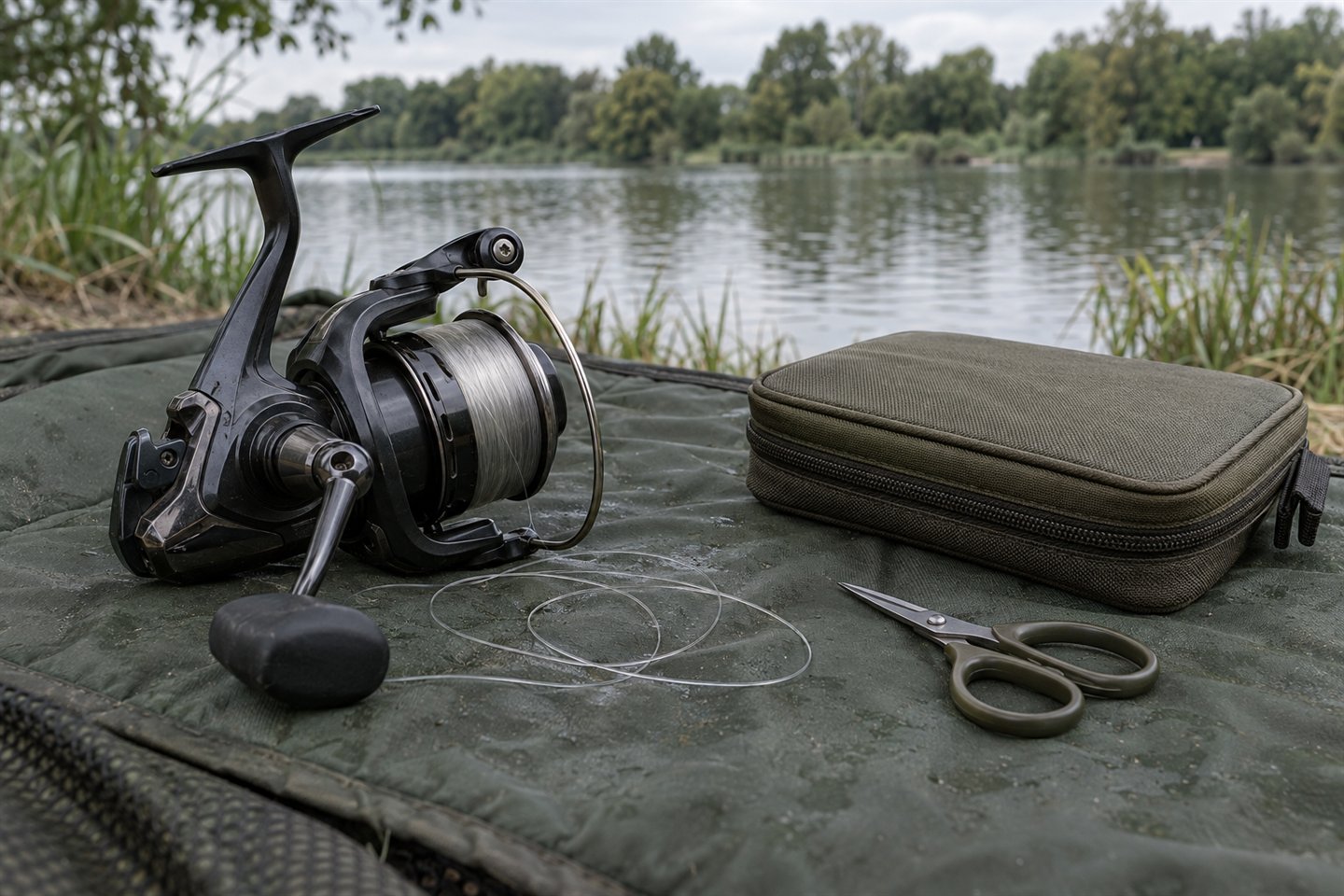
A protected rig board, suitable scissors and a small inspection tray help preserve and examine the tackle. Carry spare hooks, compatible sleeves and the exact replacement components your lead system requires. A small set of known parts is easier to troubleshoot than a mixed box of similar-looking but incompatible accessories.
PVA can be useful when it forms part of a tested presentation, but buy the type and size that fit the job. Finger protection may support safe casting practice where appropriate. The most valuable improvement may be instruction in a controlled casting sequence rather than another packet labelled anti-tangle.
Korda RazorBlades scissors (paid link) are a practical example for rebuilding a damaged hooklink neatly, while Korda SUBline monofilament (paid link) is one option if inspection shows the existing main line needs replacement. Neither product is an automatic cure for tangles. Identify whether the problem starts at the spool, in the air or as the rig settles, then select appropriate material and retest. A new spool cannot correct an overloaded cast or incompatible terminal components. Keep sound equipment in use and make one explainable change rather than replacing the whole setup at once.
Frequently asked questions
Does a stiff hooklink stop every tangle?
No. Stiffness can help separation in an appropriate rig, but hair position, casting, descent and components still matter. A stiff material that presents poorly on the bottom is not a complete solution. Diagnose the wrap and choose a compatible material for the whole presentation.
Should I always use a PVA bag?
No. A suitable bag can organise some rigs and feed, but it changes the payload and may interfere with components if attached incorrectly. Use a complete tested method, check dissolution and preserve the lead system's safety function. A simpler reliably cast rig may not need PVA at all.
Does a tangle on retrieval prove I had no chance?
Not necessarily, because the retrieve itself can alter the rig. Repeated similar tangles are still a strong reason to investigate. Record how they form, compare controlled casts and inspect the tackle rather than either dismissing every wrap or assuming every quiet session was caused by one.
Fix the stage that is actually failing
Check the rig, make a controlled cast, let it settle and inspect it when it comes back. Work out which stage is causing the tangle, then change one thing. Keep the lead system's release working throughout. A simple rig you can cast neatly is a much better starting point than adding every anti-tangle accessory you own.
Sources and further reading
Manufacturer guidance checked on 15 September 2026 includes Korda's linked coated-braid explanation, Terry Edmonds casting masterclass and PVA-mesh guide. They support particular material, casting and attachment principles. Their product examples are not guarantees, and any component change must be checked against the current instructions for the complete rig.