Pellet waggler fishing is an active way to catch carp feeding in the upper layers. You're casting, feeding a little and watching the bait fall. We'll start at a comfortable range and build a feeding rhythm around the response you get.
The method is especially associated with commercial stillwaters, but the venue label alone doesn't make it suitable. You need carp willing to feed in the upper layers, permission to use the approach and enough clear space to cast repeatedly. A fish cruising near the surface is not necessarily interested in pellets.
We'll build a first setup and then watch how fish respond to the feed. Adjust the depth and rhythm to what you see, keeping the hookbait close to the pellets. If nothing is responding, change the approach rather than carry on feeding the same line all afternoon.
Pellet waggler fishing for carp: get feed and casting working together
A pellet waggler is designed for fishing a relatively shallow hookbait beneath a float, often with little or no additional shot down the hooklength. Casting gives the bait another controlled fall through the water. Feeding sinking pellets can create a small area in which carp intercept food before it reaches the bottom.
That differs from ordinary bottom waggler fishing, where measured depth and a steadier presentation are central. Our close-range float guide covers that alternative. It also differs from floating-bait fishing: a pellet waggler's hookbait normally sinks beneath the surface rather than remaining visible on top.
Drennan describes its pellet wagglers as floats for presenting pellets in the upper water. That intended use is a helpful starting point. The particular float still needs the correct loading and attachment, and the method must fit the water rather than a seasonal slogan.
Choose a lake and swim that support the method
Ask the fishery whether pellet wagglers are permitted and what restrictions apply to pellets, loose feeding and casting. Some waters require fishery-supplied feed or limit bait size. A rule about groundbait or surface bait may not answer the separate question about shallow pellet fishing, so clarify the exact approach you intend.
Choose an open casting lane with a comfortable landing area. Repeated casts increase the importance of checking behind you for people and obstructions. Don't fish beneath electricity cables or cast across another angler's water. A method requiring constant attention works best when the surrounding space is simple and predictable.
Look for signs that carp are actually taking falling pellets. Occasional turns, competitive movement after feed and positive bites tell you more than a group basking motionless. If birds immediately gather over every pellet, postpone the approach; repeatedly feeding around them is not a safe way to force an opportunity.
Start at a controllable range
Your useful range is the distance at which you can cast the float accurately, feed pellets to the same area and read the tip. The shortest of those three distances sets the practical limit. Being able to cast thirty metres is irrelevant if the feed consistently falls ten metres short.
Begin closer than your maximum and establish a clear far-bank reference. A modest fishing area gives you enough room to correct for breeze without invading another swim. It also makes it easier to see the float settle and distinguish a genuine bite from the moment the float rights itself.
As confidence improves, range can be extended only while all three tasks remain controlled. The short-session guide explains why a manageable plan often uses limited time better. Learning a precise rhythm close in is more valuable than spending an afternoon alternating long casts with misplaced feed.
Balance the rod and reel for repeated casting
A suitable pellet-waggler or carp-capable float rod should cast the chosen float within its rating and cushion fish at close quarters. Consider the combined casting load, including any added shot and hookbait. Don't assume a light-looking float is weightless simply because much of its loading is built into the body.
Comfort matters because you'll hold and cast the outfit repeatedly. A balanced fixed-spool reel with a smooth drag is more useful than unnecessary line capacity. Check that the reel seat, handle and bail arm remain secure, and that the line runs freely through undamaged guides before making repeated casts.
Use the coarse reel guide if you're unsure about size and drag. Avoid buying a much heavier outfit on the assumption that every carp method needs specimen hardware. Equally, don't substitute a delicate silverfish outfit where the fishery and its carp require stronger equipment.
A concrete first setup for open commercial water
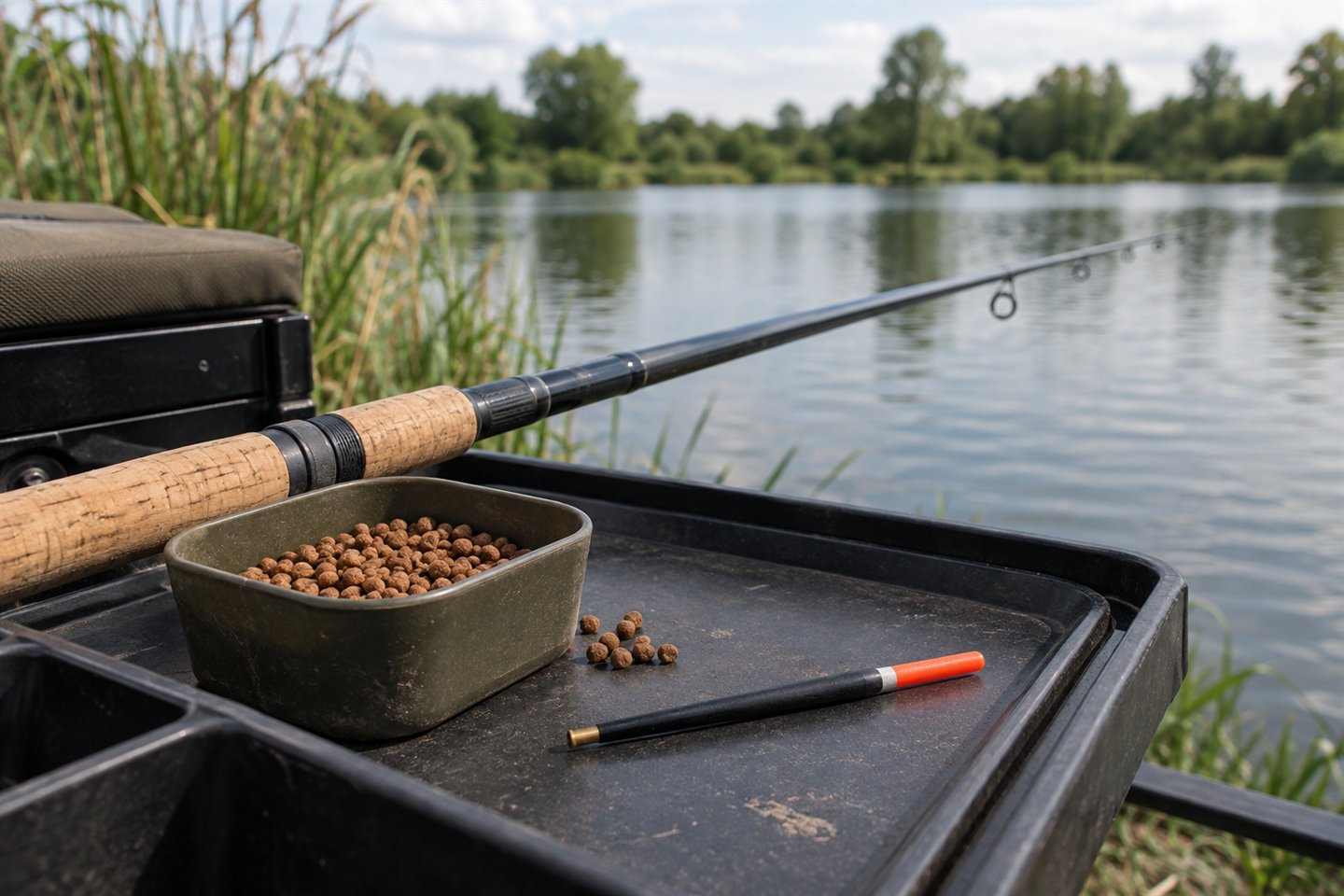
For modest carp on a clear commercial lake at short range, a conditional starting example is a 10 ft pellet-waggler rod, 6 lb main line, a 4 g loaded pellet waggler and a size 14 strong banded hook on a compatible roughly 0.18 mm hooklength. Drennan's Vertex specification supports 4–6 lb reel line, and its Shorty range includes the 4 g float. Check the chosen hooklength's actual strength and knot performance, not diameter alone.
Use a permitted 6 mm hard pellet in a correctly sized band and begin about 2 ft below the float, where the overall depth allows. Feed five or six pellets accurately as an initial trial. These bait, hook and depth choices follow the scale of Dean Barlow's Drennan guidance; they are not a fixed feeding schedule. Try depth adjustments of about 6 inches while watching clean bites and keeping the other variables steady.
This combines supported component choices into an illustrative beginner setup, not a certified kit. Use compatible attachments and keep the float's loading correct. It is not intended for specimen carp, snags or a venue requiring stronger line. If those are the conditions, revise the outfit with competent advice or choose a more manageable water.
Line and hooklength must suit the carp
Choose sound line that behaves well on the reel and suits the rod, fish size and venue requirements. Diameter, abrasion and knot quality all matter. A line marketed for float fishing still needs to be assessed against the actual water; the product category doesn't override a minimum line rule.
A separate hooklength makes changes convenient, but it must not become an intentionally fragile weak point. Use a compatible combination and test knots safely before fishing. If the tackle cannot control the expected fish in the available open water, move to a more suitable swim or revise the outfit.
Inspect the line around stops and attachments frequently. Repeated casting and moving the float can reveal wear that was absent at setup. The line and hooklength guide gives the broader checks. Replace damaged sections rather than hiding roughness beneath another stop or sleeve.
Loaded and unloaded floats are not interchangeable
A loaded float carries some or all of its casting weight in the body. An unloaded model needs added weight arranged according to its design. Read the markings and instructions carefully. The weight printed on one float may describe its loading differently from the marking on another manufacturer's model.
Use the maker's compatible attachment system and the correct stops or shot arrangement. The float needs to retain the chosen depth without being permanently trapped in an unsafe assembly. Don't glue stops to line or improvise a rigid fixing simply because a float has moved during a forceful cast.
Drennan's linked product information distinguishes unloaded versions and their locking shot, with an attachment option for changing floats. That is model-specific guidance, not a universal instruction to add the same weights to a preloaded float. If uncertain, have the complete setup checked before casting it over water.
Choose enough float without creating unnecessary disturbance
The float should reach the target accurately and remain visible. Too little weight may tempt you to cast harder and lose control, especially in wind. Too much can create unnecessary splash and make repeated close-range casting cumbersome. Choose for the actual range and conditions rather than always taking the heaviest model.
Short, buoyant designs can settle differently from longer ones, and some include discs or bases intended to limit diving. Observe your own float in the water. A design feature doesn't remove the need to control the cast or prove that every fish will welcome the impact.
Keep one sensible alternative available, not a dozen simultaneous experiments. If wind strengthens, you may need a different float or a shorter range. If carp visibly retreat from disturbance, reducing the casting frequency or changing methods can be more sensible than assuming a louder splash will eventually draw them back.
Match a hard pellet to a suitable band
A banded hard pellet is a common hookbait because it can withstand repeated controlled casts and sink through the feeding area. Choose permitted pellets and a band that grips securely without splitting the bait. The band is a mounting tool, not a reason to select a pellet too large for the hook.
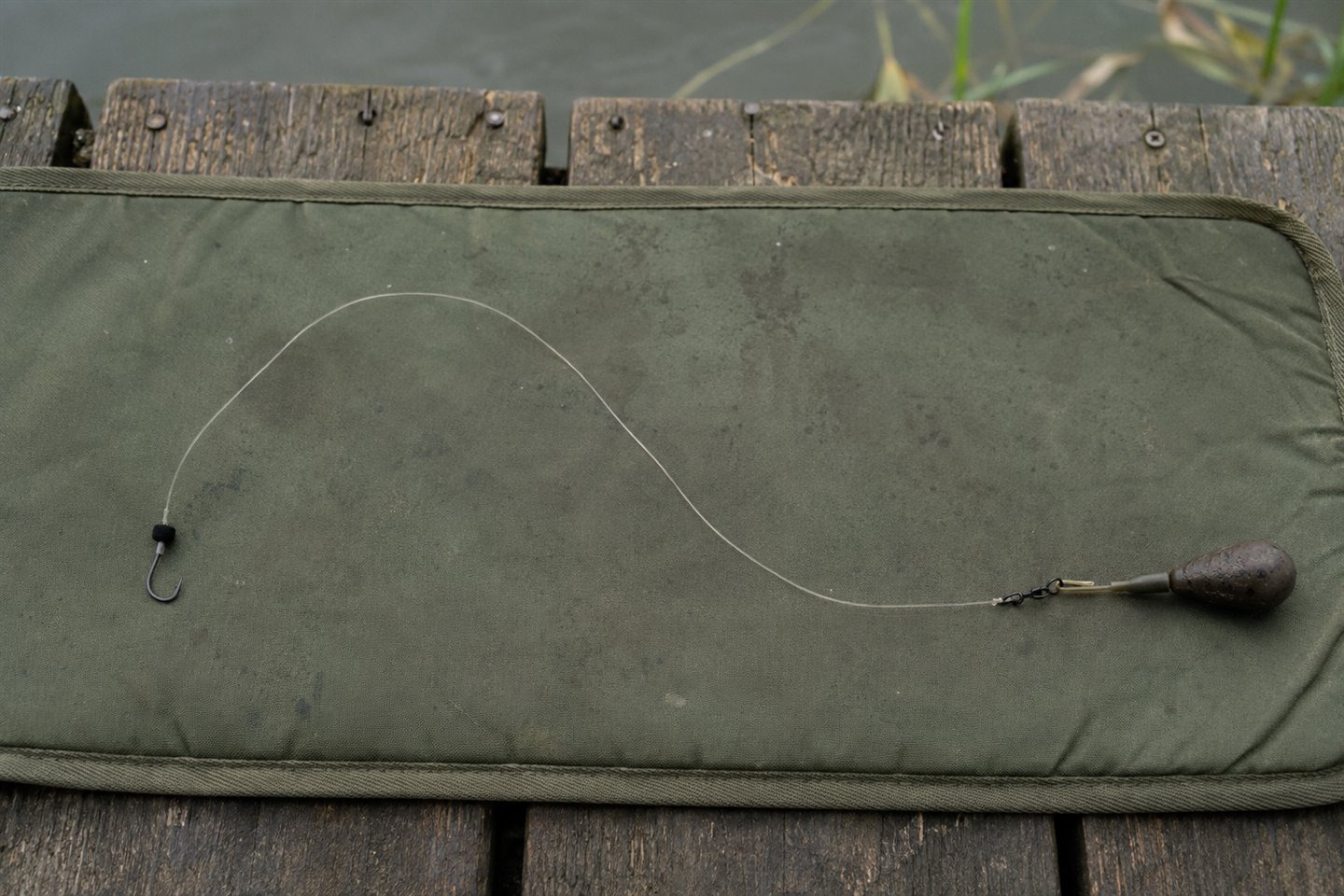
Check how the band sits on the hair and that the hook point and gape remain effective. A pellet pulled tight against the wrong part of the hook can compromise presentation. Use properly tied hooklengths or learn a suitable pattern with help rather than improvising several knots around a loose elastic band.
Our pellet preparation guide explains why hard feed pellets, expanders and soft hook pellets are different products. Don't soak every pellet by one universal timetable. Follow the product's purpose and instructions, and test whether the chosen hookbait remains secure after a few casts.
How deep should I fish a pellet waggler?
Start at a sensible shallow depth only where the overall water depth is known to allow it. A setting somewhere below the surface is a trial, not evidence of where fish are feeding. Adjust in small increments while keeping track of the previous position, so changes produce useful information.
Notice when bites occur. A take shortly after the float settles may suggest fish intercepting the early fall, while later indications can suggest a different part of the descent or fish near the final depth. These are clues to test, not precise underwater measurements derived from a stopwatch.
Avoid scattering experiments over many depths and ranges at once. Hold the feeding area steady while testing depth, then assess the response. If the fish settle lower than the approach can usefully reach, a bottom float or feeder arrangement may be the more appropriate next step.
How to feed when pellet waggler fishing for carp
Introduce a few pellets accurately and observe rather than starting with large handfuls. The aim is a repeatable opportunity for fish to intercept food, not a carpet of bait. A small amount frequently can be a useful trial, but frequency must follow the response and the fishery's restrictions.
Coordinate feeding and casting so the hookbait falls through the area receiving loose pellets. Choose a sequence you can perform calmly and repeat it long enough to judge. Rushing between catapult, reel and loose tackle can create unsafe casting and a feeding pattern that changes unintentionally every minute.
Watch the amount used over the whole session. Tiny feeds can still add up quickly when repeated. Our bait-quantity guide helps put that cumulative total into context. Regular feeding is not an instruction to continue indefinitely when the fish have stopped responding.
Use a catapult safely and accurately
Choose a bait catapult suited to the pellet size and intended range, and follow its instructions. Inspect the elastic and attachments before use. Keep the pouch pointed safely over your own fishing area, away from people, wildlife and neighbouring anglers, and never practise by aiming at a solid object near others.
Consistency comes from repeating a comfortable action, not pulling the elastic to its limit each time. Feed a manageable number of pellets so they arrive in a compact area. If the pattern spreads widely, reduce range or adjust the amount rather than blaming the hookbait for missing the feeding fish.
Put the rod in a secure, immediately accessible position only when necessary to feed, keeping full attention on it. Don't leave the bait fishing while searching through luggage for another catapult. Arrange the swim so changing between casting and feeding doesn't create a gap in supervision.
Cast smoothly and keep contact useful
Check the surroundings on every cast, then accelerate the rod smoothly. Control the final part of the flight so the hooklength extends and the float lands where intended. Slapping the rig down with uncontrolled force can produce tangles, lost pellets and much more disturbance than the method requires.
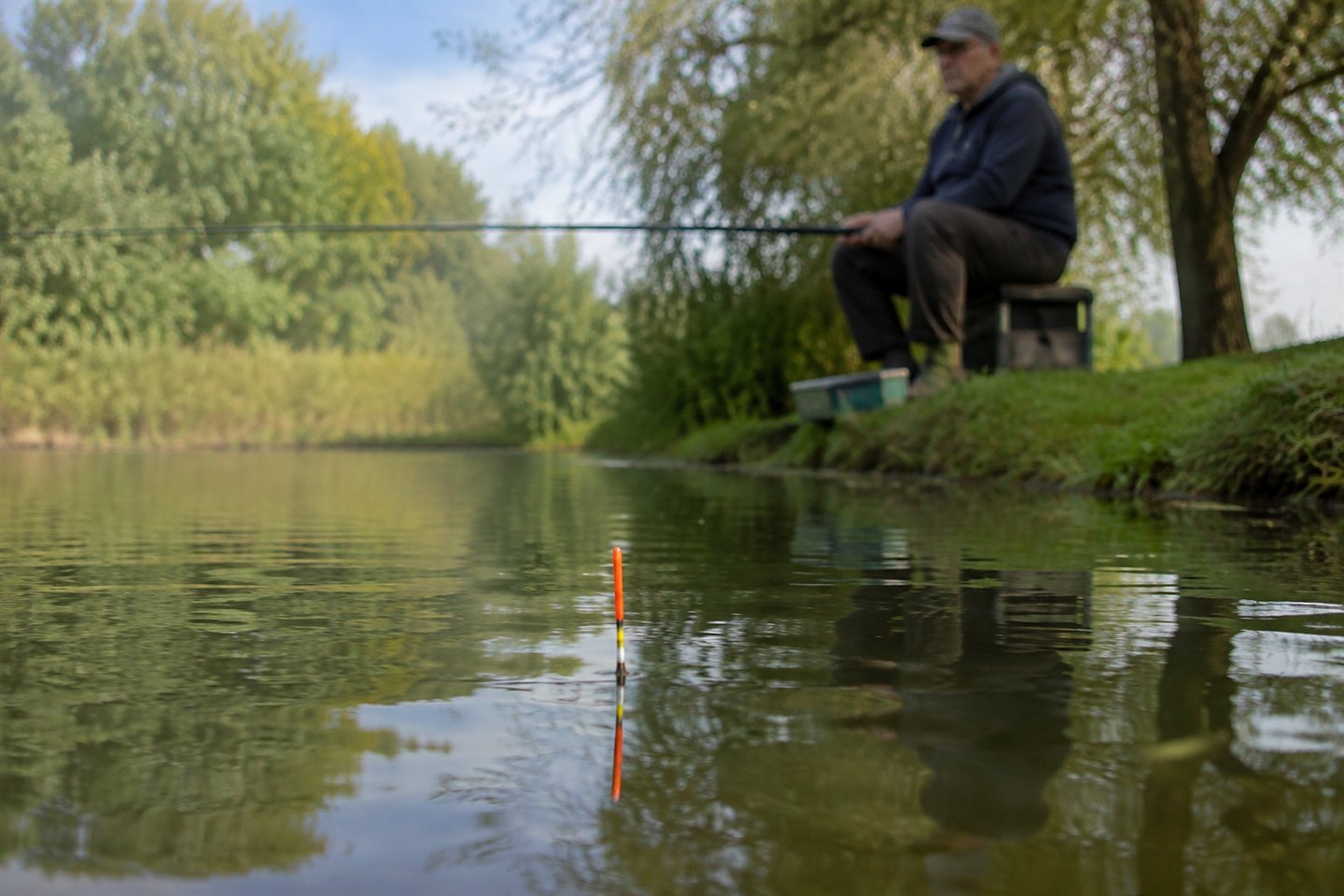
As the float settles, remove excessive loose line without dragging it away from the feed. Keep enough control to respond to a bite while allowing the hookbait its intended fall. The exact rod-tip position depends on breeze, distance and the float; there's no need to copy an angle blindly.
Avoid leaving the reel's distance clip engaged in a way that prevents a hooked carp taking line. Use a safe accuracy routine appropriate to active fishing and the venue. If clipping practices are unfamiliar, get practical coaching rather than discovering their limitations when a fish accelerates across the swim.
Why am I missing bites on a pellet waggler?
Learn how the float behaves when it lands, rights itself and responds to surface drift. A consistent disappearance or positive movement deserves a controlled lift into contact. A violent strike is unnecessary at short range and can throw the float back towards you if the fish is not attached.
Missed bites don't automatically mean the hook is too small. Check the band, pellet, point, depth and line control. Carp brushing the line or competing above the hookbait can create indications without a clean take. Repeatedly striking at those movements increases the risk of foul-hooking rather than solving the presentation.
If foul-hooked fish occur, pause and reassess feeding and depth. Don't treat them as proof the method is working. A smaller, more controlled feeding response and a better-aligned hookbait may help, but if you can't produce clean bites, change approach and seek advice from the fishery or a coach.
Keep the landing routine ahead of the pace
Prepare the net, mat and unhooking equipment before the first feed. When a carp is hooked, use the rod and smooth drag to maintain controlled pressure in open water. Don't rush the fish into the net because you feel the feeding rhythm must be kept going.
Once the fish is safely landed, stop fishing and complete the care routine. Other carp may move away while you do so; that is acceptable. The carp-care guide explains the priorities. Restart only after the fish is returned and the hooklength and working line have been inspected.
Frequent captures can make the method physically demanding. If concentration drops, take a proper break with the rig out of the water. A calmer pace with sound handling is a better beginner session than attempting a competitive catch rate while becoming careless about knots, casting space or fish welfare.
When bites stop, change one variable
First check that the hookbait is still attached and the rig is untangled. Then observe whether fish are still responding to feed. A quiet spell caused by a missing pellet will not be improved by changing depth, and an empty feeding area will not be fixed by another aggressive strike.
If fish remain active, try one small depth or feed adjustment and give it a fair comparison. If activity has moved, consider a permitted move of the target while preserving safe boundaries. Don't continue feeding the old spot heavily at the same time unless you have a clear reason.
If there's no convincing response, stop the routine and reassess the session. A bottom bait may suit the fish better, or the productive opportunity may have passed. Pellet-waggler fishing is one method among several, not an obligation to keep catapulting until the bait box is empty.
A simple first-session comparison
Begin on a known-depth open-water spot with one pellet size, one float and a modest feeding pattern. Make a note of where the loose feed lands and how quickly the float settles. Spend the first part learning that baseline instead of treating every fish seen elsewhere as a reason for another cast.
Once the routine is consistent, test one small depth change while leaving range and feed stable. Compare clean bites and secure hookholds, not just the number of float movements. If the original setting was better, return to it. A reversible experiment is much more informative than constant unrecorded adjustment.
At the end, note the amount fed, useful depth range and any difficulties with wind or accuracy. That record helps plan the next visit and identify whether the limiting factor was tackle, technique or fish behaviour. It also prevents a single successful afternoon becoming an inflexible rule for every lake.
Equipment worth considering
A compatible float-and-attachment combination, sound pre-tied or carefully made banded hooklengths and a pellet catapult suited to the range are practical starting purchases. Add a protected spare float and replacement bands. Choose components you understand rather than a large assorted kit whose pieces may not work together.
Comfortable seating, organised bait boxes and a net handle that reaches the water safely support an active session. Keep tackle within reach but clear of the casting and landing areas. If your existing carp-capable float outfit handles the intended float within its rating, learn the method before buying another rod.
The Roddarch four-piece bait-box set (paid link) can keep feed pellets and hookbait choices separate, while Korda RazorBlades scissors (paid link) provide a clean cutting tool for preparing suitable line or hooklength material. These are supporting accessories rather than a pellet-waggler setup in themselves. Check the selected float, rod and hook arrangement separately, and use only the fishery's permitted pellets. Ventilated bait boxes don't protect their contents from rain, so cover and store the working quantity sensibly. Reuse functional equipment and spend time learning an accurate, controlled feeding rhythm.
Frequently asked questions
Can I use an ordinary waggler?
Some ordinary wagglers can present a shallow bait, but a suitable pellet-waggler design can make repeated casting and quick settling more manageable. Choose for the task and use the correct loading. Don't assume two floats with similar dimensions require the same shot or attachment arrangement.
How often should I recast?
Often enough to test a fresh fall of the hookbait while the fish are responding, but not to an inflexible timer. Watch how bites develop and whether disturbance helps or hinders. If activity disappears, reassess before continuing a rapid cycle that only adds food and splash.
Can I fish the method when birds are present?
Only when you can keep wildlife safely clear of the bait and line. If birds approach the feeding area or could reach the hookbait, retrieve and pause. Don't cast beside them or try to distract them with more food. Choose another safe method or wait for a genuine opportunity.
Make accuracy the first skill
Practise getting the float, hookbait and loose pellets to the same area at a comfortable range. Then use the fish's response to adjust depth and feeding. There's no prize for keeping up with the fastest angler nearby. A pace you can control and understand will teach you far more.
Sources and further reading
Manufacturer information checked on 15 September 2026 includes Drennan's pellet-waggler specifications and its Shorty Pellet Waggler demonstration. These show the intended shallow-fishing application, not guaranteed results or a universal feeding rate. Follow current product instructions and local bait rules.