Maggots can give carp something different to investigate—but plenty of smaller fish like them too. We'll look at mounting the hookbait, keeping the feed accurate and deciding whether maggot fishing suits your water and its rules.
Maggots are not carp-only food. Roach, perch, bream and other fish may reach them first, and that activity can be enjoyable or frustrating depending on your objective. The sensible question is not how to eliminate every smaller fish. It is whether maggots let you fish effectively for carp in this particular situation.
This guide explains hookbait options, accurate feed delivery and practical bait care for UK carp sessions. It also shows when to simplify the presentation, reduce the loose feed or choose a tougher alternative. A modest, well-managed trial is easier to learn from than committing a large bait budget before you know how the water responds.
Maggot fishing for carp: when is the small bait worth using?
You might use maggots as the main hookbait, as part of a small feed around another hookbait, or as a limited addition to an existing presentation. Those are different decisions. Choose which one you're testing before changing the rig, feed mixture and baiting pattern all at the same time.
On a short session, a small amount around a securely mounted hookbait may be enough to assess interest. On a mixed fishery, a tougher hookbait over limited maggot feed can be more practical than relying on a delicate bunch to remain untouched. Neither approach requires starting with several litres of bait.
The single-hookbait guide explains the value of keeping an experiment small. If carp are already using a clear spot, placement and reliable presentation may deserve more attention than building the largest possible bed of food around the hook.
Check the water's rules and fish population
Confirm that live and dead maggots are allowed, whether quantities are restricted and whether bait must come from an approved supplier. A rule allowing natural baits may still have exceptions. Read the actual fishery information rather than assuming a product sold locally can be used on every nearby water.
Ask what happens when maggots are introduced. A venue with abundant small fish can be a very different prospect from one where carp usually reach the feed quickly. Local advice will not predict every session, but it can prevent an expensive plan based on a method that rarely remains intact there.
Use the fishery-rules guide to interpret restrictions and ask precise questions. If the venue says no maggots, don't disguise them inside PVA or a spod mix. Select another permitted bait and put the same care into its location and presentation.
Choose the quantity after planning the session
Decide how much bait the intended approach realistically needs, then buy a manageable amount of sound bait from a reliable supplier. A small hookbait trial and a large feeding campaign have very different requirements. Purchasing the largest container first can encourage feeding simply to justify what you brought.
Remember that the cost includes waste, storage and transport as well as the shop price. A bait you can't keep in usable condition is not good value even if the bulk rate looks attractive. Confirm what the supplier recommends for the expected storage period and how soon the bait should be used.
Our bait-quantity guide helps scale feeding to actual fish activity. Keep the first maggot session conservative, with enough reserve to respond if carp clearly feed. Avoid making a fixed quantity the target regardless of the number of fish seen or caught.
Live and prepared dead maggots have different uses
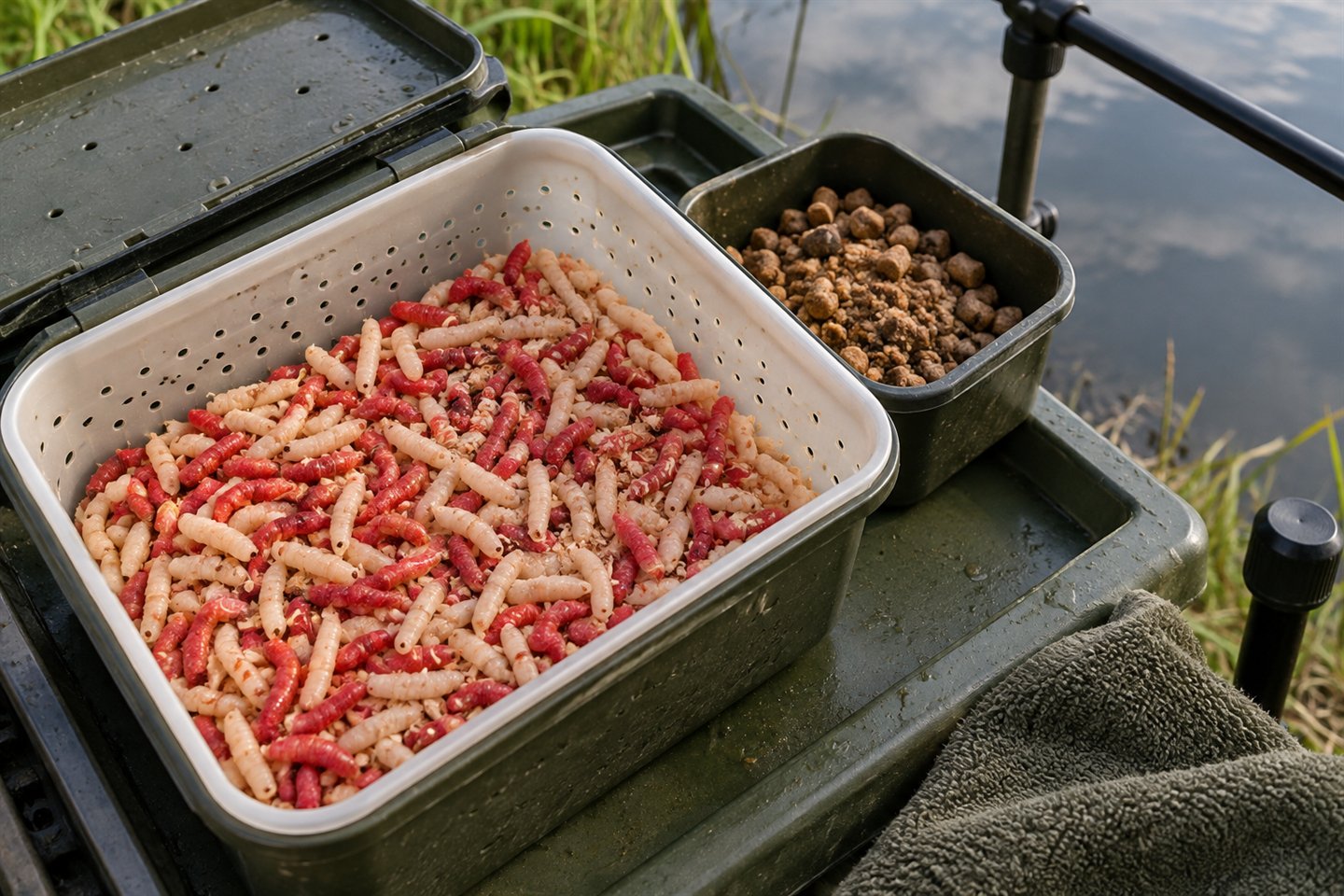
Live maggots move, which changes how a hookbait appears and how loose feed behaves after introduction. Prepared dead maggots don't crawl away in the same way. That distinction can matter when trying to keep a small patch of bait together, but neither form guarantees a better response from carp.
Korda's natural-bait guide discusses live and dead maggots, including small-fish attention and different mounting options. Treat those as choices to test, not proof that a particular colour or preparation must outperform all alternatives on your lake.
For a beginner, buying correctly prepared dead bait from a reputable supplier can remove uncertainty about preparation. Ask how it should be stored and handled after opening or thawing. Don't assume advice for keeping live bait lively is also suitable for a prepared dead product.
Keep bait cool and contained
Use clean, secure bait containers appropriate to the supplier's guidance. Live maggots need suitable ventilation rather than being forgotten in a sealed warm tub. Keep the working portion shaded and avoid leaving the reserve in a sunlit vehicle, where conditions can become unsuitable much faster than the outdoor temperature suggests.
Manage condensation and rain so the bait doesn't become an uncontrolled wet mass. A lid helps contain bait, but ventilation and moisture management still matter. Keep the lid securely fitted while moving around the bank; a spilled tub is difficult to recover and can create nuisance well beyond the swim.
Separate bait equipment from food preparation and wash your hands before eating. Ask the supplier about any colouring or treatment if you have sensitivities. Follow the stated storage instructions and discard unusable bait responsibly rather than trying to disguise deteriorating condition with a stronger-smelling additive.
How to mount maggots on a carp rig
A bunch of maggots can look attractive while physically obstructing the hook. Check the gape, point and freedom of movement with the finished bait attached. The important size is the complete wet presentation, not just the hook number printed on the packet or the number of maggots you intended to add.
Begin with an arrangement that leaves the hook effective and survives a controlled test cast. If a bigger bunch is needed for a particular reason, reassess the hook and hair together. Don't simply keep adding maggots until the bait is larger than the rig can present cleanly.
The hook-size and pattern guide explains why comparable numbers can conceal different shapes and strengths. Match the hook to the fish and tackle as well as the bait. Very fine small hooks are not automatically suitable simply because individual maggots are tiny.
Direct hooking suits an actively watched approach
For appropriate close-range float fishing, a small number of maggots can be mounted directly on a suitable single hook. Pierce carefully through the skin near the blunt end without crushing the entire bait. Keep the point clear and inspect after each cast or indication to see whether the bait has been damaged or removed.
Use a carp-capable float outfit rather than scaling the whole setup down to silverfish tackle. The bottom-float guide explains how to balance strength, depth and indication. This active approach makes it easier to notice when small fish strip the bait and to refresh it promptly.
Direct hooking is less attractive when the intention is to leave a rig out for a long period without checking. A partly empty hook can remain in the water unnoticed. Choose the mounting and check frequency for the actual method rather than assuming the simplest hookbait is best for every waiting time.
Using a dedicated maggot clip
A purpose-made clip can carry a bunch on the hair while leaving the fishing hook separate. Korda's Maggot Klip instructions describe attaching the clip to the hair, threading the bait and closing it. Use the correct size and follow the product's fitting guidance.
Inspect the closure carefully before every cast. The sharp threading point belongs secured within the completed clip, not left exposed because the bait was difficult to fit. Confirm that the bunch cannot slide over the hook point or foul the bend when the rig is moved gently in water.
A clip adds weight and structure, so it can change how a balanced presentation behaves. Test the finished hookbait rather than assuming a wafter or buoyant topper still balances it. A larger clip is not automatically an upgrade; choose the smallest suitable complete arrangement that presents the intended bunch securely.
Threaded bunches need care and a clear purpose
Another option is threading maggots onto fine baiting material and attaching the finished bunch as a hair presentation. This can be fiddly, so practise with the hook secured and the work supported. Use a suitable fine needle and keep sharp tools pointed away from your fingers and other people.
The finished attachment must be secure without leaving long loose tags or a mass that catches around the hook. Test it in water and after a gentle cast. If mounting takes so long that bait condition and observation suffer, a simpler approved presentation can be the more sensible beginner choice.
Follow a complete demonstrated rig rather than combining isolated details from different designs. Korda's maggot-clip rig tutorial is one manufacturer example. Its listed components belong to that specific construction; they are not a requirement to buy an elaborate rig for every maggot session.
A durable main hookbait can keep the rig fishing
On waters where soft bait is attacked quickly, consider a permitted, suitably mounted boilie, wafter or artificial hookbait over a small amount of maggot feed. This separates the attraction trial from the question of whether a delicate bunch survives. It also gives you something definite to inspect on retrieval.
If adding a few maggots to another hookbait, check the whole balance again. Their weight and movement may change how it sits, and they can fold around components. Keep the hook point clear and don't assume a visually appealing combination behaves correctly beneath the surface.
The hookbait-type guide explains the different jobs of buoyancy and bottom presentation. Artificial baits must be permitted and securely attached. They are not a reason to ignore indications or leave a damaged rig out simply because something durable remains on the hair.
How to use maggots in PVA for carp fishing
A suitable fine mesh can hold maggots that would escape through a coarser weave. Korda's PVA-mesh guidance distinguishes fine and larger-hole versions. Select the mesh for the bait, then follow the stated instructions for attachment and dissolution rather than assuming every PVA tube is interchangeable.
Moisture matters. Damp bait, wet hands and unsuitable liquids can begin dissolving PVA before the cast. Test the actual bait and mesh combination, including how long it will sit prepared. A mix that survives a few seconds during assembly may fail after being carried around in a damp tackle tray.
Check breakdown in water of similar temperature and keep the hook presentation clear of any residue. The PVA guide covers the wider setup. Make modest bags at first; a larger bag changes both the casting payload and the way a rig travels and lands.
Deliver loose feed accurately
At close range, introduce a small amount by a safe, controlled method that keeps it near the chosen spot. At longer range, suitable baiting equipment may be needed. The delivery method should fit the distance and conditions, not the other way round; move the target closer if accuracy is poor.
Maggots can drift during descent, especially with depth and water movement. A feed landing beside the marker on the surface doesn't prove every item reaches the hookbait. Keep the first feeding pattern modest and observe where activity develops rather than imagining an exact underwater pile from the splash alone.
If using a baiting device, remain within its and the rod's ratings and include the full loaded weight. Don't cast a heavy feed payload on an unsuitable fishing rod. Accurate baiting should improve the presentation without adding a separate equipment or safety problem to a simple session.
How to tell when small fish are spoiling a maggot carp approach
If smaller species arrive rapidly, reduce unnecessary loose feed and inspect the hookbait more frequently. A larger or more durable bait may survive longer, but it will not prevent every bream or tench from taking it. Selectivity is relative, and those fish deserve the same careful handling as a carp.
Consider whether time or location offers a better opportunity. A different clear spot or a period with less small-fish activity may suit the intended trial, subject to venue hours and safe access. Don't keep feeding heavily on the assumption that enough food will inevitably push smaller fish away.
If the bait is repeatedly stripped before carp can use it, change the hookbait or method. The boilie-size guide discusses durability and selectivity without promising a carp-only outcome. A successful decision can be recognising that maggots are not practical on that water today.
Separate line bites from missing bait
Maggot feed can create busy indications as several fish move around a small area. Don't interpret every bleep as a carp accepting the hookbait. Check the setup and look for sustained, meaningful movement while keeping prompt response and fish safety central to the arrangement.
If indications continue but the hookbait returns damaged or absent, you have evidence of a presentation problem. If it returns intact and the hook is clear, the explanation may be different. The bite-indication guide helps distinguish symptoms without turning every quiet spell into a rig redesign.
Avoid progressively increasing the delay before responding to ambiguous takes. Better mounting, line control or a clearer-indication method is preferable. When a fish is connected, note hook placement and inspect the rig afterwards; those observations are more informative than counting isolated alarm sounds.
Cold weather doesn't make maggots compulsory
Maggots can be worth considering during quieter feeding periods because a small presentation is easy to offer, but season alone doesn't make them the best bait. Fish location and small-fish activity still matter. A carefully placed alternative may be more practical on a water where maggots disappear quickly.
Reduce assumptions about quantity in cold conditions. Start with a controlled trial and observe rather than borrowing the feed rate from a productive summer commercial. A few clean opportunities can justify a little more bait, while persistent inactivity is a reason to reconsider location before adding another container.
The winter-bait guide gives the broader context. Keep storage and PVA checks current to the actual conditions too. Cold water changes dissolution times, while a heated vehicle or sunny shelter can still create unsuitable bait storage during an otherwise cold day.
Keep the reserve separate from the working bait
Put out only a modest working portion while the reserve stays under the supplier's recommended conditions. This makes moisture control easier when preparing PVA and reduces repeated handling of the whole supply. Use a clean scoop rather than returning wet hands or leftover prepared mix to an untouched container.
At the end of a quiet spell, count the prepared bags or check the working tub before adding more feed. It is easy to forget small repeated additions when the alarm has remained silent. That simple stock check can reveal that the spot has already received considerably more food than the restrained approach you intended.
If a prepared portion becomes damp or changes condition, keep it separate and follow the supplier's advice. Don't mix it back into fresh reserve to make the overall tub look normal. Clear separation makes any storage decision more reliable.
A practical two-spot comparison
If the venue and your experience support fishing two rods safely, keep the comparison simple. Use one established presentation and one modest maggot trial on separately understood clear spots. Avoid changing range, lead system, flavour, hook pattern and feed quantity together, because any difference in response will become impossible to interpret.
Alternatively, use one rod and compare consecutive periods while recording where fish are actually present. It is not a controlled scientific experiment, but clear notes can reveal practical problems such as bait loss or difficult PVA handling. If one rod is in a better spot, a catch on it doesn't tell you much about which bait the carp prefer.
At the end, record the amount used, how long the hookbait stayed intact and which species interacted with the feed. That tells you whether the next trial should improve mounting, reduce feed or use another bait. The useful outcome is a more dependable approach, not a permanent verdict that maggots work everywhere.
Equipment worth considering
Secure bait boxes appropriate to live or prepared dead bait, a small insulated carrier and a clean working tray make the session easier to manage. Carry only the needles, clips or mounting materials required by the presentation you actually understand. A spare complete hooklength is often more useful than several unfamiliar accessories.
If using PVA, choose the appropriate fine mesh and protect it from moisture separately from the bait. Keep a modest supply for testing before committing to larger refills. Scissors, protected spare hooks and reliable fish-care equipment complete the practical kit; maggot fishing doesn't require a separate collection of expensive carp hardware.
The Roddarch four-piece bait-box set (paid link) provide ventilated containers to compare for carrying and separating a modest working quantity of maggots, while the NGT 42-inch landing net with 2m handle (paid link) is one example for checking carp landing requirements. Neither should be treated as a complete maggot-fishing kit. Confirm that the container closes securely, keep bait appropriately cool and follow supplier storage guidance. Match the net to the actual water and fish rather than the small hookbait. A few careful purchases can support the method, but feeding, presentation and suitable fish care remain the essential decisions.
Frequently asked questions
Are red maggots better than white maggots?
There's no reliable universal colour winner. Availability, bait condition and how the fish respond on the actual water matter more than copying a preference. Test a change only after location and presentation are sound, and avoid attributing one capture to colour when several other factors changed too.
Can I put maggots in any PVA bag?
No. Mesh size, moisture and attachment matter, and the bait must remain contained until the bag dissolves where intended. Test the actual combination and follow the maker's guidance. A wet mix or coarse mesh can fail before it reaches the water, even when the packaging is labelled for carp fishing.
How do I stop every small fish taking them?
You can't guarantee that. Reduce unnecessary feeding, improve hookbait durability and consider a different time or safe spot. If smaller fish strip the bait repeatedly, change the presentation or bait. Continuing to pour in maggots is not a dependable way to make the water selective for carp.
Make the trial manageable
Keep the maggots fresh, mount them securely and feed accurately in small amounts. Look at what comes back on the hook. If smaller fish keep stripping the bait, adjust it or try something tougher. When the bait stays intact and carp are present, you can give the approach a proper chance.
Sources and further reading
Primary references checked on 15 September 2026 include Korda's linked natural-bait overview, Maggot Klip specification, complete clip-rig tutorial and PVA-mesh explanation. Their product-specific instructions support mounting and material choices. Feeding quantities, colours and session examples here are practical starting judgements, not manufacturer-backed guarantees of catch rate.