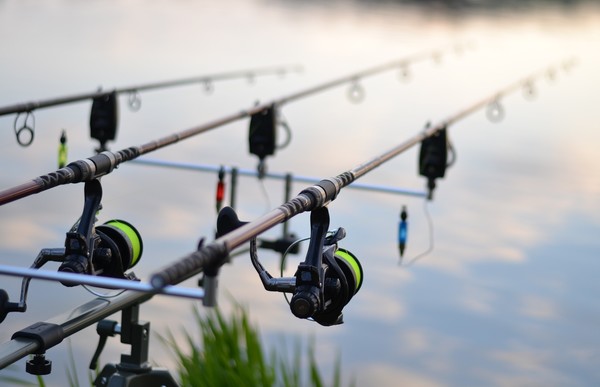
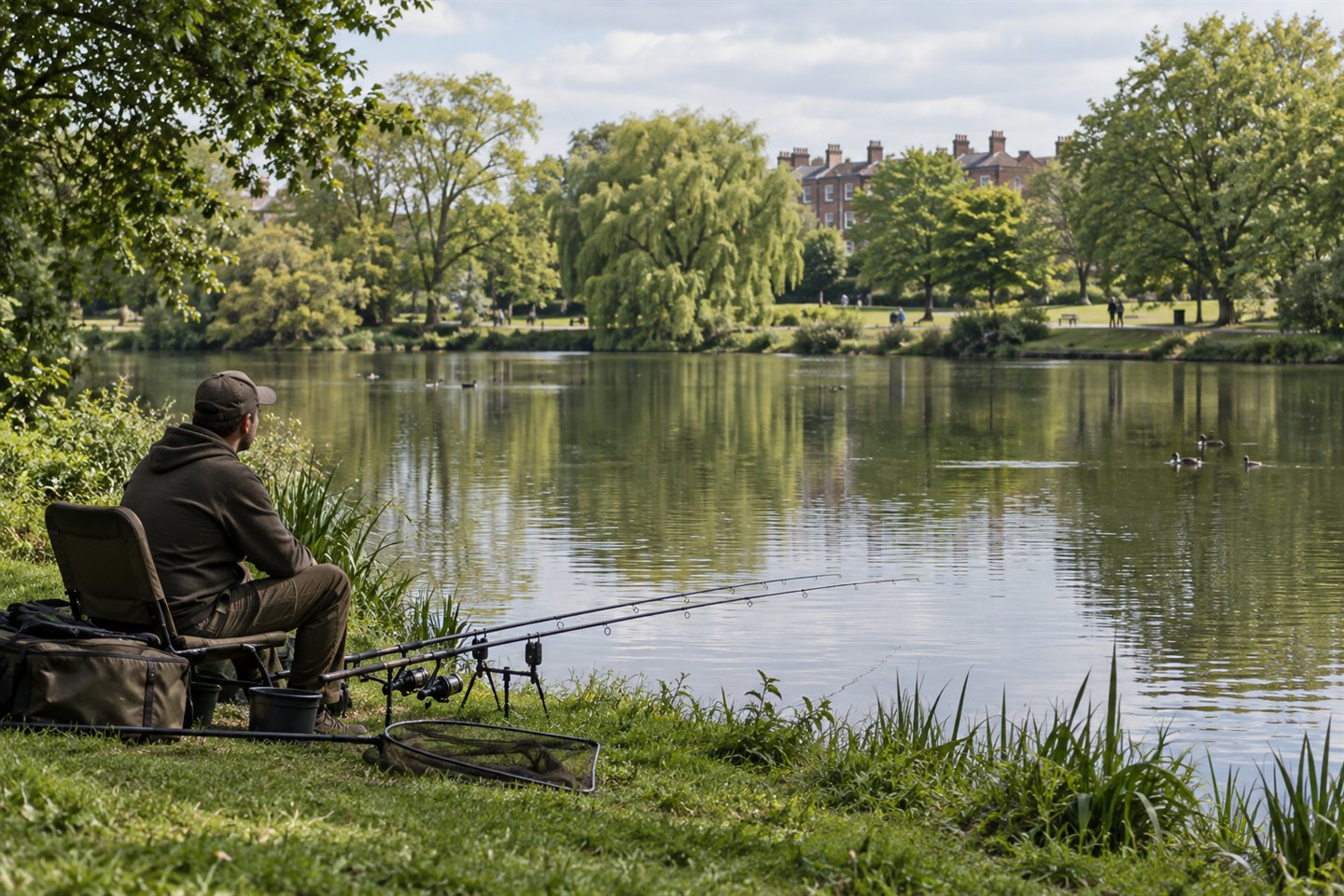
Carp fishing on park lakes can put interesting fish close to home. Check that fishing is allowed, choose a safe landing spot and leave room for other people using the park. We'll look at finding carp and fishing quietly in a busy setting.
Urban water can reward careful observation. Regular short visits may reveal where carp travel and when particular areas become quieter. At the same time, pedestrian traffic, wildlife, maintenance work and opening hours can change what is practical. A plan based only on fish location is incomplete if the chosen spot cannot be fished responsibly.
We'll look at permitted park waters and how to fish them considerately, rather than assume public access means free fishing. Use the advice alongside the current rules for your park, and choose a simple approach that fits the space available.
Carp fishing on park lakes: where can you fish properly?
Find the current information from the council, park authority, club or organisation controlling the fishing. Confirm the exact lake and permitted bank, not just the park name. A complex may contain several ponds with different uses, including wildlife refuges or waters where fishing is prohibited. A public footpath beside them doesn't settle the fishing rights.
Ask whether you need a day ticket, annual permit or club membership, and how to obtain it before arrival. Establish any booking, age or companion conditions. Keep the permission accessible for inspection. The water-access comparison explains the broader ticket choices, but the park's actual arrangement is what matters here.
For England and Wales, relevant rod-licence requirements remain separate from permission to fish the park. Elsewhere in the UK, check the appropriate national arrangements. Don't rely on a social-media description of free fishing to establish either point. Free may refer to one charge, one age group or an outdated arrangement rather than unrestricted angling.
A real park example, not a rule for every lake
The Royal Parks' Bushy Park sport and leisure page, checked for this article, describes a permit system and a stated fishing season for the relevant waters. It illustrates why public access and fishing access must be checked separately. It is not permission to fish every pond in every Royal Park.
Use the same approach for your local water: find the managing authority's current page, follow the permit information and obtain clarification where needed. Older park maps and forum reports can help identify questions, but they should not override current instructions. If the responsible organisation cannot confirm fishing is allowed, don't begin on the assumption that nobody will object.
Park opening hours can also differ between pedestrian and vehicle gates, facilities and particular areas. Ask about the route you'll actually use. A lake may remain visible from an open path even when the fishing access or ticket period has ended. Plan the session around the permission, not simply around whether a gate is physically open.
Check seasons and temporary closures
In England and Wales, the official season guidance explains that most enclosed stillwaters can be fished for coarse species year-round, subject to relevant rules. That doesn't prevent a park or fishery applying its own season or closure. Don't confuse a general stillwater position with a guaranteed right to fish today.
Read current notices for spawning closures, maintenance, water-quality concerns or events affecting access. A familiar swim can become unavailable even if it was open on your last visit. Check before buying bait or arranging travel, particularly when the park hosts seasonal events or carries out works around the lake.
If a closure disrupts the plan, use a separately confirmed alternative or postpone. Fishing just beyond a sign, moving into a refuge area or assuming the restriction only applies to other anglers undermines the access everyone relies on. A local venue remains useful because it can be revisited; there is little reason to force an unsuitable day.
Inspect the bank before thinking about tactics
Look at the complete fishing space: where you stand, the room behind the rod, the path of a cast and the position from which a fish can be netted. A low wall may look convenient for resting tackle while leaving no safe way to reach the water. A grassy edge may conceal erosion or a steep drop beneath the surface.
Reject spots requiring you to lean dangerously, climb fencing or enter unknown water to land a fish. Choose a bank where your net and handle provide proper reach while you remain stable. The landing-net guide helps assess working dimensions, but suitable equipment cannot turn every urban edge into a safe swim.
Check overhead hazards and keep well clear of power lines. Don't carry an assembled rod through an area where it could approach electrical infrastructure or become entangled in trees and other users' space. If the layout leaves no safe casting and handling arrangement, enjoy the observation visit and find another authorised area for fishing.
How to fish for carp around public paths safely
Keep bags, rod supports and any seating out of through routes. A path that seems quiet when you arrive may become busy with runners, wheelchairs, pushchairs or groups of children. Set the swim up so those users don't need to step over tackle or enter your casting space to pass normally.
Look behind before every cast, even after a long quiet spell. Stop if anyone approaches the swing of the rod or lead, and explain calmly if you need a moment to make equipment safe. Don't rely on headphones, an initial warning or the assumption that a passer-by understands fishing tackle. Casting is your action to control.
Where a path runs directly behind the only available position, consider a different permitted method or swim only if it removes the hazard. Casting quickly between pedestrians is not a reliable safety system. A promising fish location is not worth using if the bank cannot accommodate the method without putting other people at risk.
Learn the park's daily rhythm
Observe how the area changes through the day. School journeys, exercise groups, dog walking, boating and maintenance can affect access and disturbance. This is useful practical information rather than a reason to resent other visitors. Choose a session window that fits both your permission and the way the park is normally used.
Quiet periods may help you watch the water more clearly, but don't assume fish feed only when people are absent. Some carp may remain visible near busy areas while others move away from disturbance. Record what you actually see on this lake instead of turning one general urban-fishing theory into a rule.
The short-session guide suits local park fishing because repeat visits can build knowledge without heavy equipment. A forty-minute observation walk on an authorised route can be useful in its own right. You don't need to cast every time you visit to learn where a future safe opportunity might develop.
Find carp without chasing every surface sign
Look from safe positions for identifiable fish, repeated movement along an edge or activity that suggests feeding. Polarised glasses may help reduce glare, but shadows, reflections and submerged branches can mislead. Watch long enough to see movement and shape rather than declaring every dark patch a carp.
Distinguish reliable observations from possibilities. Bubbles can have several causes, and a splash may be another species or a bird. Several carp moving through the same reachable area provide stronger evidence than one unexplained disturbance at the far end. The watercraft guide explains how to combine clues without pretending any one sign guarantees feeding fish.
Keep observation respectful. Don't enter closed planting, climb trees or lean across barriers to obtain a better angle. Nor should you stand behind an occupied swim pressing another angler for access because you can see fish there. A useful location is one you can legally and safely fish within the space available.
Margins can be useful when they are genuinely fishable
An accessible margin may allow quiet, accurate placement without distance casting. Look for open areas where fish can be played and netted without being drawn through roots, railings or dense cover. The proximity of carp to the bank is not enough; there must be a responsible route from the hookbait to the landing net.
Use the stalking guide for a careful close-range approach. Keep movement and unnecessary tackle to a minimum, but remain in a position where the rod can be controlled properly. Don't sacrifice a stable stance or immediate bite response merely to hide behind vegetation.
If the only visible fish are beneath an unsafe snag, observe rather than cast. They may later move into open water, or the information may help another visit. The snag-fishing guide explains why a difficult location is not made acceptable simply by tightening a clutch or using heavier line.
What tackle should I use for urban park lake carp fishing?
Choose a known, permitted setup that suits the bottom and the fish present. A straightforward float approach or simple carp rig may be appropriate depending on the venue and conditions. You don't need a different complicated rig for urban fish merely because the lake sits between roads and houses.
Investigate the spot proportionately. Repeated heavy casts across a small park lake can disturb fish and other anglers without providing useful information. If you can't establish that the presentation is serviceable, choose a clearer, more manageable area. A confident cast to a modest spot is preferable to a long cast into uncertain debris.
Use the first-session plan to keep the routine orderly: fish care ready, safe casting space, a sound presentation and clear indication. One well-managed rod is often enough to learn the water. Add another only when permitted and when it covers a useful option without complicating control.
Feed modestly and protect wildlife
Use bait permitted by the fishery and introduce only an amount justified by the session. Public bird feeding may already affect parts of a park lake, but it is not a reason to add unlimited feed or assume that any household food is appropriate. The bait-quantity guide helps make the decision proportionate.
Watch waterbirds before casting and during the session. If birds are feeding over the intended line or repeatedly diving around the presentation, stop or retrieve safely rather than waiting for entanglement. Change the plan when wildlife activity makes the method unsuitable. A tempting surface opportunity doesn't override the need to prevent hooking a bird.
Keep bait tubs closed and remove hookbaits from unattended packed-down tackle. Loose food and exposed hooks can attract birds or dogs while your attention is elsewhere. Secure the area before taking a break, and never leave discarded line where feet, paws or wings can become caught.
Respond calmly to dogs and curious visitors
Place sharp items and bait where a passing animal or child cannot easily reach them. If somebody approaches, pause any casting or tackle work that could create a hazard. A brief friendly explanation of what needs to stay clear usually works better than assuming they understand the significance of a hook lying beside a bait tub.
Keep personal boundaries sensible too. You're not obliged to hand a rod to a stranger or share private details about your routine. If a conversation distracts you from proper rod control, reel in or bring the exchange to a polite close. The fishing should remain manageable while the park continues to function as a shared place.
For repeated problems, contact the park staff or fishery rather than escalating an argument on the bank. If you feel unsafe, secure what you can and leave. A short local session is not worth a confrontation, and reporting factual details through the appropriate channel is more useful than trying to enforce rules personally.
Keep fish care ready in a public setting
Choose the unhooking area before casting, on stable ground away from through traffic and hard edges. Set up the mat, net and tools so a capture doesn't require clearing a space while people gather. The carp-care guide covers the full sequence; a busy park is a reason for better preparation, not abbreviated care.
If onlookers gather, ask calmly for room and keep the fish low and supported. Don't prolong handling to answer questions or let several people take turns posing. A brief explanation that the fish needs to return to the water is enough. A photograph is optional, and the crowd should not decide how long the capture remains out.
Return the fish safely to the same water according to the fishery's rules. Don't move it to another pond, let a visitor take it or improvise treatment for a visible problem. Notify the responsible staff about significant injury or unusual condition. Stock and welfare decisions should be handled by the people authorised to manage the fishery.
Keep the session manageable when alone
Know the entrance, the route home and how to contact park staff if needed. Tell somebody your plan when appropriate and keep a charged phone accessible. Choose a position where you feel comfortable with the surroundings, especially as light changes. Being local doesn't remove the need to assess the actual setting.
Reel in before leaving for toilets, a café or a walk around another bank. An alarm receiver doesn't provide control while you're elsewhere. Keep valuable equipment close and avoid spreading belongings across several areas. A compact setup helps you remain organised without treating every other park user as a threat.
If access becomes unexpectedly busy or the available fishing space shrinks, adjust or finish the session. There's no need to defend a position simply because you arrived first if the setup can no longer be used safely. Good urban fishing includes recognising when another visit will provide a better opportunity.
A practical first park-lake session
For an illustrative three-hour visit, allow the first part for checking permission, current notices and suitable bank space. Watch a few accessible areas before unpacking the full kit. Select one position that combines evidence of fish with safe casting and landing, rather than choosing the nearest bench and hoping fish eventually arrive.
Set up a simple presentation and a modest feeding plan, then spend the main fishing period observing. Note any change in carp activity, waterbirds or public use of the path. A small adjustment in range may solve a presentation problem without moving everything. A move is worthwhile when the new authorised area offers a clearly better and still safe opportunity.
Begin packing with enough margin for the gate and journey home, keeping the net and mat ready until every line is retrieved. Check the ground for hooks, line and packaging. Record what was useful about the area and what would make the next visit easier. This information matters even when no carp was caught.
Equipment worth considering
An appropriate net and padded mat, a compact tackle box and secure bait containers form a practical core. Choose luggage that keeps items within the swim and away from paths. A short transport package can help when walking through a busy park, provided the assembled rod still suits the fishing and the equipment remains protected.
Polarised glasses can help with safe bankside observation, and a reliable headtorch is useful if the authorised return journey may approach dusk. Neither justifies staying beyond access hours or inspecting dangerous edges. Buy equipment for a specific practical job, and retain existing suitable items rather than adding complexity to a simple local session.
If reflections prevent useful observation, Fortis Bays polarised sunglasses (paid link) are worth comparing with the eyewear you already own. A SPEERO stink sleeve (paid link) may help contain a damp net while walking through shared public space, provided its dimensions fit. Neither creates a right to fish, cross private land or block a path. Keep the complete packed load manageable and unpack wet equipment for cleaning and drying after the visit. The important investment in an urban session is a well-chosen, permitted position with room for other park users.
Frequently asked questions
Is fishing free because the park is public?
Not necessarily. Public access and fishing rights are separate. The water may require a permit or membership, limit fishing to certain banks or prohibit angling altogether. Obtain current information from the managing authority and comply with relevant licensing requirements before casting.
Are park-lake carp easier to catch?
There's no general rule. Stock, angling pressure, natural food and the practical fishing space vary. Some waters offer manageable opportunities; others are challenging or unsuitable for your experience. Assess the individual lake and use repeated observation instead of assuming an urban setting makes the fish easy or exceptionally clever.
Can I fish after the main vehicle gates close?
Only if the actual fishing permission and pedestrian access arrangements allow it. Different gates and activities may have different hours. Confirm the route and ticket conditions directly, including how to leave, rather than inferring permission from an open footpath or another visitor remaining in the park.
What if birds keep picking up the bait?
Stop that approach and retrieve safely when possible before entanglement occurs. Change the method or location only if a safe, permitted option exists. Don't continue introducing feed into a gathering of birds in the hope that carp will reach it first. Wildlife activity can make a fishing plan unsuitable for the day.
Use observations to choose the next session
After a few visits, compare the same part of the lake at similar times before deciding that a bait or rig has transformed your results. One trip during a busy park event and another on a quiet morning are not a fair test of a hookbait change. Record the visible fish activity, access and presentation separately so the useful differences remain clear.
Keep location notes proportionate and respectful. A private note about an authorised margin can help your next outing without publishing an exact position that encourages crowding or fishing from an unsuitable bank. If sharing advice, explain the need for permission and safe access rather than presenting a photograph as an invitation for anyone to cast from the same place.
Notice the small things that make a visit easier too. Another entrance might shorten the carry; finishing a little earlier might make the journey home simpler. Build those details into the next trip. The easier the routine becomes, the more often you can visit and learn where the carp spend their time.
Build a respectful local routine
Good park-lake carp fishing combines watercraft with awareness of the people and wildlife sharing the space. Confirm permission, choose safe banks, keep the method manageable and leave the area tidy. Official and park references were checked on 15 September 2026; current access instructions and conditions on the day remain essential parts of every visit.